


Advice charities cutting back face-to-face services
19 Jun 2013
Leading advice services are being forced to cut back on face-to-face support and place more emphasis on...
Sorry for interrupting, but there is something we need to tell you...
We use cookies to ensure that we give you the best experience on our website.
If you wish to restrict or block web browser cookies which are set on your device then you can do this through your browser settings, the Help function within your browser will tell you how.
The Charity Commission should cease giving advice on good practice and acting as a ‘friend’ of the sector, and focus on its regulatory role, the NCVO has suggested in its response to the Commission’s strategic review consultation.
But in its response, financial umbrella body CFDG said it was “essential” that smaller charities can continue to access tailored advice.
The NCVO said: “Although the Commission’s one-to-one advice is valued, particularly by smaller charities, we recognise that this is not a cost-efficient solution within its limited resources.”
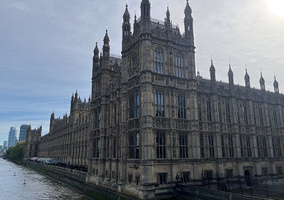
Instead the Commission (pictured) should provide general online advice and leave charities to find legal or specialist advice elsewhere.
“It is neither appropriate nor necessary for the regulator to give advice so that charities can run themselves effectively,” the NCVO wrote. “This can cause confusion among charities when trying to understand what they are legally required to do, and what is good practice recommended by the Commission, creating potential for regulatory creep. NCVO has always voiced concerns about this dual role.”
But CFDG said that many smaller charities run entirely by volunteers needed help to interpret the information available on the website, and that “if feasible, this one-to-one support should continue”. However, it suggested taking certain steps to reduce the volume of queries - for instance, making the Commission website more user-friendly, and creating packages of bespoke information tailored to different types of charity.
The NCVO said the most important function of the regulator is to maintain public trust and confidence in the sector, and that maintaining the public register is essential to this.
However, the umbrella body disagreed with suggestions that the Commission should refuse registration to new charities unless they offer something ‘new’. “The right to organise and come together is a fundamental one in our society; it is not for the state to decide.”
However, it supported the idea of raising the registration threshold from £5,000 to £10,000, while ensuring that all charities that want to be registered can do so.
While charities should be encouraged to take more responsibility for their own compliance, the Commission must retain the discretion to institute an inquiry when it is alerted to impropriety. Such decisions should not depend on the size of the charity or whether it is national, but must reflect the level of risk.
The NCVO disagreed with the suggestion that charity trustees could make their own decisions on whether to pay themselves, arguing that the voluntary nature of trusteeship is what sets the sector apart from private industry. However, it supported the proposal that trustees need not require the Commission’s approval to sell land.
CFDG has advised that the Commission should make use of umbrella bodies like itself to pass on guidance and information to frontline charities, freeing up resources and enabling the Commission to have greater reach.
“For example, on registration the Charity Commission could refer charities to CFDG to provide information and training on finance issues.”
It also said the Commission should consider charging professional advisers for advice, and only communicating with them by email and phone rather than letter.
It should delegate its research reports to think tanks or other bodies, and should charge a fee to private companies that want to access these.
And the Commission should look into charging a fee for filing accounts, though this should be minimal for smaller organisations.
Both NCVO and CFDG recommended creating a single return form for submission to the Commission and Companies House.
Philip Haynes
Trustee
Various small charities
17 Jan 2011
I agree with CFDG as small charities could not afford legal and other advice without using too great a proportion of their income. But perhaps this service should be limited to charities with income below, say, £250,000 as larger charities might be able to justify professional fees. Contact only by phone and/or email would seem reasonable and fees to professional advisers should be charged to them.
Commission could charge large charities £5,000 a year
Statutory fundraising regulation and new constitutional form should go, say lawyers
Commission publishes top-line priorities for future strategy
Charity Commission unveils new management structure
Commission cuts are "a violence", says Leather
Charity Commission may cut fraud investigations
Charity Commission to consult on which services it should deliver
Charity Commission can't be exempt from cuts, says Hurd
Interview: Charity Commission chief executive, Sam Younger
Commission must not charge charities for services or registration, says DSC
19 Jun 2013
Leading advice services are being forced to cut back on face-to-face support and place more emphasis on...
18 Jun 2013
The Big Lottery Fund has announced 72 projects that have been allocated a share of £19m from its Reaching...
18 Jun 2013
The three fundraising regulatory bodies – the Institute of Fundraising, PFRA and Fundraising Standards...
19 Jun 2013
Disability charity the Papworth Trust and Workwise, a charity which supports people with mental health...
19 Jun 2013
The Housing and Support Alliance has teamed up with the co-founder of moneysupermarket.com and the Centre...
19 Jun 2013
Leading advice services are being forced to cut back on face-to-face support and place more emphasis on...
19 Jun 2013
The Housing and Support Alliance has teamed up with the co-founder of moneysupermarket.com and the Centre...
19 Jun 2013
Leading advice services are being forced to cut back on face-to-face support and place more emphasis on...
17 Jun 2013
The Charity Commission data sets on how charities spend their money will be made publicly available in...
29 Oct 2013
29 Oct 2013
29 Oct 2013
27 Nov 2013
Jane Lutton
17 Jan 2011
Fees for registering? Seeking legal advice instead of contacting a free service? Is this not the voluntary sector we are talking about? Some might have money in the bank to welcome these moves but ours for one, doesn't. I thought that the NCVO was speaking on behalf of charities, well it doesn't speak on behalf of mine and I am so pleased that I decided not to join!
[Reply]