
Nesta launches crowdfunding directory
21 May 2013
Nesta has launched an online directory which lists all the crowdfunding sites in the UK.
Sorry for interrupting, but there is something we need to tell you...
We use cookies to ensure that we give you the best experience on our website.
If you wish to restrict or block web browser cookies which are set on your device then you can do this through your browser settings, the Help function within your browser will tell you how.
The real issue at the centre of the row over the proposed tax relief cap is not donations to charities, but about whether wealthy people should be able to avoid their obligations to society, Conservative MP Richard Harrington said last night.
Four hours into the Parliamentary debate on the second reading of the Finance Bill 2012, which had been peppered with references to how the tax relief cap would impact on charities, the MP for Watford moved the discussion onto a more ideological level.
“There is a serious point to make,” he said, “which is that I do not think this debate is about charities. Rather, I think it is about whether, in a sophisticated society such as ours, where 40 per cent-plus of gross national product is spent by the government, certain individuals should have the freedom to decide, for whatever reason, quite legally, that they will not pay any tax at all.
“Although we are talking about charities, society has to make a decision on that question. Is it acceptable, under any circumstances, for people obeying the law and earning money – a lot of money – to say ‘I’m opting out of paying tax on my income’ because they are giving to charity?”
Harrington said he found it unacceptable that people should be able to choose not to pay tax using various tax avoidance methods, including charitable giving.
“Should people be able to choose to support, say, the National Theatre, the opera and Christian Aid, while choosing not to support the National Health Service, education and social services? I ask the Opposition to consider that point before being so critical of the government’s desire to make tax fair for all and to ensure that very wealthy people no longer pay no tax at all.”
Earlier in the debate, Chief Secretary to the Treasury Danny Alexander ignored a direct question from Conservative MP David Ruffley as to whether he would consider exempting donations to UK charities from the cap, but said discussions with charities and philanthropists are ongoing.
In response to a query from Labour’s Andrew Love about how the government squares the policy with the objectives of the Big Society, Alexander reminded the House of the “many other measures” to support charities, such as Big Society Capital and gift aid on small donations.
And in response to a question from Tory MP Mark Field as to whether the government intends to restore the tax relief benefit once the deficit has been reduced, Alexander said he could not confirm that intention, blaming the “major ongoing problem with the sustainability of our public finances”.
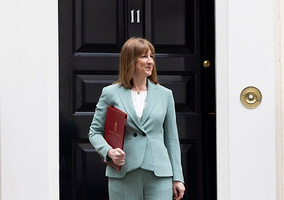
Alexander’s shadow, Labour MP Rachel Reeves, had attacked the way the proposal was announced. She said: “Instead of the government making up policy as they go along, without bothering to talk to anybody who is affected by it, they should have consulted the Charity Commission and the charities affected.” She went to say that the Press Association has reported that a U-turn is coming, and asked Alexander to confirm this. But Alexander did not reply.
Conservative MP Ben Wallace asked Reeves whether she agreed that “before people give money to charity, they must also fund their obligation to society? They must do that first, before they start funding charity.”
Reeves replied: “If the honourable gentleman extended that logic, there would be no tax relief for giving to charities. I am not sure if that is what the government are proposing.”
She went on: “Calling people who give to charities tax dodgers, as this government imply, and referring to charities as dodgy, when those charities include Macmillan, Red Cross, Unicef and Oxfam, is unhelpful.
“If the government truly want to increase giving, the language should be tempered and people who try to do the right thing and support worthwhile causes should be encouraged not insulted, for what they do.”
Barbara
18 Apr 2012
Conservatives are very strange poloticians indeed. While promoting all this localism and taking personal and social responsibility, they cannot accept situation of people deciding themselves what to do with their money. A donor don't gain anything by giving to a charity and having their tax cut - either way they get rid of the money - but he/she is exercising their freedom to choose how money will be spent. I wouldn't be surprised to see Labour going mad over this, they've always been protective of state revenue as every social democrats, but conservatives?! You have gone too far gentlemen.
Robin Bogg
CEO
BUBB
17 Apr 2012
So let me get this straight. A MP from a party that has historically supported the rich and helped shape the society we now have questions whether the rich should be able to avoid their responsibilities to that society by giving to charities that are only needed in part because of the inequalities in that society.
At least it isn't completely muddled, hypocritical thinking.
I think the choice of Christian Aid is a telling example here. There is an undertone of "shouldn't give to them charities helping the foreigns when there are services being starved of tax payer funding at home" to some of this.
What some people might regard as "very little charitable work" actually means "very little of the charitable work I agree with". Which is a valid debate but completely different from the one first implied by Pasty Dave.
Adrian Beney
Partner
More Partnership
17 Apr 2012
It's a legitimate political debate about whether or not there should be tax relief on gifts to charities. But if that debate it to happen then it needs to happen in a measured way with proper planning and not as the result of a last minute gaff in a Finance Bill.
And there is almost no western democracy that does not use the tax system to incentivise giving for the public benefit.
Treasury publishes figures on taxes paid by the rich
Bubb: Charity Commission should have defended tax cap claims
Cap on tax relief is fairest way to tackle deficit, says Treasury Secretary
Tim Yeo MP: Keep up the pressure on tax relief cap
HMRC publishes costs to Exchequer of gift aid relief
Bowcock explains calculation behind £1bn tax relief cap estimate
The tax relief cap: a lawyer's view
Sector 'needs a plan B on tax relief cap'
Donors or dodgers? - the tax relief cap saga so far
Let donors escape tax relief cap by giving the relief to charity, says Red Cross
21 May 2013
Nesta has launched an online directory which lists all the crowdfunding sites in the UK.
21 May 2013
The Big Lottery Fund has announced over £44m in funding for 160 community groups as part of its Reaching...
21 May 2013
The Canal and River Trust has challenged product design students from Central St Martins university in...
21 May 2013
Cancer Research UK has signed up 16 high-flying philanthropists to the development board to lead its £100m...
20 May 2013
The Information Tribunal has ruled that the Department for Work and Pensions must publish the names of...
20 May 2013
An impressive array of sector leaders turned out in all their finery on Saturday to attend the wedding...
20 May 2013
Your CivilSociety rounds-up the most read stories from the previous week.
17 May 2013
The voluntary sector should create a “data manifesto” that identifies who holds data about the sector...
16 May 2013
While management in the charity sector has changed significantly in the past few decades, a reluctance...
29 Oct 2013
29 Oct 2013
29 Oct 2013
Simon Hebditch
19 Apr 2012
It is interesting to see a Tory MP taking this line about rich givers. But I agree with him in principle in that surely it is the first responsibility of us all to pay our fair share of tax in order to fund, collectively, the services a state requires in relation to its citizens. Of course, many countries provide tax incentives for all sorts of purposes. For example, we give tax incentives to savers of ISA's because we deem it appropriate to encourage saving.
But it must be right to ensure that everyone pays an appropriate minimum before we allow some tax liabilities to be offset. Assuming we are talking here about future 45% tax payers, can't we insist that a minimum of 30% is paid in income tax thus allowing very wealthy donors to be able to offset a maximum of 15% of their liability by making a commensurate donation to charity.
[Reply]
Bob
20 Apr 2012
Response to [Simon Hebditch]
Good idea - I was thinking exactly the same: pay a minimum annual income tax rate of x% above which you are free to offset / donate as much as you want.
[Reply]