

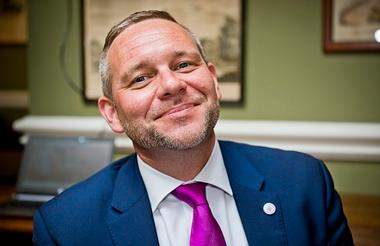
The latest Civil Society Podcast episode has been published with Social Enterprise UK group chief executive Peter Holbrook.
In recent months, civil society organisations such as the RNLI have faced attacks as they deliver their vital services from anti-migrant protestors and other groups .
Holbrook joins the podcast to discuss his own efforts at helping to form a sector-wide response. He also shares his thoughts on government relations and hope for the future.
You can listen to the interview now below or on all major streaming platforms including Spotify, Apple Podcasts, Amazon Music and Pocket Casts.
AI-generated transcript
Rob Preston (RP): Hello and welcome to the latest episode of the Civil Society Podcast. I'm news editor Rob Preston, and for this episode, I had an in-depth chat with Social Enterprise UK's long-serving chief executive Peter Holbrook about recent attacks on civil society and how the sector can respond. We spoke amid reports of RNLI volunteers being subject to verbal and physical abuse by anti-migrant protesters. About a year ago, Peter put out a call on social media to try and promote sector-wide solidarity in response to such hostility. We start the conversation by discussing that call before talking about efforts since then to form a united response across civil society and our sector's relationship with government. I hope you find this discussion somewhat thought-provoking, and I'll speak to you again at the end.
Peter, you put a call out on social media. You were trying to form a sector-wide response to what you described as the growth of angry nationalism becoming more prominent in society. You suggested a few things. You said there could be a joint letter from sector representatives as a starting point, but also that civil society organisations could offer practical support for threatened communities and try to form a unified symbol of hope to help remind us that a counter movement of tolerance, empathy, and compassion is out there. So your post got lots of engagements, and I know you held several discussions with people in the sector. What can you tell us about what was discussed and what came from those discussions?
Peter Holbrook (PH): I asked, I think, if anyone knew what was going on? I sensed that I wanted to do something or contribute somehow, but I wasn't clear about the routes or entry points to do so. And in the absence of finding anything, I did put the call out, and I had three long meetings with hundreds of people joining the call each call, to try and understand how my thinking was aligning with others and what the need might be, and then how best to meet that need. The principal kind of observation that came out overwhelmingly was: “What is a middle-aged white man, you know, putting himself forward to do this for? Like we've been some of us been doing this for years,” which was a fair point. I mean, I've also been doing it for years, but perhaps it's completely right call out, you know. And so I decided I wanted to do something that was complementary and something to use the benefit of all those people that had spent time liking, sharing, commenting, getting in contact, and one of the best conversations I had, and one of the most challenging ones that I'd had, was actually with Better Way Network, and the the constructive challenge, but the breadth of it made me completely understand that I didn't need to duplicate what was already happening. Channels already existed. I could play my role as a network, a convener, as someone with a bit of public profile to make sure people are connected. But I didn't need to create something to sit alongside everything else. And secondly, people didn't want a centralised central image that's approved and a conventional model of central command and control either, which I completely was relieved to hear, because they thought we have to make this, you know, of the people. It needs to be authentically locally responsive, and trying to create something in the centre is just going to fail. But I also know, as a marketeer and someone that's worked in comms, that something that expresses unity-that you're not alone in feeling how you feel-is also very powerful. But actually, wasn't the priority. It was backing what was already happening and contributing to others' work rather than trying to, you know, propose something that displaces what's already proving to work. So I tried to signpost people to other things. Other things were emerging by the end of that process. I heard of other networks emerging that were doing things, and what we needed, I felt, was probably signposting as much as anything else, because there was an abundance of stuff happening just out of mainstream view.
RP: And just on those, on what was happening there. So, I mean, I think the most prominent sector-wide campaign that people might be aware of was the Million Acts of Hope campaign, which was backed by Hope Not Hate and NCVO. That was an attempt to show a unified front against social hostility. Events that took place earlier in the summer. From your point of view, I don't know to what extent you were involved with that. Whether you were or not, what were your observations of that? And do you think that had much success in in what it was aiming to achieve?
PH: I think it made a useful contribution. You know, I felt that it had quite a soft response, if I could put it like that, to quite a serious challenge. And I kind of said to myself, you know, we probably need, you know, a million acts of, you know, civic defiance or something like that. Civil defiance. The oppression was coming from so many different sides. Hope probably wouldn't have been a big enough response. But look, I'm grateful for anyone that made a contribution, and I think that that role also had its place because you need to you know change your messaging to achieve different audience penetration and having a diversity of messages and access points is critical too. So, no criticism. I felt as if we needed something that could actually engage with the nascent energy of people that wanted to make a direct contribution rather than just a donation, perhaps, and those acts of hope are powerful. But yeah, it's not an easy time to penetrate the media with, you know, notions of hope. Fear does so well in the media. We know that, and across the algorithms. And I also wanted charities to more than just think about what they conventionally do. But what about the workforce? What about the volunteers, the staff? What about your neighbours? It's not just professional sector response that I was looking for. It was a way that we could all be part of something bigger than the oppressor.
RP: Yeah, and that's the worry I think as well, isn't it? That these networks of people who are who've been protesting recently they seem to be getting quite organised now. So they're getting their houses in order. I suppose they've got some well some very wealthy financial backers. They've also got communities in different countries who they're in contact with and sharing ideas. So it does feel like,, well, the resistance to that needs to get organised too.
PH: It's a really good point, and most recently we've seen these very large donations totaling £70m plus going to kind of Nigel Farage and reform. I kind of think, wouldn't it be wonderful and refreshing if a number of big trusts and foundations came together and said: “We're going to match that, right, but for civil society.” Can you imagine? I mean, I spend my time imagining these things. Right, can you imagine what you could do with like half a million quid, let alone £70m plus? And I just think the sector is always starve of resource, particularly that's willing to invest in longer term outcomes. However much we might move to you know strategic funding or whatever you want to call the next buzz term, very few, very little money goes into you know deepening the roots, strengthening the foundations. And I understand that so many competing needs, but I do think organisations like mine, who try and be courageous and authentic, and I'm not always operating my own self-interest, it would be incredible to us to be rewarded here.
RP: Yeah, one thing. I mean, this is a bit of a different example, but I'm sure you saw this week with Reach Volunteering, which was saved after a load of charitable funders got together, and that that came in response to a lot of well, the sector's unhappiness at the fact that this bit of civil society infrastructure had been allowed to just fall by the wayside, and we've obviously seen many other infrastructure organisations fall away for primarily for financial reasons in the last few years. So that I don't know, does that provide some sort of an example that well they can do it? So that there's possibility for yeah charitable institutions with lots of money to kind of group together and put their money behind something when there's a big call for them to do something together.
PH: Yes, it's not always necessary to be reactive. You can assume what's coming and plan for. What might happen, and I know some are incredibly bold and brave, and some have supported me when I've tried legal challenge against government decisions and so on. And so some of them are brave, but they are in a minority, and there's not that level of coordination to match the challenge that we're up against. And so I think that's a really valid point. And but you know, creativity is you know one of the secret kind of weapons of a social entrepreneur. We're used to working with very little resource. It's been accompanying me all through my career. I've never had the privilege really of having money on tap, and so that creates a discipline of making sure that the investment you get is really well spent, well invested. That you don't trade courage for risk, but you test to mitigate risk. And I just don't think really there's that confidence maybe in sector leadership to be entrusted with money in that way, which is a great shame because I think we need to think strategically and we need to think less about you know the front line at every opportunity and have a bit more space for thinking about what is the theory of change for the sector. Where do we want this sector or this movement, as I prefer to call it, where do we want it to be in five years and 15 years? You know, and that should really inform a lot of what infrastructure does, but actually, you know, rarely is that the case. And I think sometimes we have to hold ourselves to account for not being as accessible or as accountable directly as we might otherwise be. And yet, government needs to know that also is offensive at times. It doesn't come for free, you know. So it's really, really challenging. And anyone that survived for the last, you know, five or 10 years in sector leadership, you know, bloody deserves a gong just for that.
RP: I think that's a really important point about resources. And just to go back to kind of where we started with the recent attacks on RNLI. So obviously, the RNLI is a massive charity, and it's got a huge profile and a lot of public support. And they've they are weathering this these attacks from a small minority pretty well. They are reporting an increase in donations, but other charities, much smaller and much less well known, have also been taxed and targeted. There's a few, so there's the 10,000 Interns Foundation that received a legal threat over its flagship campaign to offer opportunities to lawyers. City City of Sanctuary UK last year - it was cleared by the regulator after a complaint that it was encouraging children to send Valentine's cards to asylum seekers. Hope not Hate's got quite a profile itself but even itself and the campaigning work it does, has led to it being complained about to the commission by Nigel Farage himself in in a couple of instances. So yeah, I guess he shows the sort of breadth of attacks. It's not just about these attacks that sort of get the national newspapers. It's not just about big charities either receiving these attacks. When it's a smaller charity, it can be a big financial problem to receive this sort of attention.
PH: True, and you know, I don't think there are rules necessarily that you can follow. I've seen the way that the National Trust has been pursued, one of the largest charities in the country, no doubt. You know, certainly pursued actively by a campaign to take ownership of it by a political ideology. I think we have seen smaller organisations suffer, whether that's you know the closure or the loss of visibility of some of the women's organisations that used to exist in infrastructure, like you know Viv Hayes, the Women's Resource Centre that she used to run a formidable champion for winning that you know is on the backbenches because no organisation exists for her to have a voice, and I think that can be said for many many infrastructure organisations that especially represent those most excluded, whether that's you know the trans community, whether that's, you know, whoever it is, refugees, asylum seekers, their voices often missing from the conversation. It's a serious moral, but also it's a missed economic opportunity. You know, I'll say it 100 times this month, and I'll say it 100 times next month. But you know, diversity is good for all of us. It's not a cost we have to bear. It is an opportunity to learn and understand more about the world, more about yourself, to be informed about complex issues from a different perspective than you'll have ever heard. And I just think we do have a disservice when we allow those voices to be absent when we engage across government or with large corporations. We have to be the first ones to say, "Hang on, our colleagues are missing, and that that doesn't happen really. People enjoy the privilege, and the narrower the access, the better, you know, like the few other people. So we have to do some thinking about as a sector set of infrastructure organisations. What is our theory of change? What are we going to do to make that a reality? I guess.
RP: That's interesting, and it might be a good time to move on to talking about the government and its relationship with civil ociety. So obviously, last year there was the Civil Society /covenant under Keir Starmer's administration. We now have a new prime minister Andy Burnham. That work is continuing. We have a Civil Society council, which is made up of sector representatives, who's got who has as regular meetings at Number 10. So there's access there. What are your thoughts on that relationship now? Are you optimistic that, it's only it's only been a year so far, but do you think this is a positive thing that's going on in the sector?
PH: Yeah, on the whole, I'm not going to, you know, be mean about anything that is additional that we didn't have previously. But I think you know, history and context are really important, and I'm not asking people to think about 100 years, but only you know, 10, we have been hollowed out quite significantly as a sector, as individual organisations representing whoever constituents we might, and that has taken a toll. So, I think inequality, just like in society has grown within the sector, the haves have more than they ever had, and the have-nots are barely surviving. And government needs to address that because although I welcome any additionality that emerges, I'm always going to question its legitimacy if it doesn't look and feel like the sector and the people working in it that it pertains to represent. So that would be my challenge to it. I think there are lots of points where you can create change within government, and so that mechanism, that new mechanism through the covenant and the Civil Society Council is one new doorway. We now have the Office of Impact Economy, and I was talking to their staff team earlier this week, which was a great opportunity and great privilege to build relationships further with them. That's another door. There are different routes in. We are ourselves, you know, a private secretariat for an all-party parliamentary group, you know, led by Patrick Hurley MP, who's a an outstanding member of parliament at Southport, and you know that's a different routine, and so we all have to, you know, use whatever routes are available to us. I would hope that having that new additional part of the mechanism with which we feedback doesn't create displacement elsewhere. And I would like, you know, just to see much more active engagement from a really, you know, like robust and capable bunch of ministers that are actually interested in civil society, because I think that has always really fundamentally made a difference more than what you call it, where it sits.
RP: You mentioned the Office for the Impact Economy there, and I know you've talked about this previously, I guess some people who are listening might not really fully understand what the impact economy is and what that includes, and I think that was part of your challenge earlier this year about how that is defined and how much it focuses on well, social enterprises, charities, other community organisations that have a set structure, as opposed to businesses that don't have any compulsion to do good, but have kind of an intention that they've to have a positive impact on society. I think that was the general thrust of what you were saying. But it sounds like you've had some discussions more recently with this. So, so what's your what are your feelings on that whole programme now?
PH: Well, it's my it's my first opportunity to directly engage with them, which I really really appreciate. You know, in terms of being in person, so that's really important because relationships are forged in group life, not online, and that was a great opportunity to meet with I think most all of their staff team and others that have joined from different departments. And I just believe in self-determination. I think like we all probably do mostly, and that's true whether you're a person, whether you're you know from the trans community or not, how you're addressed and what you're called is certainly a parameter for your kind of discussion, inclusion, or consultation, right? If not ultimate determination, and I just felt we were being asked to adopt language for someone else's reason, and I think you know how can you exclude cooperatives and employee-owned businesses, and include all these other businesses which might be making a fantastic contribution? Right, they might well be, but they're not doing that as a primary purpose. They're doing that almost incidentally, and I've always maintained because I've worked in the private sector that it's actually not. It's when things are really tough that that I see the values of organisations really materialise. It's not when they're you know rolling around in piles of cash and enjoying life. The test is when the pressure is on, not when the pressure is off. And time and time again, having worked in those businesses, when the pressure is on, shareholder primacy, investors always trumps what other considerations there might be. Staff, employees, beneficiaries, customers, and I think we can see that playing out right now with Ben and Jerry's ice cream, over Unilever, where there's a fight over control, over self-determination. We've seen it over and over again in all sorts of businesses. I won't rehash an old point, but you know, the language you use does create power within the sector. It shifts the dynamic, the sense of where traction can be found, and I just ask the Office for the Impact Economy really just to make sure that they talk to us about unintended consequences of good intention because government and society and civil society are littered with good intention, and it's often just not doing the hard jobs of really understanding what you're fiddling with before you fiddle, and I think that was quite well received because we see in infrastructure some very, very stark inequalities between those that have been kind of benefited with public money, be that dormant assets or be that from the lottery or somewhere else in government, functioning in a market economy where they are not part of the public sector, so they are directly able to compete for contracts and corporate relationships and things with the minister, whatever it might be. They become players, and they become very, very large players with lots and lots of advantage. And just being aware, just because we're small doesn't mean that we aren't valuable.
RP: No, I think that's a really good point. And the I suppose to me it sounded a bit more than just like a language thing or more a technical thing. It was if the whole programme sounds like it's a really positive idea to try and get philanthropists or more philanthropy to sector organisations, but then when you looked at the, I think it was the NPC report which kind of scoped out this whole what the impact economy is, and you look at the whole pie or the pie chart and then you see like most of it seems to be these purpose-driven businesses, and like you have to kind of squint to see where social enterprises are, where charities are. Then that can cause a bit of concern. Like, is it is it worth us investing ourselves, our time in this programme if we're not going to actually benefit that much from it? I suppose.
PH: You make excellent point, and I understand why it happened because I think £428bn or whatever the figure was that they were able to quote is a big number, and unfortunately, the culture of government is that big numbers draw attention and will open doors that moral argument does not, frankly. So I understand the temptation to do it, but I just think you have to kind of resist those temptations at some points. And for example, you can't go from critiquing GDP as a way of measuring economic value and then using it as your main source of comparison in your next report. Because if you don't believe in it fundamentally representing anything of value, then why would you quote it? So, look, but I get it, and the chaos of the sector, and you know, is part of where you know the genius of it sometimes emerges. It is through the you know, yeah, maybe, maybe who knows? I mean, I all I would ask is that we are partners, we can work together, and we are better when we collaborate than when we compete. And therefore, I would really, really encourage, you know, trusted foundations to invest in that element as well. How can we collaborate without the necessary financial incentives that tend to stimulate, you know, kind of acquiring businesses, mergers, joint ventures, hybridisation in the private sector? How can that be funded so that it's not always a cost? Because working differently does come at a cost, and yeah, that needs to be supported so that we can find ways to build coalitions and partnerships that really do begin to move the dial, because civil society deserves to be much, much bigger and much more powerful, and have much more leverage than I think it currently does.
RP: Absolutely, and another well-intentioned government scheme is the Social Value Act and the social value procurement protocols that have been introduced, and they've been around for quite a while now. I think about a decade, but you wrote a piece for us recently about some proposed changes to how social value might be applied in government contracts, and it was interesting to hear your response because you kind of went against what some of the other sector bodies were saying, which were that this is great and this is going to be really positive for sector organisations. So it's 10% on all contracts, I think, at the moment. And they were going to bring in some tiers. So it wouldn't apply for tenders under £1m. It would raise to 20% over £5m, I think. And there were other changes as well, which you had thoughts on, so yeah. Did you want to just summarise what's going on with that? Because you also ran a survey as well to try and get some more thoughts on it.
PH: Look, I would first of all say it's not for me to determine the policy changes that the government want to impose. They are, you know, part of democratic infrastructure, and Andy Burnham is, you know, the prime minister. And I have been mostly impressed with this speed, presentation, and choice of announcements that have come thick and fast. And on the social value one, first of all, I recognise that it was done with good intent, and I would say, in the haste to get announcements out, perhaps the opportunity to consult and understand the unintended consequences of these potential changes very more thoroughly. And although I do welcome doubling of social values, 20% on contracts over £5m pounds, really there's no one, very few organisations within our communities of both charities and social enterprise are winning central government contracts of that size and scale. So for those that are, congratulations, well done, it should favour you, but for most of the sector, we're actually delivering the sub £1m contracts, and social value is an effort to encourage commissioners or procurement folk to see beyond price and quality alone.
And the Social Value Act, because it was born under the coalition governments, I think in 2012-2013, it was always going to be a little bit compromised from the idea we first proposed at Social Enterprise UK back in 2009 for this legislation. And I accept that it was always going to have to go through a process of evolution, but they've made a couple of, I think, foolish errors, which I believe will be corrected when the secondary guidance is published in the autumn. I've had the opportunity to feed that directly in, and I think in a constructive way, those I've spoken to have thought, ah, maybe something we hadn't considered. I've given them a proposed solution. I really hope they adopt that solution. I think it's a simple fix, but I think we, particularly from a government that's talking the language of devolution, we, you know, need to resist the temptation to centralise everything and make everything uniform.
One of the changes that's been proposed is to reduce the definition of social value only to jobs and quality jobs, right? To work and good work. What's missing is the reward to have diverse supply chains. For example, particularly focusing on VCSE organisations, that benefits them, makes them more resilient and strong, and that benefits the government ultimately. So there's a way that you can fix some of these problems, but at the moment it looks like a a quickly considered fix that isn't quite the right size and shape yet, but I think we have the opportunity to put it right. And I I'm just grateful that I now do have access to Number 10 and the prime minister and Downing Street because I've spent a lot of you know the last few years in Exile, and it's felt like, and so it's good to be back and having those direct conversations. And I'm very grateful to be given a voice again. So I think it's a, and that what that's taught me is about trust. Really, if they can learn to trust us as a sector, and we can learn to trust them, and there's work to be done there. Then I think we can start going back into a spirit co-production and helping to design things that work better from the outset, rather than being revised after we've identified a problem.
RP: Excellent. Yeah. Okay. Well, that does sound encouraging. There's been some positive engagement there. I wanted to. We've covered a lot of ground today, Pete. I think we could probably talk about many other things, but I'd like to try and finish on a on a note of optimism. Is there is there anything that you would like to say that you think gives you hope for the future of the sector at the moment? We've covered a few things in this discussion that sound like it's it's a bit of a tough time, really. I mean, a very tough time for certain organisations that are bearing the brunt of some of the the attacks that are going on. Yeah, what what gives you any sense of optimism about the future for the sector?
PH: It's a very good question to end on, and thank you for the heads up that it would come. I'm joking now that I was coming. I would say that people are finally beginning to challenge the fundamental orthodoxy of the whole capitalist system, and I kind of reached that conclusion some time ago that this could only go in one direction, and regrettably, I've kind of mostly seen that play out as I imagined it might. And what that is doing is bringing more and more people into what I call a movement, not a sector.
I was taking a charity CEO out for dinner for a catch up quite recently, and woman serving him said: “You're talking about social enterprise,” and we were like: "Yeah.” And she said, "I've just graduated, and it's the only sector I would choose to work in. I don't want to work in public sector. It's corrupt. I don't want to work in the private sector. This is where I want to work. It's such a privilege to serve you.” Oh, when has that ever happened, and when would that have ever happened? And I think that shows the kind of slow but iterative kind of process of movement building, and it's not happening fast enough.
And I'm very impatient, as many people will tell you, but it is that that sense that we're onto something, and we are not just to society, but we are fundamentally, if we adapt and evolve and allow ourselves to, we have a future of the economy. That's the way I see the opportunity ahead, but we've got to manifest that by believing it ourselves and being that kind of high level, strategic in our ambition, in our alignment, whilst still doing all of the delivery work and looking at you know issues of tax and the Charity Commission and is this good enough and what about fundraising and that sort of stuff, all valid, but let's not lose site of what we hoped for and we believed in, and bake that into the way we go about creating social change.
What we've done the last 100, 200 years clearly has not been enough because look at the state of what's outside. So let's really gear up for the change that I think we can. Many of us will be able to rally around and actually amplify, and actually see that we aren't just civil society. You know, fundamentally we exist across society, and we exist across the economy, and let's kind of understand, recognise our place within those, rather than seeing ourselves as an isolated satellite that is limited in any way, shape, or form. Because we are not only by our imagination and our courage.
RP: Thank you so much for listening to this episode of the Civil Society Podcast, I hope you enjoyed my chat with Peter, which I feel could have gone on for much longer. You can like and subscribe and listen to all our other episodes on all major platforms. I hope you stay safe and well, and we'll speak to you again soon for another episode.