

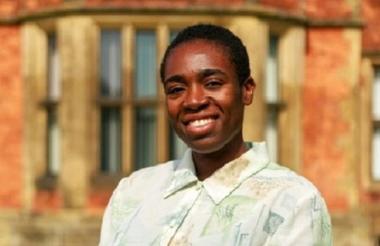
The latest Civil Society Podcast episode has been published with Yeme Onoabhagbe. In this interview, Onoabhagbe discusses the barriers people of colour face in attaining board roles, what charities can do to become more inclusive and the challenges new trustees face in getting their voices heard.
You can listen to the interview now below or on streaming platforms including Spotify, Apple Podcasts, Amazon Music and Pocket Casts.
AI-generated transcript
George Hayes (GH): Hello and welcome to this month's episode of the Civil Society Podcast. I'm delighted to be joined by Yeme Onoabhagbe, CEO of Board Racial Diversity, to discuss the important task of increasing representation in charity leadership teams. I'll check in with you just at the end of the podcast.
Great. So, thanks for agreeing to be on the monthly Civil Society Podcast. We're just here today to talk about your role at Board Racial Diversity, and I just had a few questions we wanted to go through. Primarily, what is Board Racial Diversity's main strategy for helping to close the gap of 60,000 Black and Asian trustees that the charity says are needed to achieve proportional representation?
Yeme Onoabhagbe (YO): Yes. So thank you so much for for having me as well. First off, so I think essentially Board Racial Diversity, in order for us to do this really sort of big task, we're moving away from just representation and thinking about inclusion and sustainable change. So Board Racial Diversity exists to really just transform who leads organisations in the UK, and we see representation as a starting point, but inclusive governance as the real catalyst for sustained change. Black only trustees can't just be recruited because if they're just recruited without thinking about the environment, they're not going to to stay and thrive, and they need to be retained. They need to be empowered to thrive because they're excellent and bring incredible skills to organisations, and that means boardrooms need to, you know, welcome challenge, acknowledge the power dynamics in those spaces, and actually proactively support trustees to lead with confidence. So we work with organisations to not just improve implementation, but to promote inclusive board cultures, so that leadership becomes more effective for representatives as well.
GH: That's fantastic, and it sort of leads on quite well to the next question, which is just about, I guess, the plan to persuade. Basically, quite a lot of charity boards. I think the vast majority are still kind of overwhelmingly white, rich, and to be honest, old, and they're not even aware of that this is an issue. I mean, how would you sort of plan to get through to those sorts of demographics to sort of achieve that change?
YO: Yeah, because I think our strategy is really about trying to address both the supply and demand for Black and Asian trustees. I guess at the same time, because I think the demand. There are a lot of organisations who do recognise that they need to increase diversity, but for a lot of organisations, they don't really understand the benefits. But for us, it's really clear. You know, boardrooms make decisions that actively shape the lives of like millions of people across the UK, and for those decisions to be credible, that people making the decisions have to understand the communities that they serve, and if they don't, then they're not making good decisions, and they're not serving their communities, and they're going to have poor outcomes. It's so similar to, you know, the arguments that we get in the workplace around diversity and inclusion. You know, reports like you know CIPD, Deloitte, where it talks about you know driving innovation, boosting financial performance. It's exactly the same for boards, and I think what we're trying to do is make this like a business priority for organisations. It's not just about getting more Black people onto your board; it's about good governance, which ultimately leads to good decisions, which is a board-made purpose essentially, so we're working really closely with partners like recruitment firms and sort of like-minded organisations to build the demand for what we do. So it's a lot easier for us to sort of grow our great work as well.
GH: I'm aware that you've joined fairly recently. I mean, not as recent as when we last spoke, but yeah, how has that been, and what has been your sort of specific like hands on role in trying to achieve these things?
YO: So it's been about four months, and I think my main role has been sort of taking over from the founder, our brilliant founder Malcolm John, who's been doing this work as a campaign for many years before we became a charity two years ago. We're at a really exciting stage in the organisation where we receive funding and we're slowly sort of growing our reach and influence in the sector, and we now want to sort of look forward to what we can actually do to, I guess, create really tangible change for the sector. And I think that's two things. One of those things is that we internally are just building operations, just getting our house in order, so that we can start to do more and provide more services. But also, we want to be financially sustainable. The charity sector. Right now it is really really challenging to secure funding, and so my main sort of role is to ensure that we can find really I guess, mission-aligned funding opportunities that allow us to essentially provide free programmes and accessible opportunities for our beneficiaries, for aspiring trustees. You know, we don't want to ever charge somebody to get to use our services. We want that to go to, you know, we basically want it to be free for anybody who needs to use our services. And so we're trying to figure out how we do that sustainably for a small charity like ours. So that's that's the top priority for me. And of course, like any CEO, it's really exciting being the first CEO of the organisation and getting to sort of shape the future of the organisation. So I'm writing our strategy at the moment, which is really exciting. So we're launching that in autumn of this year, and that will be a really clear indication of our commitment to the sector for this work, but also what we're going to be doing moving forward, and I guess also kind of call to action to ask for support for what we're planning to do as well, which will be really really exciting to to share with the world very soon.
GH: That is exciting, and yeah, that's sort of good news to hear that you're sort of previewing that, and you've spoken quite a lot about sort of fundraising, and obviously that's kind of an issue we've noticed across the sector, whether it's a small or large charity. It is just increasingly difficult to secure funding, and you know much of your strategy depends on finding more funding. So, what is your specific fundraising plan, if you've got one yet?
YO: The focus really is just actively pursuing diversification of income generation as much as possible, so that we're not relying on any one form of income. So we're exploring lots of different ways of partnering with sectors and infrastructure bodies as well, so we have you know our services that we run. So we have consultancy and training offers for organisations, which is a great way for us to work with boards proactively. But also we recognise that for the majority of the charity sector, they are very small organisations with not a lot of funding to sort of fund sort of consultancy type work. So we're also exploring sort of corporate relationships where we can actually get the funds to support smaller organisations without them having to use their very limited funding to be able to do that. So we're exploring potentially getting corporate organisations to kind of fund meaningful work for sort of smaller organisations who don't have huge budgets, don't have as a capacity to be thinking about governance, and so we're really hoping we can we can explore that a bit further. We're doing a lot of work, obviously, you know, exploring grants like everybody else, and sort of seeing if there are potential partnerships we can do. So I'm really keen as a small charity that we support other small charities, and so we're exploring working with similar sort of charities to ourselves to go for kind of joint bids. We think it's quite. I think grant funders are kind of quite keen to also think about how you know partnerships could actually lead to like a more impactful result as well, especially because we want to get international approach in the work that we do. So that we're kind of exploring sort of joint grant bids at the moment, and we're also going to be launching membership service that's really focused on our sort of future sustainability. So we already offer lots of great things for organisations, and we want to basically create a member benefit that's very sort of light touch and affordable, but will help to build a bit of a loyal customer base that can kind of get resources from us and support from us really readily, but also hopefully act as our champions and advocates across the sector as well, so we're excited to be launching that as well later in the year too.
GH: I guess outreach is really important as well, and that's something else we're interested in in terms of, yeah, how do you sort of plan to reach you know millions of people of colour, sort of young and old, who aren't even aware of trusteeship — that its even a thing that they can do.
YO: So I think a couple of different streams. We're doing a lot of work, especially thinking about younger people, because yeah, especially with the younger generation, which is often quite a gap that organisations are looking to, you know, improve on, which is age diversity is working with the Young Trustees Movement, who are one of our kind of really close friends of the organisation, to basically explore how we can yeah work together to help demystify the role, but also yeah inform people that these roles exist and that they have an opportunity to really influence the communities. That they are part of and want to sort of protect and support. We're also thinking a lot about our part of the organisations. So we have the BANO's database, which is made up of you know, 500-plus organisations across the UK that are led by Black and Asian people, and we're doing really targeted work to build like better relationships with those organisations, so going to visit those organisations, exploring what they're doing, and exploring how we can support them, and trying to think a bit more proactively about how we can all support each other. I think that's what's really, really critical. The only way we're going to survive is if we work together to ensure that no one's left behind. And so we want to be a bit more intentional and spend a bit more time with communities, and so we're trying to do a little bit more of like literal going out and practically meeting with people, and exploring if there are sort of like you know unique and diverse ways for us to continue partnering, which is really exciting. So you know we have a lot of connections that we're building with community foundations. So we have a webinar coming up with Community Foundation Northeast, but I'll be doing a session with them just based on again us reaching out and exploring if there's something we could do together. And similarly, we're having conversations with other regions like Scotland to sort of explore as a way for us to yeah to support what they're doing up there as well. So we're trying to slowly build that kind of just that relationship with organisations, and that's less of a just you're on a list of people we email, but actually let's build a you know personal connection and explore and see what happens next really.
GH: You mentioned the BANO database, which was something I was going to ask you about, and yeah, what has the uptake been like so far to the database? Obviously, it doesn't contain, you know, more private information about, as you said, it's a sort of multi-resource tool for charities to tap into. Do you think there's the requisite level of trust among those organisations in signing up to it, and is that something that you hope other organisations will be willing to join quite soon.
YO: I think uptake has been really encouraging since BANO launched, you know, many years ago. I think what's been most positive is that the database, I guess, is not only being used to reach organisations to promote trustee roles, but it's also allowing organisations to build longer-term relationships with community orgs in their region to support succession planning. So, you know, if somebody in you know Cornwall wants to find community organisations in their region, they're not just going to them and saying we have a trustee role. Can you help us out? They're actually starting to build something that might actually support their EDI work more generally in the future as well. So I think there is a lot of benefit to how we're supporting organisations to think strategically about how they build community. That's what's really important about what we're doing there. So yeah, I think it's been really, really positive, and we're excited to see how our support in that kind of region sort of grows in the future.
GH: I was also interested in again something you touched on quite briefly, but slightly changing topic a little bit. But it's something that we've covered quite a bit, which is the impact of sort of anti EDI litigation. There are quite a few charities, especially smaller ones, who have been subject to lawsuits, and I think it's something we discussed previously. What what are you noticing as sort of a new charity CEO on the sort of impacts, perhaps not on your charity specifically, but on the the sector more widely.
YO: As a somebody in the sector, it's incredibly disheartening to see what is happening for organisations, and you know, even at the beginning of sort of my journey with Board Racial Diversity UK, it was a key question that I had about how we were going to do this work when you know quite frankly EDI is very much under attack in the majority of sectors in the UK. I think we're quite lucky in that we, for the most part, are not trying to change hearts and minds. We are working with organisations who really understand what we're trying to deliver, and so our our work and our partnerships are really positive in that sense. But also, I think the issue that I'm seeing is that there are often those allies and those sort of you know cheerleaders, champions, and organisations who really get it, but the organisation itself doesn't get it, and so they're having to kind of shout into the abyss and try and support and get this work going. But also, then the issue is that they'll they might leave, they'll burn out, and they'll leave, and then there's nobody left to sort of keep that work going. So, I guess the main reflection I'm having is that because of the sort of. The shift that we're seeing is becoming a lot harder for us to, I guess, build relationships with certain organisations because of the sort of limitations that they have, and especially internationally as well. Just sort of from previous roles too, that it is just getting a lot harder to talk about EDI to even use those words. Like I had a conversation recently with an organisation where they weren't allowed to use that language, and then we had to think about how do we how do we frame this? And I was like, we can't dilute what we're trying to do. So I think there's a bit of like a two part response. Really, is that I think we're very lucky that we do have lots of great relationships, people who really understand what we're doing. But there's also a bit of a push that we need to give organisations as well to understand the damage that could be done by not engaging with this work in the long term for their communities. It's not just a simple thing of this is an EDI issue. This is about your organisation's decisions and about the outcomes for your service users, and it's a major risk for any organisation. And it's a risk, you know, as a charity CEO, I'd see that in any organisation I was working for, if that wasn't being considered effectively. So yeah, it's been really disheartening to see. But also, I'm very motivated by the community that I'm lucky to have in this role as well.
GH: I was just thinking back to when we met and I came to the talk, and you mentioned you know the sort of importance of having that sense of community and having an environment where those sorts of conversations are easy to have, and you're able to use that language, and for people not to be afraid to raise it in board meetings. I mean, besides, I think you've covered this quite extensively. But what would you say are the key barriers to racial diversity across charity boards in the UK?
YO: That's a big question. I mean, I think a lot of the barriers to racial diversity are just the general barriers to diversity on boards, because for the most part, boards they all look the same, and there are still a lot of very entrenched practices on boards. So there are still a lot of boards that don't have fixed-term appointments, and so there will be people who have been on those boards for decades. There are still a lot of boards who do not recruit openly and will just recruit from a pool of friends or from a very close network. There are there is there are still boards that don't factor in. When I say younger people, I mean people under 50 who have full-time jobs and can't do meetings from nine to five, and that's still not a factor in how they promote a role as a trustee because that immediately, you know, excludes people with roles, but also people with care responsibilities, for instance, or who can't commit to certain times of the day, so I think actually a lot of the reason why there's a lack of diversity is because boards, you know, they want diversity, but they aren't actually willing to look at the the systemic problem, which is that boards themselves are not many boards are just not inclusive, and are not an inclusive environment for underrepresented trustee communities, and if boards aren't willing to sort of challenge how they operate, the kind of environment they create, the kind of messaging that they put out about what that board's like, the culture they're trying to like, you know, curate. If they're not honest about that, they're never going to see improvements in racial diversity or any diversity, really. I think in terms of racial diversity specifically, one of the kind of key things that we find actually is obviously, you know, trustees will say that they find it really challenging to sort of get these roles and to secure these positions. But even for those who secure the position, retention is a key issue because you know there's data, you know, literal data about how Black Lives trustees often feel isolated, you know, tokenized, undermined, not heard in these positions, and then they leave. And so, a really big issue is that they're just not getting the support, and just being like championed and supported and allowed to thrive in these positions. And it means that they're not staying. Boys don't understand what's what's happened. You know why they've left. But yeah, it's that lack of commitment really to inclusion. It's if it's just a tick box, then nothing's going to change, and so it makes our job really hard because we are we're a charity that's trying to transform organisations at the top. So it's quite a huge undertaking. But I think what we're we're hoping to sort of demonstrate in our strategy and the work we're. Over a couple of months coming forward is that this work, if it's done right, could lead to transformative outcomes for organisations in how they make decisions and how they support their communities, and the culture of the whole organisation as well.
GH: I'm struck by you know, the fact that entering what can be sort of a hostile environment or something that's kind of not familiar, that's dominated by a certain demographic, and trying to get your point across can be very sort of tricky to navigate. And it sounds like something that you've learned a lot about and are able to do. I guess what would you say to someone who's like a new entrant trying to do that, trying to make their sort of way into, you know, wanting to be on a charity board, but perhaps being a bit intimidated by some of these things and feeling like they're, you know, they don't want to contribute, for example, or just they'll be better off maybe doing like a lesser role. Yeah, what would you say to people who are kind of a bit hesitant to take on these responsibilities?
YO: That's such a good question. And I mean, when I was a trustee, my first trustee position, you know, I had the exact same concerns and did not feel prepared and wasn't really prepared for the position and just kind of muddled along for the first year or so. And I think one of the things I wish I was told about these positions is just to do your research before you start, like literally about what your responsibilities are, because it's you don't know what high-end of charity you're walking into, and if you don't have any kind of sense of what good practice looks like it's going to be hard for you to challenge it because you're coming with like a lack of knowledge already. So I would just suggest read up. Like it's very simple, but just be informed. Read up on what this role actually requires because like anybody who has a vested interest in the community that they're trying that they're applying? You know, if you're applying for an organisation where there's a community you're really invested in or you really care about, you have the relevant skills to be a trustee. It's that simple. It's not like this, you know, a hard-to-reach position. It's just hard to reach because you're not being encouraged to go for the role. So I would really encourage you to just read up on the position and make sure that you're really confident on what responsibility is. The second thing I would suggest is being really clear on your boundaries for the role. So I just didn't really understand what was appropriate at the beginning in terms of like how meetings should be held, how decisions should be should be made, what kind of support I I deserved, and what I should be offered as well. So I think really early on having that conversation with the chair or the organisation about what kind of support you need, the boundaries of your role. So you know what you're able to commit to. For instance, I can only commit to this much. I want to be informed about this. You know that kind of thing. Just being really, really clear about it with yourself and with the organisation is going to provide that level of like trust and also like respect as well, because you really get it and you understand like what you need from the position is really important. And I wish I'd done it at the beginning, that's what I definitely would advise. I would also encourage you to find community as well. Find others who are like you, and probably in a very similar situation of just trying to figure out their first trustee role. I'll obviously plug our network that we have, Ball Connects, which is made up of hundreds of aspiring and current sort of first-time trustees from Black and Asian backgrounds, and that's literally what it's for: is to sort of build connections, so you can sort of share any problems that you have, any challenges that you've got, and sort of talk them through. Yeah, we'd love to have you if you're interested. So yeah, obviously come along to that, and you can just use that to sort of build your connections and yeah get get in a sense of like what these roles are like for people like you as well so yeah that's what I'd say.
GH: That's a very helpful response and I was just curious again it just came up but obviously you know you've had quite a extensive career so far, and I was just sort of wondering from your own personal experience: were there any particularly challenging or difficult moments when you've been working in leadership where you felt a bit challenged or pushed on something in a way that you haven't been comfortable with? Obviously, you don't have to name names, and if so, how have you managed to kind of overcome that yourself? If that's not too probing a question.
YO: It's a really important question, and I think it's important as well to be transparent and to you know demystify these roles because I think the. So the principles of like good leadership are pretty basic. The example that comes to mind was where I was working with a board, and it was just really clear the decision was wrong, and I and I just felt really like I didn't know how to handle didn't know how to handle the sort of conversation. I quickly realised that I just didn't have like the power imbalance was became really clear during that kind of that issue that we had the board I was working with at the time, and I think it really tested me as a leader because you know I'd I'd been a leader for a while, and I guess I'd led you know teams and had conversations and had felt you know felt like I had confidence to sort of share my opinion and support decision making, but I felt really challenged by the fact that the power dynamics were really like I don't know how to put it, like really like entrenched, and I wasn't going to be able to fix it really quickly. And I guess what I did in that scenario, which I would always recommend, is I sought external support, so I'm really lucky that you know I've been able to build like connections over the years, and there are probably people who don't even realise they've like sponsored me and supported me over the years into kind of roles or opportunities, but I just reached out to the community and had some really like honest chats and reflections with people who who I realise have probably been through similar things, and they had, of course. And I just tried to like, problem-solve how to go about addressing our current issue, but then our longer-term issue. And that was it. I basically just chatted with people and solved the shorter-term issue, and then made recommendations about the longer-term issue. That's how I'll put it, and then also recommended like further conversations, sort of externally as well, because I think the only way that board was going to see their issues was if an external was to come in and help them see it, if that makes sense. So I think the lesson, and it's always been, I guess, a key part of my leadership style, is to sponsor others. So sort of beyond the mentoring, but actually like sponsoring and like actively helping them to sort of progress. But also that other people, people do that for me as well. They sponsor me and support me, and I guess supporting others means I get it. I get it back. That makes sense. So making sure that I am always actively building community, especially with people of colour, especially with Black people, with queer people. You know, we want to, as Black queer person myself, we want to support each other and just make sure and lift people up in this in this sector, that isn't always welcoming to us. So yeah, I'm really really lucky to have the sort of community that I have around me to sort of keep me grounded and keep me safe and sort of able to thrive in these positions as well.
GH: That sense of community is quite apparent, just from even looking on social media on LinkedIn and people giving each other advice at in-person events as well. I think it's really important to share that sort of information and learnings with each other. I was just curious. I mean, it seems like quite a tough job. I mean, when did you decide that you wanted to become a charity sector leader, and why?
YO: I've always loved charities, and have always believed in the power of the voluntary sector. In terms of, I think it's just the way that charities are literally like they're operated to support and a community and only the community. So they need to be community-for-the-community, led by the community, and I think that is just really important to me. I give a lot to any role that I have, I'm really passionate and I work a lot, and so I have to feel like I'm getting out of bed for something that means that is important to the communities that I care about or am part of or want to support. So I think I've always cared for charities, and then I guess leadership positions. I kind of just if I fell into it a little bit in that I think I'm also somebody that really enjoys change work and like solving a problem, I guess. And I started to do that more and to sort of step into leadership roles and naturally help organisations solve problems and actually provide that kind of steer and support through periods of change. I then was really lucky to secure my first like interim chief exec role at Student Minds. Will be forever grateful to that organisation for the opportunity to do my first interim position, and it kind of gave me, I guess, both a love-hate relationship with the role. It's an incredibly challenging position, but it's also so rewarding because the power you get, like the opportunity to literally make a decision one day and then see the outcome of it like a month later, is is quite addicting, to be honest. And I think the impact I've been able to have, like getting to look at the people I make a difference for, is quite yeah it feels great and it's something where I know that I'm able to use the skills I've developed over the years to make a real tangible difference to people's lives. I don't know how else to pitch it. It's just a great opportunity, and I think that first role gave me lots of experience, but I think every role I have is just giving me more and more opportunity to learn from, you know, others in the sector, other leaders about what kind of leader I want to be. And I think I just want to continue to develop and learn more about the kind of leader that I can be and the kind of change that I can enact in the sector. So, Board Racial Diversity UK is my next big challenge, and yeah, looking forward to seeing how it develops.
GH: You've touched on this already, but I mean, what has been your sort of greatest success? That might be quite hard to quantify, but if there was one thing that you would say that you're especially proud of, or a few things, what would they be?
YO: Gosh, that is so hard. There are so many. I guess there are. When I think about sort of my proudest, you know, moments, I think it's literally the days where I got to look at the people I made an impact on. So, an example is probably from the beginning of my career when I was at Stonewall, and we ran a couple of we ran lots of different things for the community, and I did like some really took a long time to do building sort of back trust with certain communities, and then we ran this event for the QTPOC community, so LGBTQ plus people of colour. I had never been done before for Stonewall, and it was a really incredible sort of showcase of the talent and beauty of that community. And it was like months and months of work. It was like you know beautiful and stressful, and it involved so much sort of coordination, working with loads of different organisations and partners. But that moment on the day where I got to see the people I'd made an impact on was just like you know a complete highlight. And I think when I think about that event, I think about other events, other kind of fashiony launches, other sort of big announcements of funding. You know, where I got to sort of see the people at the event, at the you know meeting that I was actually making an impact on. So it's so hard to choose one, but I probably would choose a Stonewall event that I did because that was like probably the first moment where it kind of clicks for me. Why I care about working in the sector so much, but that's a really hard question.
GH: It's a tough one. I think most people when I ask are just completely stumped because there's obviously a lot to choose from, and yeah, yeah, there's no one thing, I suppose. But no, it's interesting that you mentioned Stonewall, and again, such a large charity, and I was also curious about if I'm not mistaken, you spent some time working in further education. How did that sort of differ from working at a big charity such as Stonewall?
YO: So I worked in higher education, so I worked at Kings College London as a director, so yeah, I mean, it obviously is very different because it's such a huge institution. But the work we were doing was very much focused on widening participation of students. So we were supporting students from underrepresented backgrounds in Russell Group institutions, so I think it allowed me to do, I guess, very impactful work for a very large community, which was quite exciting. And I think also the time there helped me, I guess, build a lot more connections as well because I got to do a lot of work in the south, so working with lots of like London sort of areas of deprivation, working with lots of community organisations. Obviously, Kings is incredibly well connected, so I think it was like a very very big charity. I guess that's the only way to kind of compare it to Stonewall. But I think the big difference. That I had with that period of time was the opportunity to sort of build really kind of meaningful connections with a much sort of like larger sector, and I guess that time as well, sort of I built a bit of a love of governance as well. So got really interested in the sort of governance side of the programmes that I was running, but also because we did lots of programmes with community organisations, I started to help smaller charities as well with their governance. Then got really into it, became trustee myself, and that kind of led me into my interest in governance as well. So, I think yeah, that time was really impactful. But also, yeah, I think it was kind of a bit of a turning point in my career, probably getting that position at Kings. But yeah, I really enjoyed it.
GH: Fantastic and fast forward to now, you've got a sort of different set of challenges leading a fairly new charity. I guess what would you say are the sort of different or distinct challenges from your kind of role now to where you were before?
YO: It's very different because we're starting from the beginning as a charity, and we've run you know as a campaign for about you know five years before we became a charity. So it's very different in that everything is new and everything is up for grabs, I guess is the only way to put it. So I think my challenges are more that me and the team want to do everything straight away, and so my job is to prioritise and to decide how we stage our progress. Because you know, I think what's most important for us is that we are sustainable and that we do survive. That's not a guarantee, and we need to find a way for us to survive as an organisation. So we are thinking about how we stage all of the excellent ideas that we have to make sure that we can do it all sustainably. Because I think for us, it's just making sure that we remain a service that is accessible and reliable for our service users. So I think our challenge is just, you know, taming the enthusiasm that we have probably for we're doing. I guess the other challenge is that we are, while we have lots of connections, we are still doing that work to build sort of more meaningful partnerships as well. I think we're getting there, but that obviously takes a lot of time. And I think also our internal infrastructure, which is an issue for lots more charities, is that our ambition does not align with our internal infrastructure. So, for instance, our fundraising ambitions don't align with what we have internally, and so it's a chicken-and-egg. You know, if we want to do more, we need to get more in, but we need to get more to get more people in. So we're trying to figure out how we balance the demand that we're getting with the limitations that we have in terms of our FT, really, basically. So I mean, I think the challenges we have are no different to any small charity just starting out, but I think the main reason why I'm really motivated is because there is huge demand and it's so, so clear why we need to exist, which is why I took on the role. And I think it's about being able to articulate that really clearly, and yeah, I guess galvanising the sector as much as we can.
GH: The lack of board diversity is, as you say abundant and it's extremely clear. The Charity Commission has identified it as a crucial thing that's holding the sector back. I was just wondering, is the commission helping Board Racial Diversity UK achieve its aims in any practical way?
YO: So over the years, we have supported the Charity Commission, and we have good working relationships there. So we consulted with them. We consulted them recently on their guidance on trustee recruitment, and obviously welcomed, you know, the research they did last year with Pro Bono Economics that has actually helped clearly articulate our problem as an organisation that we're trying to solve as an organisation. So it helps us to legitimise our work. But beyond that, you know, we would really welcome a more structured partnership in the future where we could influence their priorities. We'd welcome more reporting and sort of stronger support and recommendations that would go beyond representation and would look into board cultures being more inclusive. So, sort of you know things as simple as fixed-hand appointments or like supporting co-chair structures. We would love to see the Charity Commission endorse some of those really key recommendations that we have for improving board cultures, but yeah, we are yet to see that kind of more structured partnership from them at the moment.
GH: That's useful to know. And I just had a few more questions, and again, it's something that you've spoken about or alluded to. But has Board Racial Diversity set any specific targets over various time frames? For example, 10,000 trustees of colour by 2030. Or are you setting sort of targets in a slightly different way?
YO: So, in terms of any targets we do set, our strategy will launch very soon, so stay tuned to see if we do anything like that. But I think, if I'm being honest, we are quite cautious about setting headline numeric targets in isolation because numbers alone obviously can drive tokenistic appointments rather than like lead to meaningful change. We do have our target of reaching 60,000 more Black American trustees, and for more kind of detailed targets and sort of milestones, look at our strategy. But I think it's just really important to recognise, as I've already sort of alluded to, that increased representation for us is really important. But what we want to see, really, is yes an increased representation, but also an increase in the number of organisations who are doing open trustee recruitment, who are sharing their diversity data, you know, who are doing things to drive change and how they're both operated and how they're structured. And obviously, representation is our outcome and would be a great indication of that, but that alone, it cannot be our only goal. So, we're really invested in the sector changing, essentially. So, I think in terms of targets and all that, please do look at our strategy that comes out very soon, and yeah, we'll be really transparent about all of those those targets.
GH: No, that's very that's very helpful. I'm sure people will be very keen to see those outlined when the time's right. And this is a bit of a plug for myself, actually. So I'm soon to be releasing a story, a data piece about pay gap reporting for ethnicity and disability, and we've seen quite a few varied responses from charities. Some who you know take it very seriously, others don't quite have the data yet. That's not to say they're not taking it seriously, but yeah, there seems to be different views on it as a sort of barometer or measurement whether a charity is operating effectively. I mean, what are your views on pay gap reporting? Are they an accurate measure of how inclusive a charity really is?
YO: I definitely think it can be really useful. I think that, in isolation, just as I've already kind of alluded to, is it enough? So yes, I think it can highlight structural inequalities, and it has, I have seen, helped to put pressure on leaders to act. But I think, from my perspective as a charity CEO, it definitely does not alone, you know, demonstrate or measure how inclusive a charity is, because I think a strong indication is how inclusive an environment it is. So that real basic question of how it feels to work in the organisation, what's the culture like? How do the board and leadership articulate that culture? How are decisions made? How are experiences of discrimination addressed? And how does the organisation learn from those experiences? So I think, and also one of those examples is obviously pay inequalities. How does the organisation address, you know, claims around pay inequality? So I definitely think there is a role for pay gap reporting, and it's essential because it's a really key indication of accountability as well, which should be a core value for all for any organisation, you know that and that includes things like board and leadership diversity in particular and retention of data too. So yeah, I definitely think it's a really important way to articulate you know an organisation's sort of stage. But I think that in isolation isn't enough, and I think that for putting pressure on leaders to act, that there needs to be not just a tokenistic, you know, request, but actually that should be part of a wider picture of the organisation. And I'm sure that's the sort of first step. Recognising the pay gap concern should lead to wider discussions about what that organisation, what the evidence of a pay gap actually says about the organisation itself, and that's the wider conversation that I'd want to have. And as a CEO, that's what I'd want to do: ask that question. Why has this been allowed to happen? You know, how we got to this position as an organisation, and why has it not been enough of a priority for us? You know, in the most recent years, you know, coming in as a new CEO, that would be my kind of main question. But that's often not the case. Often the kind of response is, okay, how do we address this? What's the quickest way for us to sort this out? This needs to be better. But I think there needs to be a broader conversation about yeah the organisation as opposed to kind of just addressing the pay gap itself, but very much looking forward to your paper, your report about it as well.
GH: Thank you very much for your very considered views and experiences on the charity sector and your own personal experiences. It's been really, really interesting to chat.
YO: Thanks for having me.