
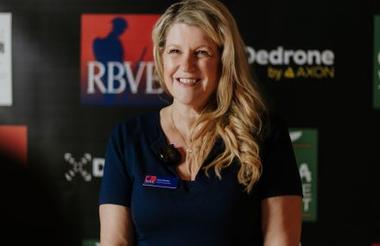
A new episode of the Civil Society Podcast has been published with Lisa Farmer, chief executive of the Royal British Veterans Enterprise (RBVE).
In this episode, Farmer discusses the RBVE’s recent rebrand and name change from Royal British Legion Industries, as well as its pioneering Veterans’ Village model and how its social enterprise model could be adopted by other charities.
You can listen to the interview now below or on streaming platforms including Spotify, Apple Podcasts, Amazon Music and Pocket Casts.
AI-generated transcript
Emily Moss (EM): Hello and welcome to another episode of the Civil Society Podcast. I'm Civil Society’s junior reporter, Emily Moss, and on today's show, I’ll be speaking with Lisa Farmer, chief executive at the Royal British Veterans’ Enterprise. We discuss the RBVE’s recent rebrand and name change from Royal British Legion Industries, as well as its pioneering Veterans’ Village model and how its social enterprise model could be adopted by other charities.
I hope you find this conversation with Lisa interesting and useful, and I'll speak to you again at the end.
EM: First off, I wanted to ask: what did your rebrand from RBLI to RBVE reveal about how your stakeholders are understanding or misunderstanding your organisation? If you could share a few lessons you've learned, that'd be great.
Lisa Farmer (LF): Of course, so the rebrand gave us a real opportunity to be able to say more clearly what we do. We had a lot of confusion in our name with other charities within the charitable sector, so with RBI, with RNLI, with the blind charities… a number of challenges, and we really wanted to be able to distinguish quite clearly what we do, because since 1919 we've been creating jobs, providing homes, and building communities for veterans and people with disabilities. Our purposes never changed, but our name and brand didn't reflect that [which is] why it was so important to get a name and a brand that could distinguish us from any confusion, but could also make clearer our mission and who we're for and what we're here to do.
EM: Yeah, yeah, and then, well, I suppose there is just a lot of the royal charities as well, which you know adds to the confusion I can imagine. And I suppose on that note, how do you balance preserving such a long-established charity legacy while also making sure that it remains really relevant and, you know, understood today?
LF: So that's such an important question, because when we were thinking about the rebrand, we didn't want to lose that legacy, that history, that pride, that all those values that are attached to our charity and that royal name, that's a really, really important thing that we were able to keep the royal status, and it's not automatically guaranteed, so we were over the moon that when we asked for permission, that that was granted, and that we were able to change the name, but also keep that royal, which is so part of our legacy and our history. But but what we needed to do is to move into… to reflect what we're doing today, which is about creating jobs and building homes. We're investing over 45 million pounds in facilities for veterans. It's a critical time for us at the moment, a real impact time for us. And I don't think people realise the amount of work we're doing currently at the moment for veterans, so it all brings together at the right time with this investment, the change of name and the brand, and the ability now to be able to really talk about why we've done it, so we can let more veterans and people with disabilities know about our work and access our work and benefit from our work.
EM: Yeah, yeah, yeah, of course. And then obviously rebrands can nevertheless be a little bit of a touchy topic for, like, some charities. Did you find there was at all any resistance, internally or externally, to the rebrand?
LF: When I first took over as chief executive in 2022 I raised the question of rebrand. Then I got a big, massive no— “no way, not happening” from stakeholders, seeing stakeholders attached to us, but because of this work, because of this determination on the mission to really talk about work and opportunity. I always have a saying that veterans and people with disability don't want charity, they want opportunity. I just felt that the name didn't give us that, it didn't reflect it, and we spent too much time confusing, and I was able to really work on our senior stakeholders over a number of years, that's three, four years before we've done it, about the benefits of changing the name, benefits of changing the brand, the benefits of losing the poppy and leading with the Tommy, and so by the time we got there, the resistance… I don't recall any resistances… there was a few people that was like, ‘oh, why are you doing it’, who maybe hadn’t been brought along in the narrative, but as soon as we began to talk to them about why we're changing it, and that everybody's been with us, and it's gone down so well. I mean, it's been really regarded as a great thing.
EM: That's great to hear, it's really interesting you say there was so much resistance, because I wouldn't have necessarily anticipated that. What do you think changed? Like, was there a turning point at all? Or no?
LF: Well, I think what changed was the clear omission on what we're doing, by creating the jobs, by providing these homes. I think that clear. A mission and knowing what we want to achieve, but knowing that veterans need to know what we're there for, that overrides any feelings about what the name is, and actually this, this name, this image, this logo, this brand, it really reflects that who we're here for, and then people are saying, well, how can they help me, and ultimately that's what's important, isn't it?
EM: Yeah, yeah, very much so. And then moving on to one of your big projects, I suppose we'd call it, which is like the Veterans Village model, and helping veterans with the housing and employment. Why was it important to bring all these elements together for you rather than like treating them separately with the, with the Veterans Village model.
LF: Sorry, can you just repeat that?
EM: Well, I suppose better phrasing of the question would be like saying that one of the things that makes the charity very distinctive is it sort of combines housing, employment, community building through this Veterans Village model. So, why was it important to you to bring those elements together rather than treating them separately, like some charities do?
LF: Yeah, I mean… so one of the big things that makes RBVE distinctive and its model really impactful is that combination of homes, employment, and community, and it's the model we're trying to explain that replicated across the UK. People come and see that model, and they see how they intertwine. They realise that it's not one thing in isolation that actually makes the impact, but a combination of it, and if we could replicate our model across the UK for different communities and different disadvantaged groups, we would see a real impact. And I, it's one of the things I'm passionate about speaking to government about, that you can provide a home over somebody's roof over somebody's head, and they can begin to take that breath and go, ‘okay, so why am I in this place?’ How can I begin to get independence, and very often being a part of the community starts that self-belief and that self-understanding, and that inspiration, but [what’s] so important for us, and what we're absolutely passionate about as a charity, is getting people into paid employment, because paid employment means people can become independent, they have choices, they have purpose, and this is what is the real driver for them. Without the roof over the head, they can't do any of this, so not thinking in isolation works as well as what our model works when you put them together, and the impact of that.
EM: Yeah, yeah. And have there been assumptions that you've had to challenge along the way about what your beneficiaries need the most, because I feel like there are so many stereotypes about veterans, they're so like homogenised into one group. So, what sort of assumptions have you had to challenge?
LF: Yes, I mean, there are assumptions that are there, and we have to work really hard on that. Everybody's story is different; every reason is different. How people come to us is different, and their goals are different. So, we always treat whatever we do, we treat the individual and their needs, and we work on them, and we develop goals and plans for them. If they're of work age, our ultimate goal is to try to get them back into work and back into paid employment, because we know that when that happens, that's when life changes. We did a pilot on our homeless veterans, and over an 18 month period, and in that pilot, 49% were able to move on, so we were disappointed, 51% weren't. Why, why couldn't they move on? Well, lack of housing, that's a crisis, and we are passionate about really talking about that, but of the 49% who moved on, the really interesting fact was that 72% of them were able to move on because of paid work, so what we know as a charity, is that if you can get somebody to paid employment, keep them in paid employment, you can then begin to get them back onto the road of independence, and to reduce veterans homelessness, or any homelessness really, getting people back into employment is key, and this is a national problem, isn't it? When you've got unemployment and people can't get into work, don't believe they're able to get into work, then life tends to have less meaning and less purpose and more reliance, and what we're against, what we're about, is creating opportunity and independence.
EM: Yeah, yeah, yeah. Of course, and that leads quite nicely onto the talking about the Britain's Bravest Manufacturing Company a little bit, because I'm just so interested by this social enterprise model that you've adopted with it. So, a lot of people in the sector who work with marginalised, minoritised communities are very interested in unrestricted income and in setting up similar types of operations to Britain's Bravest Manufacturing Company, but what do you think are the biggest opportunities, but also challenges of building a trading enterprise like that? Because it's obviously pretty significant. Yeah, it's a very big question, to be fair. It's, but it's a bit general, but feel free to answer it how you, how you wish.
LF: I mean, I am absolutely passionate about social enterprise. It’s been in place for 100 years, that's no mean feat. We've now got three. We've got our social enterprise in Kent, our social enterprise in Scotland and in Leatherhead, employing over 130 people. 70% of those have a disability and or a veteran. That's a high percentage- there’s no other charity achieving that in the UK, and what, what we're doing, and why it's so important. Social value is so important. The contribution back into society of getting people into work is massive. So our social value contributes, it's 2.4 million, we thought it was 1.2 but actually the actual figure that's come out is 2.4 million back into society each year. Every veteran we employ is worth about thirty three and a half thousand pound because of less of dependency, but if you are… for anybody who's listening, we do the road and rail signs across the network, and commercial signing for house builders. Every time you buy a sign, why would you buy it from a commercial operator? Why would you not buy it from somebody that's employing veterans and people with disabilities and contributing back into society? And so we're very proud of that. We're very proud that these are real jobs, commercial jobs. We're paid… they're paid well, and that actually, that is so… that is so important that people get that sense of worth, that they are working and in a job and able to do a job and are being successful. It's so important, and then alongside all the social value benefits, and then alongside all the British manufacturing that we're fundraising to build a new factory, and that will be Green Outstanding. You know, I feel as a charity we're really showing how to build a successful enterprise, social enterprise that others can replicate.
EM: Yeah, for sure, for sure. And I suppose, then, what sort of advice would you give to a similar type of charity that was looking to replicate it?
LF: Well, you've got to inspire people, you've got to show them what's possible, and they've got to really be clear on what their social enterprise is about, it's creating jobs and it's creating opportunity. Have to have something that can do that, so it's got ,it's got to be something that also you've got to be able to turn over, haven't you? [You] don't just want the same jobs for the same people, you need to keep getting new work for new jobs to bring people in, train and skill, but it's really powerful for charity to do this, and we've seen people's lives changed. It's… it's so rewarding, so fulfilling, actually, to see what people thrive, so I'd encourage anybody to do it, and I'd encourage people to, you know, if they want to come and visit, then they're more than welcome.
EM: Yeah, and what interests me as well is because it is also like trading, obviously. How do you make sure that commercial priorities don't start driving that mission rather than supporting it, because obviously it's also a very hostile environment for businesses, not just charities at the moment. So…
LF: Yeah, you have to remember why you're doing this, you're not here to make a profit, you know. If we made half a million profit, we'd invest that in more jobs. So there is that balance, but equally you have to make sure you don't make losses. We're here for jobs first. We're here for training skills. You have to be in a business that enables you to generate enough work to employ vital lots of people. That's not easy. They're major contracts with major customers, you know, they're big contracts that can keep people in work day in, day out, every day of the year. That's not easy, but, and you have to, as you say, it's a really important point that you can't let commercial pressure take away from why you're here, doing it for them, for the people, but equally, you cannot make losses. Also, so we need support from government. There are access to work grants for people with disabilities, and that's really important. So, if there's any adjustments we make, what I would say to people is, don't be frightened of employing people with disability. They, they are, they do an amazing job. They have such low sickness rates. They don't ever want to take off a take a day off work. They want to be in work. They're so proud of that job. And the grants that we do get from government help us with that. It's small, but it does help make those adjustments, so we have somebody's blind and they get a taxi in and out of work, they wouldn't be able to do that without that grant, and that enables us to not, if we don't have to pay for that grant, so that means that cost is not bearing down on us, and that we have to get even more commercial success, because it's not easy to balance that, so it all comes together into, you know, the full picture of making sure mission, and then commercial.
EM: Yeah, yeah, yeah, definitely. And given the current climate for charities that I just mentioned, do you think more charities are going to have to become more entrepreneurial and adopt more of a social enterprise model over the next decade, and you know, develop trading arms?
LF: I think so. I mean, we… it certainly is a strength for our charity. Lots of charities rely on fundraising, you know, fundraising can go up and down, and different causes can become more important, less important. I think being independent, being able to be independent- and to develop some commercial income that enables you to be able to forecast very predictably- is a great base. I think charities who have that social enterprise, commercial trading, and the fundraising, and those that are delivering services, are really strong, because you never want to have all of your income coming from one basket, it needs to come from a selection of them. So, we like, you know, my ideal mix is some government contracts, some commercial trading, and fundraising. That mix really provides charities with more protection.
EM: Yeah, yeah, 100% definitely, definitely. It's really, a really interesting debate, I suppose, at the moment. So, lastly, looking ahead to the future, first of all, are you thinking of expanding your social enterprise operations, your trading arm, and if we were having this conversation in a few years, what do you think success would look like for our RBVE, not just in terms of its trading arm, but also more generally?
LF: Yeah, I want this, but I want our model all over the UK, I don't want to stop till we've got this all over the UK. I think that we could, you know, if RBVE can have more social enterprises across the UK, and then can build communities around that, and housing. There's, there's so many people we could have. I say we could solve the veteran homelessness in three years. We could have our models across the UK, providing jobs, creating homes, and we would solve that problem. So, I'm pushing and pushing on the private sector, the charitable sector to come together really in partnerships to create this. Yeah, and you know, I'm pushing on government to say this model works. They've recognised that they've seen that they've, we've been recognised as a Valour Centre because they want us to do our work with official accreditation around that, and to push out more across what we're doing. I'd love to be helping veterans all across the UK, whether it be helping them back into work, whether it be helping them to get into a home or whether it be helping them to thrive in the community, that, that is, that is what I want to happen, and hopefully that will happen, because I think RBVE, its brand, the work we're doing, it's been recognised, we have won some significant awards over the last year for the work we do, that's really important and gives credibility to our work. And yes, if I can get more people to come and see the model, understand the model, and be inspired by the model, then we'll make that happen.
EM: Yeah. Brilliant. Thank you so much.
EM: Thank you for listening to my chat with Lisa. Please like and subscribe to the Civil Society podcast wherever you get your podcasts. Look out for another episode in the coming weeks, and in the meantime, I hope you stay safe and well.