

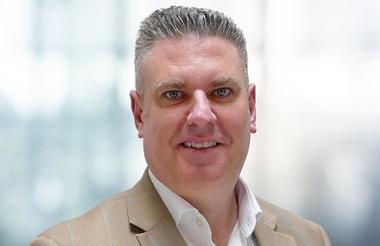
The latest Civil Society Podcast episode has been published with David Holdsworth, chief executive of the Charity Commission. In this interview, Holdsworth discusses increasing casework for the regulator, mooted new powers for it to clamp down on extremism, the debate over paying trustees and the need to boost philanthropy in the UK, among other areas.
You can listen to the interview now below or on streaming platforms including Spotify, Apple Podcasts, Amazon Music and Pocket Casts.
AI-generated transcript
George Hayes (GH): Hello, and welcome to another episode of the Civil Society Podcast. I'm George Hayes, and in this episode, I spoke to David Holdsworth about his role as chief executive of the Charity Commission. We discussed the increased caseload for the regulator, the nuanced debate over paying trustees and the need to boost philanthropy in the UK, among other areas. I hope you enjoy listening to my chat with David. It was a fascinating insight into how things work at the Commission. I will speak to you again soon at the end.
Okay, great. Thanks for agreeing to come on the Civil Society Podcast, and thanks for giving us your time. I suppose we'll just jump straight into it. So, some of the questions that we came up with are essentially to assess what your first few months have been like. So, what's that been like working with Julie Unwin, and how does that compare to working with Orlando Fraser?
David Holdsworth (DH): It's a really good question. I think Dame Julia is great to work with. She brings a lot of sector experience, but also public service experience, because she's been in other regulators like the Food Standards Agency. So she brings a really good mix of skills and experience, but likewise, Orlando was great to work with. He brought a passion for the sector, a passion for public service, he was legally qualified, so brought that expertise, and was passionate about us being an independent, fair, and balanced regulator. And then, likewise, Mark Simms, you know, runs a charity, has been a long time in the sector, but is also a clinician himself. So, I think I've been really fortunate to work with chairs who are both supportive and challenging and bring a real mix of skills and expertise to the role, which is what you want as a chief exec. Yeah, fantastic. And I think what we've observed, and something you've said in the past, is that the commission's casework is increasing. Are there any particular trends that you've seen over the past year, and is there anything in particular that concerns you?
So, it's been a really interesting time, and I think the charity sector, like the rest of society, is facing some of those big challenges, from global economics to global geopolitics. The sector isn't immune from that, it's living through it like the rest of society, and we are seeing some of that in our case work, so we have seen for the first time, certainly in my memory, charities themselves come under attack, both physically and in social media channels, simply for delivering their charitable purpose, and that's driven a rise in reporting serious incidents to us. It's driven a rise in requests for advice, which is exactly why we're here as a regulator. Our job, yes, is to uphold and enforce charity law, but it's also to ensure that charities can do legally what they are there to do, and as long as they're acting within the law, that they're free to do so, and as long as I'm CEO of this organisation, we will defend a charity's right to deliver to its charitable purpose.
GH: No, that's interesting and obviously, we've seen the commission's budget increase, and there are specific areas that you'd be looking to target. How is it going to be spent this year, has it? Have you hired more staff, and if so, what are you working on?
DH: So, there are a number of ways we're going to be using the investment. You'll appreciate it can't all be about headcount. You can't just keep growing because demand is ever-expanding. You need to find new and innovative ways to respond. Technology is going to be one of those ways, as well as investing in our people. So, we were just talking about some of the increases in our workload. One of the areas is registration, so we've seen record numbers of applications to register to be a charity, now running at over 1000 a month. So, last year we approved just over four and a half 1000 applications to register a charity, so we're seeing records in a lot of these spaces. We need to think long-term and sustainably. How do we respond? How do we provide the public in the sector with the service they need? But how do we do so in a way that's efficient, economical, and delivers best money and value for the taxpayer, and that's a real mix of using technology, digital technology, automation, and also the expertise of our people internally. Another area we've seen an increase in, and we're going to be looking to a mix of technology and people to respond to, is raising a concern about a charity, so we have seen over a 20% increase in that space. Now, what I would say is - don't worry, that that isn't necessarily charities are getting it wrong, more charities delivering terrible services, that that isn't it. What we are seeing is, and what our research shows service is five years ago, one in nine people would be accessing the services of a charity. It's now three in nine people.
So we've seen a threefold increase in those needing to access charity services, that increasing demand on charities at a time when we know the public's ability to give because of the cost of living crisis. The reduction in corporate giving and sponsorship is creating, like in all public services, a real, real challenge where demand is outstripping capacity, and that is meaning that people are perhaps not being able to access a service, charities are having to make difficult choices, and therefore people are raising those issues and concerns increasingly with us. Now we need to be able to deal with that in a way that maintains public trust and confidence in charities, but also enables us to deal with charities fairly transparently as well. So again, that's a real mix of the use of technology and people to be able to respond, and a third area where we've seen increase is in the requests and requirements for us to give permission for a charity to do something, so whether it's to sell an asset, whether it's to change its governing document, to change how it's governed or merges, even so, because of some of the financial challenges we've seen the sector go through. The sector has responded as it always does, by looking at ways it can do things differently, by looking at how it can modernise, by looking at how it can carry on delivering its charitable purpose, and that's driven an increase in casework for us as charities look to either merge, some may federate, others have had to sell assets like land or buildings, that's driven a real increase in the demand in that space of our casework. So, again, our current digital forms in that space are not great, we know they're not easy to navigate, and also it also gives us a challenge internally when there's perhaps data missing because the forms aren't easy to navigate.
That means it takes us longer to handle cases. There's more backwards and forwards between charities and our caseworkers, so we really need to invest in that technology to make it a better, more user-friendly service for charities, but also help improve internally our ability to turn those cases around quickly, and that means collecting the right data at the first point, making sure it's joined up with our internal data that we already hold on the registers, so we're shortening what case workers have to do, how they have to search our databases, and also looking for cases where can we automate, where is it low risk, and where is it if we marry the data up in the application with data we already hold? How can we use technology to do a lot of that heavy lifting and free our technical experts up to do the really complex, complicated cases?
GH: In terms of, I know you're not able to comment on specific cases, but what do you mean by those more complicated cases? What are those various sort of resource training, and yeah, how better do you think that helping the charity commission better help to streamline its operations going forward?
DH: So charity law is a real mix of statute produced by parliament, case law that comes out of the courts, and let's face it, it's got a really, really long history, you know, the oldest charity on our register has been around since 549 AD, and it is still going, that's a long time, and there's a lot of complexity that can arise over that period between the charity's original purpose, its original governing document, the evolution of law through parliament, and the evolution of law through the courts. So, in a lot of those cases, the complexity comes about from the founding governing document, the changes that might have happened over time, and what is the interaction with modern charity law and other parts of statute. So, one of the areas we see increasing complexity is where charities want to dispose of an asset, be it land or property. Now, often there will need to be widening checks done, so whether that's is there a reverter clause, often assets such as buildings and lands that are gifted maybe a century, century and a half ago, if not longer, they may still have a reverter clause within that gift, so we need to ensure that the conditions within that original deed of gift are adhered to, and we need to ensure that before that asset sale is approved, that all of those legal checks are done, and therefore it is a lawful compliant sale of an asset, that's just one example, and another example might be the updating of corporate governance over time. Charities will have adapted, they will have created subsidiaries, they might have created different structures, and often over time they can become quite complex, and the interaction between them can become complex. So, as they realise this, and as they try and simplify our job as the regulator is to make sure that is done in a legally compliant way, and we enable it as long as it's compliant, but sometimes understanding that and unpicking can actually give us complex challenges, as well as the charity themselves.
GH: Yes. No, I can imagine, and I think another area of governance that we're interested in is the commission's powers, and we still, we saw that the government plans to increase the regulators' powers to ban trustees and clamp down on those charities suspected of having extremist links. Some of the, some in the sector are concerned that this could stifle campaigning. What's your view on this?
DH: So, let me be clear. This is absolutely not about campaigning. If, if, as a sector, public trust and confidence is to be maintained, which is crucial. You know, let's face it, charities and the tax benefits that they benefit from the public's willingness to give to the tune of over 30 billion a year to our charitable sector. All of that relies on maintaining public trust and confidence. So it is in everyone's interest that those abusing charity, that those abusing charity status are rooted out and absolutely have no place in the sector, what we're talking to the government about is absolutely those in the extremist space, and how do we best handle the use of charities and abuse of charities to enable extremists to undermine our society, our way of life, and threaten actually public trust and confidence in charity, which is so important, and I think everyone in the sector would agree, and certainly the people and the leaders I've spoke to, that that is absolutely what we should be doing. I think rightly people are concerned, how could this be used politically? How could this be used to stifle, and like any new piece of legislation being brought in, or any new powers, there will be consultation on that space, and it's really important the sector has its voice and puts forward its considerations, its concerns, and how it thinks we can best keep extremists out of the sector through expanded powers, but also ensure that the safeguards are there to make sure that we don't overreach and overstep, nor can politicians in future abuse such a power. Yes. No, that's an important answer. And on the other side of things, we were looking at, we look a lot at trusteeship.
We found, I think, recent research found that a lot of people quite hesitant to become trustees, and there's a lot of responsibility with the role. I mean, the debate over paying trustees seems to be enduring. Are you receptive to any of the arguments being made that could help to improve diversity in trustees, trustee boards? I think it's a really good question, and, and look, this is a subject and a topic that evokes passion on on both sides of the debate, those that think it's a good idea and those that think it could undermine the voluntary principle of trusteeship, which has been the bedrock of charity and what it means to be charitable in England and Wales for such a long time. So I think the first thing is we need to be clear, what is the problem we are trying to solve, and then what are the best levers we can pull as a regulator, as a sector, to do so, and I think at the moment what we're facing is a very simplistic argument in this space, rather than a step back looking at what is the actual problem, and really working that through in an evidence-based approach. So, the first thing for me to look at is if what we're trying to do is make sure the future of trusteeship is secure, that people are willing to come forward and be trustees. Then let's, let's look at what are the motivators, what are the drivers, and what are the blockers of that, and I think what our research shows us is actually the first blocker is the fact only 6% of trusteeships are advertised, so the first thing is if people don't know there's a role there, if people aren't finding it accessible to find out and become a trustee, then that's one of the areas that actually we can focus on, and there are also ways that we've adapted as a regulator in our guidance, so we've made it clearer for the sector that there are mechanisms for ensuring trustees are not out of pocket already, so a way of paying expenses, a way of ensuring that there is.
The cost to the person of being a trustee that can still be utilised. Now let's utilise all those mechanisms whilst at the same time doing the research and building the evidence base for what other changes do we need to make to keep trusteeship what it is today, which is one of society's most important and valuable roles, and make sure the difference that it makes continues, but we mustn't risk damaging what is one of this nation's most important roles, and there's another area that you've spoken about fairly recently, and it's the need to boost philanthropy in the UK.
GH: There's another area that you've spoken about fairly recently, and it's the need to boost philanthropy in the UK. I mean, how important is this, and what specifically is the commission's role in helping to do this?
DH: So, it's a really interesting question, and you know, the Charities Act 2011 actually sets out a general duty for us to act in a way that's compatible with the encouragement of all forms of charitable giving, which obviously includes philanthropy. I think one of the important things for us as the commission is to make sure that the regulatory environment is welcoming of philanthropy and ensures that those who want to give feel that this is a safe place in which to do so. So one of the things that we are doing and have been doing is making sure that the great regulatory environment and one of the best in the world that we have in England and Wales, let's face it, it's grown up over 150 years and in fact for centuries, that that is well known, and I know from my international engagement we are seen as the gold standard, I know from my colleagues internationally who come to us with questions, who come to us to try and learn about what we do, that the regulatory environment we create here is really important for attracting philanthropy, not just domestically but also globally, and I think you know we have the second most generous public in the world, after only the United States.
Why shouldn't we become the philanthropic capital of the world? We have a great regulatory system, we have one of the world's best financial systems, and we have one of the world's best legal sectors, and our sectors are global, finance, legal, and our regulatory reach is global, so why shouldn't we have that ambition to be the world's philanthropic capital that benefits us domestically, but also globally, and some of the charitable purposes that our charities are driving day in, day out.
GH: Now, that's certainly an interesting response, and this all leads me on to my next question, which is more, I suppose, a bit broader, which is about what the charity sector can do more broadly to amplify its impact. Do you have any particular advice to charities, or just bodies in general, as to what they can do to be sort of seen and heard a bit more, and yeah, it's broadened their impacts?
DH: Yeah, it's a really, really good question, and it's one I'm absolutely passionate about. In fact, I've set my team the challenge internally as to how we can raise the visibility of the impact of the sector, how we can raise the positive contribution of the sector to society, and I think you know the simple answer is we're very British about this. We don't like boasting, we don't like bragging, and there's a downside to that in the charity sector. You know, there are not many sectors that talk themselves down or that hide, you know, their delivery, their impact under a bushel, and the sector does, because we're very British about it. And I think what we've got to get better at doing collectively is recognise just how important this sector is to the economy of the country. Let's face it, there's 105 billion a year now in income in the sector. There's over 300 billion in assets. The sector employs 1.4 million people, that is more than the agriculture sector. The contribution economically and in employment terms is huge alone, but when you look at the other impacts across society, the impacts on health, on research into health, on real problems that actually the state has long ago realised it can't tackle on its own, and it doesn't have the solution. That's where the sector is. That's the difference it's making every day, and actually all of us should be working together to look at ways to make that more visible to the public to show that positive difference that's being made every day and just make the case for why the sector is so important and it is, it is the backbone of this country.
GH: Yes, and we've obviously been paying close attention to events and sort of the formation of the office for the impact economy, and obviously that's a sector-wide bid to bring the voluntary organisations and other bodies closer together. It must be quite difficult to achieve that in this sort of current climate. What is the regulator's role in all of that? I know that's quite a convoluted question, but yeah, what role, if any, should sector play in kind of, sorry, the regulator play in bringing these organisations closer together?
DH: So I think our role as regulator is to facilitate and convene and use our convening power, and we've done so throughout my short time here. One of the areas we've done it is on the conflict in the Middle East, because we understood, and we could see the generosity of the British public, who wanted to get aid into Gaza when it could flow, who wanted to get aid into Sudan once the conflict allowed it, but we also understood, because of the global sanctions regime, because of some of the lack of finance, financial infrastructure in those locations that charities would have real difficulty navigating that, so what we did was we brought those charities together, so our international NGOs, those that work in these places, those who understand the problems, we brought them all together alongside my colleagues in the Home Office, the Treasury, the Foreign Commonwealth and Development Office, and what we were able to do was expose the challenges that the charities were facing, but also then collectively as different parts of the state look at, okay, how can we help resolve this? How can we help aid flow safely into these spaces, and in a legal and compliant way. And that's where we can add value as a regulator, because we use our convening power, our facilitating power. We often can't solve these issues alone, but one of the things we can do is bring people together from the sector and across government, so that firstly the problems can be understood and articulated, because often government does not know what these problems are, and secondly that then there can be a collective objective to work on solutions and perhaps reduce and mitigate some of the big risks.
GH: Yes, and we also were paying attention to your past as well, and previous achievements that you've made, and obviously there are global crises right now, but there have been significant problems that you've encountered in the past, and notably the Grenfell fire and the response to that. What would you say has been your proudest achievement in the charity sector, or more specifically, within the Charity Commission itself?
DH: Wow, that's a big question. I think for me the organisation is one of the unsung heroes of the state, it's a group of small, it's a small number of civil servants who every day punch above their weight, and they're all here because they care deeply about the importance of the sector to the UK and to society, and I think what i'm proudest of is what they achieve every single day and i'm fortunate that i get to see the cases they deal with like the air ambulance charity where we needed to provide permission a regulatory authority within 24 hours and if we hadn't done so, that air ambulance would have been grounded. They then came back to us 48 hours later and said if we hadn't have granted that permission within the 24 hours, it was likely seven people would have died because the air ambulance wouldn't have been operating, and for me that is the difference that the people in the commission make day in day out, not just in enforcement cases, but also in enabling charities to do what they do and to reach their potential. I mean, you might have already answered this in your answer just there, but what would you say has been the most difficult hurdle that you've overcome as a charity sector leader, or within the commission, more specifically, well, I think the first thing is probably the spending round, because I came into an organisation that was facing record demands on its services at the same time as its budget was shrinking, and whilst we also knew that it was an extremely challenging economic period for the country as well, so I think with the incredible team here, with, you know, I have to say great support from the sector itself, who recognise they need a well-resourced regulator if they're to succeed, we were able to make the case into government for investing.
Investment, and that is really, really important, because if we don't have the resources to deliver for the sector, that has real impacts on the ground in the work that charities do, whether that's the delayed changes in governance, whether it's the delayed permission to sell an asset, whether it's the delayed delayed merger agreement, it really has impacts on those that charities are there to deliver for, so I think making the case to the government and being able to put forward a really strong case, and then to get the approval from Treasury for that investment was really important, and I think it puts us on a sustainable footing for the next three years, which is vital for the sector and for the wider country.
GH: Yes, and in terms of the next three years or the general future, we spoke to Julie Unwin previously, and she was very clear about wanting a stable commission, one that intervenes where necessary, but only after considered thought. What's your, I suppose, your approach must be in line with that but do you particularly differ in any regard, or do you tend to follow the same approaches as Julia with regards to sort of intervention?
DH: Well, look, like any CEO, my chair is the boss, so that's the first thing, but I think what we have in common is a desire to see the sector thrive, because we recognise its importance and we recognise its potential. You know, this is a sector that has changed society for the better for generations. Now you know, people forget it was only 75 years ago that we got a national health service. Before that, it was the charity sector providing a lot of our hospitals, a lot of our health care, and it was them who were campaigning for years for a health care system, so we are passionate across this organisation about the sector, because we know what it can do and what it has done to improve the lives of people, not just in this country, but across the world, and so I think what we want as a regulator is to enable the sector to be at its best to enable it to achieve what we know it can achieve, but also ensure that where abuse does take place, that where there's abuse of charitable status, that it's rooted out quickly, and that the public can have full trust and confidence in the sector and in us as a regulator, that's really important, and it shouldn't be, it shouldn't be undermined, just just the importance of that public trust and confidence.
GH: Yes, and obviously the commission has a very good reputation among charity leaders and just the sector more widely, even your own application for the job, there were a record number of people going for the role of chief executive. Just out of interest, what did you do to sort of stand out among so many candidates? Because there must have been a lot of good people put forward.
DH: That's a really good question, I think. One for the interview panel, and for those that sifted me, I think what I probably brought was a good mix of senior public sector leadership in complex environments like the Home Office or the UK's Biosecurity Agency, the Animal Plant Health Agency, but also some private sector experience as well, alongside knowing the sector, because I'd been here for four and a half years before, so I think that real mix of public, private, and charitable sector experience probably helped in the process.
GH: Yes. No, that's a fantastic answer. And obviously this happened a while ago, but you replaced Helen Stephenson, and before she left, she warned that charities should not be led by 'whim, fashion or funding'. I think that was her final speech as chief executive. I know you're nowhere near leaving, but do you have words yourself to the sector more widely, any words of that vein or advice?
DH: I think from my perspective, whilst the sector is facing its most sustained period of challenge, and I would say its most significant period of challenge for a long time, what I think challenge offers is the opportunity to also innovate, to take risk, and to do things perhaps that you might not have tried or done before, and so I do think it's extremely challenging. The landscape is extremely challenging, and I don't think that's going to change any time soon, but when you look throughout history, when charities have achieved some of their most sizable and seismic impacts and changes, it has been through great periods of adversity, and I think in the coming years charities can once again show why they are so important, and what they mean to society. They can often be the bridge. They can often remind people of what is actually what people actually have in common, more than what divides them, and they can provide a way for people to debate, discuss, and engage on really challenging issues in a way that respects all viewpoints and all perspectives, and I think that's going to become increasingly important in the years ahead, but I know the sector can stand up to such a challenge because it has done so for centuries, so my encouragement to all trustees and to charity leaders out there is be proud of what you do. Don't be shy about shouting about it, and also don't be downheartened about some of the challenges that the sector's facing today. It's faced similar challenges through the centuries, and the leadership today is just as capable, if not more capable, than previous generations. And I have every confidence that this sector will play a vital part in advancing the nation and improving society for everyone.
GH: I think that's the perfect place to leave it. Thank you very much for taking the time to speak with us, and for your very informative and instructive answers.