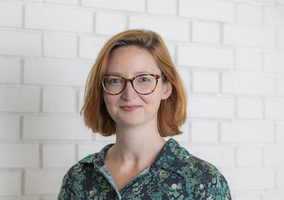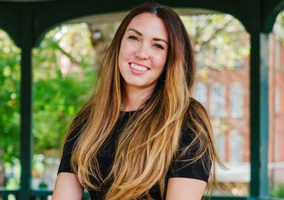


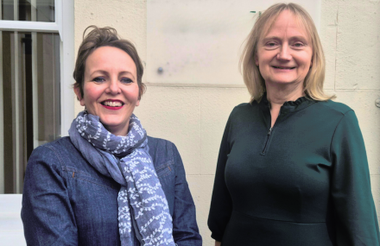
A new episode of the Civil Society Podcast has been published today, featuring an interview with Lily Caswell, head of retail and volunteering, and Jo Turner, chief executive of Florence Nightingale Hospice Charity.
In this episode, Caswell and Turner discuss what it is like to work for a local organisation, the changing face of the charity sector and supporting the community.
You can listen to the interview now below or on Spotify, Apple Podcasts, Amazon Music and Pocket Casts.
AI-generated transcript
Léa Legraien (LL):
Hello and welcome to another episode of the Civil Society Podcast. I’m Léa Legraien, senior reporter for Charity Finance, the essential resource for everyone interested in the financial side of running a charity. On today’s show, I’m speaking with Lily Caswell, head of retail and volunteering, and Jo Turner, CEO of Florence Nightingale Hospice Charity. Florence Nightingale Hospice Charity supports patients with life-limiting illnesses and their families across Buckinghamshire and its borders. Since opening in 1989, thousands of patients and families have benefitted from the charity’s specialist hospice care. The hospice remains the only bedded unit in Buckinghamshire for respite and end-of-life care. Services have evolved over the years, with much of the charity’s care now also offered in the community. I hope you find this conversation interesting and I’ll speak with you again at the end.
LL:
So, hi Jo, hi Lily. How are you today?
Jo Turner (JT):
Fine, thank you. Thank you very much for interviewing us.
Lily Caswell (LC):
Hello.
LL:
Well, thanks for agreeing to talk to me. So, Lily, I’ll start with you, if that’s okay. So, your love of charity retail started in 2002 when you joined Oxfam as a bookshop manager in Oxford. So, what made you want to join the charity sector then?
LC:
Well, it’s a long time ago now, but after I left university, I worked in mainstream retail, but had a really brief taste of charity retail, because my mum was for a short time a shop manager for cancer research, and I absolutely loved everything about retail, but if I’m honest, I wanted to do somewhere where the money that we raised in the shop mattered. I lived in Oxford, and Oxfam advertised for a shop manager of their flagship bookshop, and so I applied. And as part of the recruitment process, you had to go in and meet the volunteers, and they were amazing, like those super interesting people running a shop full of amazing books. You can imagine in Oxford how great it was to raise money for a fantastic cause. So, I was really hooked from that and really, charity shops do provide everything that’s brilliant about retail, but on top of that, it comes with working with incredible volunteers and then a treasure hunt and the creative challenge you get with donated stock. But straight away, I realised that all the work that we did, and my team did, raised money for Oxfam, and you can’t be more motivated than that. I always say, we’re really lucky, we get to do a really fun job, but the money we raise really matters, and it’s still those things that motivate me today.
LL:
Ok and after that, you worked at Barnardo’s and then Save the Children UK, and in 2016, you joined Florence Nightingale Hospice Charity. So, how did you find the move from larger charities to a much smaller one?
LC:
Oh, well, it was absolutely fascinating. So, I was really lucky to work for those three incredible charities. I was really proud of working for them, and I’d had very little experience of hospices other than knowing that their charity shops got a lot of donations and usually had a lot of volunteers. I didn’t really, really understand why, but it was obvious from the minute I walked in the door, because the most striking difference working for a hospice charity is the connection that the local community has with the cause and with the shops. So, from my very first day and genuinely every single working day since I met colleagues and volunteers and customers and donors who’ve experienced the care provided by Florence Nightingale Hospice. The money we raise funds the hospice care in the area that we are and our shops are based and the people who are affected by it. We meet them every day, the impact is right here. So you can’t stand in a hospice shop and not know what you’re doing it for and why, and that’s a real privilege, but also hugely motivating. And practically hospice charities absolutely do get a lot more donations, and we’re super lucky at Florence, our shops are really well donated to, but we’ve also got those higher numbers of volunteers who support the cause because of their experience of the hospice. And that really helps. Large charities have a huge infrastructure behind them, and coming to work in a small charity, you certainly have to wear a lot more hats. You might be doing those that you wouldn’t normally do, but it's generally easier to get things done because you know all your colleagues, they're sat near you. Yeah, so really, really fascinating in all different ways.
LL:
Okay, I’ll come back to the shops a bit later, but first, I’m turning to you, Jo. So, you started your career as private secretary to government ministers, before moving to the Department for Digital, Culture, Media and Sport, where you held several senior roles. So, when and why did you leave the public sector for the charity world?
JT:
Well, I think, in fact, charities are my third career, really. I started off as a very, very junior curator in the Imperial War Museum. I then moved to DCMS, which is quite a small government department, and worked on policy development in most of the areas covered in broadcasting, arts, culture, museums, sport. It was a great department. It’s quite small, more relatively nimble in government terms, if you can say that. The staff there are very motivated, very passionate about what they’re trying to achieve. So in some ways, it’s a bit charity-like really. But I think I felt that I probably covered all the areas that the department covered, and it was probably time for a change, really. While I moved to the charity sector, I probably didn’t really understand it, to be honest. I thought it would be interesting. I started off as a trusts and foundations fundraiser in a sort of gamekeeper-to-poacher move, really. I thought I could use my skills, instead of evidence and making a case for funding. And then I did the Institute for Fundraising fundraising diploma, so that I could get to grips with fundraising as a new career. So, yeah, that’s my kind of career history, really. I would absolutely echo what Lily has said, that the benefits of the charity sector are seeing that or working for a local charity anyway, there’s a positive impact on local people, and also being able to respond relatively quickly to needs that we’ve identified. It’s very, very satisfying to work as part of a very talented senior leadership team and also with our local community, our supporters, our volunteers, our hospice expert colleagues, and to make things happen quickly.
LL:
Okay, so it was in 2017 that you joined the charity, Florence Nightingale Hospice Charity, as head of fundraising, right? And just over a year later, you became the charity CEO. So, how did your career prepare you to become, if it’s your first-time charity CEO role, how did it prepare you for that?
JT:
Yeah, I hope the brief period of getting scripts for fundraising, I think the policy work I did in government, I think that allows you to see the bigger picture, the national context for change and what’s needed, and then to apply that very locally. I led big teams before in DCMS, both working on policy initiatives and on sort of change and transformation programmes. Particularly at the end, we had a big programme where I was programme manager that responded to the financial crisis of 2008, really. So I think that’s helped me in terms of strategy and management and leading an organisation. So yeah, it was a good preparation.
LL:
Okay, so you’ve been in the charity sector for a decade now.
JT:
That’s right, yeah. Time has flown by!
LL:
So, how has it changed since you joined it?
JT:
Yeah, I think, from my point of view, it feels like quite a challenging environment. I’m sure everyone would say that, sort of societally, in terms of hospice care, we are contending with the demographic pace. I suppose we’ve got a growing and ageing population needing more care, more complex patients who probably got a number of conditions that our nurses are having to deal with. There’s the Covid effect, which had major impacts on society and on the NHS financially. It’s been a whole period of sort of austerity, Covid, the cost-of-living crisis. I mean, they are not ideal word cloud words, are they? If you wanted them as a backdrop to income generation.
LL:
So you’ve been in the charity retail sector for two decades. So yeah, how has it changed for you?
LC:
Well, the sector has changed a lot, although I would say it’s a very proactive and adaptable sector, so it feels well placed to adapt to changes in shopping habits and things. It’s one of the things that I quote often. I remember being told when I was first at Oxfam that only 32% of people shopped in charity shops. So, this is the early 2000s, and now it is nearly double that. So, it’s somewhere between 60 and 70% which I would think that makes it mainstream. And obviously, I remember being with shop managers and thinking: ‘How could we make it cool for people to shop in charity shops? I wish a celebrity would say that they shop in charity shops.’ It didn’t feel like that was a real possibility, but it is a fact now that people are proud of shopping sustainably and shopping in charity shops. So, you know it’s reported that over 80% of people are troubled by the volume of clothing that ends up in landfill and the horrors of fast fashion are really well publicised. So, it’s not really a surprise that shoppers have been increasingly looking to charity shops as well as, obviously, platforms like Vinted. But you know, we’re looking increasingly as a society to shop more sustainably. But I also think there’s that feeling of you never know what you might find. And I definitely noticed that customers seem to have more joy when they find something in the shops. They find something they love to wear, or that’s going to go in their home, or a book they’ve been looking for. They just genuinely seem more excited when they find it and buy it. I think it’s probably fair to say that charity retail has upped its game a bit over the last 20 years. Shops are smarter, they’re more commercial, and there are some really, really talented retailers running the shops. It’s one of the true green sectors. So, if you’re looking for a job that's environmentally minded, a green job, you might increasingly be looking at the charity retailers as a career. So yeah, I think it’s changed a lot, and generally speaking, it’s one of the sectors that feels like it benefited from the changes to the economy and after Covid that people are looking to shop sustainably, shop economically and shop locally. Charity shops really fit that. What do you call it? Fit those three things, it provides the shopping experience people are looking for.
LL:
So I wanted to ask you a bit later about the past year, but I’m going to ask you now, because we’re talking about, obviously, the shops that the charity has. So it’s 15 shops, is that correct?
LC:
Yes, Florence Nightingale has got 15 shops, but we’ve just merged with South Bucks Hospice, which has added another five shops to our portfolio.
LL:
Yeah. So, sorry, go ahead.
LC:
So I was gonna say yes, so we’ve got 20 shops now, but this is, this is since October.
LL:
Okay, so, looking at the past year because of the cost-of-living crisis and all those other challenges that Jo mentioned on the back of Covid-19, would you say it’s been a good or challenging year for the charity, and now that you’ve just merged with another organisation, it’s great news to hear that you’re going to open five more shops. So, has it been mixed? What do you feel?
LC:
I would say working within charity and charity retail sector is always challenging, but I’m pleased to say (touching wood) that it’s been a really good year for us, and, you know, we’re managing to grow like-for-like income, and we’ve been opening shops over the last few years, so that’s really helping us to develop retail income further. As those shops become more established, I think we’ve seen more donations to our shops, and we also seem to have recruited more volunteers as well, which is brilliant. We’re very, very fortunate for all of those things, we’ve obviously needed to increase income because the costs of running charity retail have gone up exponentially over the past couple of years, most noticeably with energy prices and staffing costs, with last year’s changes to employee national insurance and the national living wage, but also because the need for us funding for hospice care is increasing, so it’s something that we’ve needed to do as part of our retail strategy.
LL:
Okay, so we often hear about the so-called death of the high street. Do you think that this also applies to charities?
LC:
No, I think that’s a bit harsh, but the move to out of town shopping is undeniable, and we know some of the national charity retailers are making a concerted effort to rise to that move. And most charity retailers, including ourselves, now have an out-of-town presence as well, but my experience of going into town centres and the high street, it’s clearly changing, but I still see a lot of people out and about. They’re looking to shop – nothing really beats seeing the stuff you want to buy in person without the frustrations of missed deliveries and things that can come with online shopping and the cost of postage and things. And shopping, I think, is still very much a social activity where you meet families and friends and, you know, for a coffee and a mooch around shops, that sort of thing. And I’m hopeful that the changes to there being more residents in town centres will ultimately be good for town centre shops because people will shop locally. People shop where they live, don’t they? But as I said earlier, I think the charity retail sector is really adaptable, and I’ve seen it evolve over the past 20 years, and I’ve got no doubt that we’ll continue to do that. And charity retail, I’m certain, will remain very much part of the retail landscape in the UK.
LL:
So, you mentioned the merger with South Bucks Hospice. Could you tell me a bit more about your decision to merge? Was it maybe in response to the tough economic climate? Or were there several reasons for you to merge?
JT:
Yeah, I think the merger project has probably taken up a year. I think it literally dates back to this time last year. We were approached by South Bucks Hospice as a potential merger partner. Our charity covers the entirety of Buckinghamshire, a long, thin county, where we provide inpatient care, hospice at home care, and particularly clinics and other services. And South Bucks Hospice is a purpose-built building on the edge of High Wycombe, so in the south of the county. It’s an outpatient facility, so it doesn’t have any beds. I think, really, we were looking at efficiency and how we could offer services to more people at a time of need, really. It’s a very beautiful building, purpose-built, as I mentioned, and opened in 2017. So yeah, a great facility, some really talented staff based there. So, we’re very excited about the opportunity. The formal merger didn’t take place until the third of October, so it’s really early days in terms of bringing the teams together.
LL:
Okay, I was about to say, because it was completed in October, yeah, you haven’t seen, like, any massive changes yet, I guess. So it’s going to really take some time.
JT:
It does take time, I think. Yeah, so first priority, we’ve been doing a review of the hospice services on offer there. In fact, we’ve taken the opportunity to look at the hospice services on offer at Florence Nightingale and also at South Bucks Hospice to compare them and work out what the fit is and how we can extend services to more people. So, yeah, we’re hoping to conclude that review this side of Christmas, which is pretty quick work. Some of the services at South Bucks Hospice were delivered by third parties. The retail operation, for example, was managed by a company. Some of the fundraising, some of the clinical guidance, so we’ve been able to make some efficiencies straight away. The South Bucks CEO was an interim, so financial savings were possible on day one, really, which has been helpful, obviously, to secure what we’re trying to achieve. I think, in terms of bringing teams together, we all know that takes a lot of time and a lot of communication, so we’re not remotely complacent about how much work is going to be involved. And it’s going to be a key project going into 2026, really, to bring both charities together properly.
LL:
Okay, so have you faced any like big challenges so far? Has it been like a smooth process so far, and there’s still obviously a lot of work to do in 2026
JT:
Yeah, I think, you know, there was an initial business planning piece of work right at the beginning of the year, followed by lots of legal due diligence and lots of work with both sets of trustees to make the merger happen. But no, it feels, yeah, I think sometimes we’ve got a very motivated senior leadership team, but I think sometimes you have to remind ourselves that we were quite busy before all of this. We did actually have jobs where we ran our own charity. So, I think we’ve achieved a lot in the timescale, but there’s lots to do, and we want to make the most of the opportunity of merging.
LL:
Okay, sounds good. So, in England, palliative and end-of-life care is a statutory requirement. But yet, I feel like we don’t seem to place the same emphasis on dying as we do on birth. Why is that so? Whoever wants to go first.
JT:
So I think I’d agree with that. Actually, our lead nurse frequently says that you wouldn’t run maternity care through bake sales. So, I think it’s a kind of cultural issue that we don’t put the same focus on death and dying, even though we know it’s inevitable; we would rather avoid it as a topic, I think. I think the assisted dying debate is shining a bit of a light on the issue, really. National umbrella body Hospice UK have argued, really, that assisted dying probably wouldn’t be needed in most cases if we had enough investment in specialist, palliative and end-of-life care. I think I would tend to agree with them. But no, I can’t really answer the question why that is the case, but I think as a charity, we feel the public do want to invest in hospice care and do want to make it as good as possible. Those supporters that have personally experienced a member of their family being cared for, or just think that hospice care is a really important public good. They are happy to invest. But there’s got to be a good partnership between the charity sector and the NHS, and that’s really important. We have a really great relationship with our local Bucks Healthcare Trust, but that’s not the case in all parts of the country.
LL:
Did you want to add anything to this, Lily?
LC:
No, no, not really. I think I’m fine.
LL:
So, I don't know if you watched the autumn budget and if you have any thoughts on this, I was just wondering if any of the measures announced by the chancellor will affect your charity and its retail operation.
JT:
I think for the charity as a whole, there weren’t really any direct benefits. I think, no changes to the national insurance contributions, which Lily mentioned earlier. It’s still quite a difficult economic climate for many, isn’t it, both for individuals and for companies. So, we are finding corporate fundraising quite tricky. I suppose we hope that the investment in the NHS will, in the sort of medium term, be beneficial to hospice care. Otherwise, some slight benefits, which I’m sure you’re covering in your magazine, you know, to do with, you know, business donations to charities and things, but yeah, time will tell. I think it feels fairly similar to pre-budget times.
LL:
Did you say that corporate fundraising is not what it used to be? Is it more difficult now to find, like, corporate partners? Is that what you’re saying?
JT:
I think it can be harder for a local charity. I think it doesn’t have, you know, big national companies on your doorstep. And I think as perhaps small to medium companies have contented themselves with national insurance increases to the national minimum wage, which obviously is a good thing, but it perhaps does mean that it’s harder for them to invest in local charities. So, a lot of the corporate fundraising we do might be employees of companies doing activities for us, rather than grants from companies. We’re very grateful for that support that we get, but it is different to the corporate support that a national charity might get.
LL:
Ok, I see. So, what about your priorities for next year? Can you tell me a bit more about these?
JT:
I think, from my interview for the whole charity, we want to build on our merger, as I’ve already mentioned, and we don’t underestimate this, you know – an awful lot of work to do to maximise the opportunity of that merger. We need to develop our hospice services in line with the local need, really. We’ve just launched a Christmas campaign as part of the Big Give movement and raise money for our hospice at home night team. So, you know, there’s a big push on as much care as possible being delivered in the community. And when it comes to having a patient who’s very, very ill and maybe dying, obviously, that need is a 24/7 need, and probably the time at which the family need the most support is at night time. So, our next investment, I think, will be in an extra staff for that night-time cover to be really important. We’re delivering a new service called compassionate neighbours. It’s a service that was invented by the hospice movement, by St Joseph in Hackney, and it involves volunteers tackling sort of loneliness and social isolation that many people face due to illness or age. It’s mainly volunteers that will be operating in the community. We’ve got two new colleagues who’ve just, literally, just joined us to make that project happen. We’re very excited about that. We’re also starting to think about our main hospice building in Aylesbury, which is starting to age. We spend a lot of money on keeping it as smart as we can, but actually, we need to think about the future as well. So, we’ve always got a lot to think about. We’ll continue developing income generation to make that happen, including retail.
LC:
Absolutely, my priority for the next year is obviously to just keep growing retail income. So, yeah, that’s what we’re here to do, to raise more income. So, we’ll be doing that both through our existing shops, through our online sales, and hopefully also by opening some more new shops as well across the county, that would be great. And we’re also always keen to find more ways to make even more of the amazing donations that our shops are given, you know, keeping more clothing and other items out of landfill. Let’s see if we can just keep as much [...] and raise as much money as we can.
LL:
Yeah, and you have to be innovative and creative. And yeah, it sounds like there is a lot on your plate, but 2026 sounds like it’s going to be an exciting, maybe a bit challenging, year, but lots to think about.
LC:
It will definitely be exciting.
JT:
I think perhaps one of the side effects of a merger is maybe a lot of work, and it may mean that you’ve had to park some issues that you were working on. Perhaps, there is a slight energising element to it. You think ‘well, actually, yes, we can achieve that on top of our day jobs, just about. So, what else can we achieve,’ which I think is a really positive thing.
LL:
Thank you for listening to my chat with Jo and Lily. I hope you enjoyed it. Please like and subscribe to the Civil Society podcast and look out for another episode in the coming weeks. Stay safe!