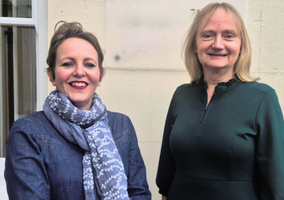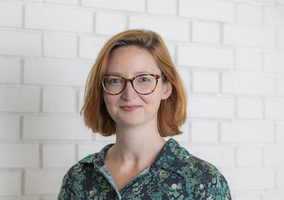

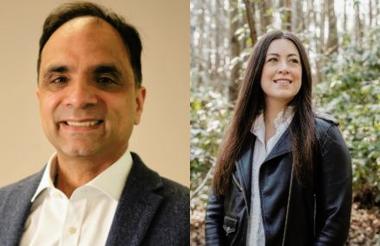
A new episode of the Civil Society Podcast has been published with Anand Shukla, chief executive of the Henry Smith Foundation, and Emma de Closset, chief executive of UK Community Foundations.
In this episode, Shukla and de Closset discuss the benefits of multi-year funding; the importance of creativity in grantmaking; the role of community foundations and the future of place-based philanthropy in the UK.
They also talk about their organisations’ joint care leavers’ programme and its recent expansion.
You can listen to the interview now below or on streaming platforms including Spotify, Apple Podcasts, Amazon Music and Pocket Casts.
AI-generated transcript
Emily Moss (EM): Hello and welcome to another episode of the Civil Society Podcast. I'm Civil Society’s junior reporter, Emily Moss, and on today's show, I’ll be speaking with Anand Shukla, the CEO at the Henry Smith Foundation, a 400-year-old endowed grantmaking charity, and Emma de Closset, the CEO at UK Community Foundations, which supports community foundations across the UK. Now, their two organisations have joined forces to expand the UK Community Foundations’ multi-year, flexible, match funded Care Leavers Programme, thanks to a £1.7 million donation from the Henry Smith Foundation. The expansion, after match funding, will result in a total value of £7m being awarded to individuals and organisations over five years, stemming from the seed funding in 2024 from Local Authorities' Mutual Investment Trust in collaboration with investment manager CCLA. Thanks to the expansion, support is spreading out to 14 new areas in England, Wales and Northern Ireland, meaning that 31 community foundations are now supporting care leavers and their support organisations around the UK through the programme. We discuss their thoughts, feelings and reflections on the partnership and the expansion of the care leavers’ programme so far; the benefits of multi-year funding; the importance of creativity in grantmaking; the role of community foundations and the future of place-based philanthropy in the UK. I hope you find this conversation with Anand and Emma interesting and useful, and I'll speak to you again at the end.
EM: So, can you please tell me a bit about why you're so excited about this new partnership and the expansion of the UKCF care leavers programme?
Emma de Closset (EDC): Sure, I think I can kick that one off. So, our care leavers programme is one that we really hold dear at UK Community Foundations. It was started in 2024 with seed funding from the local authorities, mutual investment trust, LAMIT, in partnership with CCLA Good Investment. And what it did was provide seed funding for a programme to support young people who are care experienced with transitioning to adulthood, and give them some additional support as they did that. And what's been really exciting is to see the impact that that programme has had in that first year, both for care experienced young people as individuals, but also the groups that are supporting them. And the partnership with Henry Smith is allowing us both to extend the programme for the community foundations already involved, but also expands to new community foundations, new areas and new places.
EM: Great. Thank you. Yeah.
Anand Shukla (AS): Thanks, Emma. And from a Henry Smith Foundation perspective, we're very excited about the programme because it shows a UK-wide foundation, coming together and bringing its strengths and resources and perspective together with UKCF, which is able to bring in the local conditions on the ground. So instead of a top down, ‘here's a set of objectives’, the programme can flex to local realities that community foundations, together, in partnership with their local authorities, can fund a range of individual care leavers who have different needs, and a range of charitable organisations that will have different needs, some of them we know, will be getting intensive support as they transition into independent accommodation, some will need employability support, health and wellbeing activities. So, there's a range of things, and this combination of national and local, I think, is really exciting.
EM : Yeah, and the programme is going to offer charities multi-year unrestricted funding. Why, in your opinions, is this really especially beneficial for charities? Do you think more grantmakers should be funding this way?
EDC: UKCF definitely believes that. I think the beauty of this programme, as Anand said, is that it is deeply responsive to both local need but also local capacity. So, what that does is, rather than prescribing a solution centrally or nationally, it allows the people that are working in a place who have the relationships with the individuals that you're trying to reach. And it goes with the grain of the energy of what's there, the capability of what's there, and what those young people are saying they need. So, it's inherently trust based. There's a lot of agency, both with the local groups who really know what they're doing, but it also allows us to put young people at the heart of the programme and respond to what it is they actually need, rather than what we think they need. And the multi-year element avoids cliff edges, which is super important for that sustainability longer term.
EM: Yeah, of course, of course. And how will the UKCF and HSF judge whether this funding model is working as the partnership, you know, develops?
AS: Sure, so… so in a number of ways, really, we'll judge. We'll judge… So there's two things, I suppose I would say. The first is: it'll be a combination of ongoing learning as the programme develops, and more formal reflection. So, this is a new way of working, both for us and for UK Communities Foundation. So, we've gone into it with the spirit that this is very much a learning partnership. So, we'll build in regular opportunities to reflect as the work goes on. There'll be structured discussions between us, there'll be conversations with funded organisations, but interestingly, we'll also be looking at what's happening on the ground as well as what was planned at the outset, and often grant processes don't allow for that. And then we will, as you would imagine, have an end of programme evaluation to understand what difference the partnership has made, as opposed to us doing our own separate programmes where it's added value and we'll be open about what we'll do differently next time.
EDC: Okay, yeah… and just to build on that, what we want to do is publish those learnings as we go along. So, you may have seen in November, we published a report with a lot of the case studies, which reflect on what impact has been had in each place. What's the view of the practitioners who are supporting the young people, what's the difference that they believe the program's made? And we share that learning really actively as we go along, and we'll be hosting an event later this month to bring together some of the groups that have [been] delivering the programme and hear from them about how it's going. So, a combination of formal and informal, structured processes, as you'd expect of any sort of grant management, but also really qualitative, thoughtful learning about what's going on in each individual place.
EM: Okay, nice. So that'll be like… you'll be in discourse a lot with the with the charities and the organisations… yeah, brilliant…and moving on, I want to talk a little bit about like creative solutions in difficult times. And obviously it's been a really challenging couple of years for the sector. But you know, these challenging periods also generate a lot of like creative kind of solutions, inventions. So, in your opinions, what does creativity actually look like in grantmaking?
AS: It's a really interesting question, actually, so… and I think creativity can mean quite different things. And from a Henry Smith point of view, I don't think we see it primarily as a way of funders coming up with novel funding mechanisms or new ideas, but more about how we create the conditions for others to be effective. So one thing we touched on earlier is the importance of long term flexible funding, which is at the heart of this partnership, but how Henry Smith approaches the world in general [is] by providing long term flexible funding. You give organisations the time stability to adapt, to experiment and respond to the challenges they're facing, rather than constantly chasing short term outputs that you put down in your application form at the time of writing. Before coming to Henry Smith and the foundation sector, I spent [the] best part of 20 years in the sector applying for funding. The way in which we work, I suppose, reflects some of that experience. So there's something about enabling the real experts - organisations - to be creative. From a Henry Smith point of view, I suppose I see creativity and grant making as being how funders use their position within the wider system, and that means a stronger focus on collaboration, as we're doing here, on systems change, on collective impact. You know, both of our organisations sit at the centre of networks, yes, and are potentially very powerful when we're thinking about collective impact. They include other funders, they include civil society, they include local government. They could include private sector actors as well. So, I see creativity, it's less about doing things in isolation, in our own silos, but more about us, connecting people, aligning resources, reducing fragmentation. So, for example, Emma, a few minutes ago, talked about sharing learning, and we'll do that learning together, rather than every funder doing its own slightly disjointed approach. And then the final thing that you asked was about the question of risk. And my view is grantmakers should be willing to take on considered and proportionate risks. There may be occasions where you back up organisations, ideas, approaches that may not have a long track record, but could have strong leadership, local credibility and the potential to contribute to wider, longer-term change. I think that combining risk taking with good relationships with learning and with an openness to adapt is the key.
EDC: Yeah, yeah. Really strong thumbs up, all of the hats you'd expect. And I think you know on the question of risk, one thing that community foundations feel really strongly about at the local level, and I feel strongly about nationally, particularly as a former policymaker in central government, sitting in SW1 trying to figure out policies that would affect people all over the country, is a real humility that you don't always have the answer, and that you can find incredible ingenuity and creativity all over the place, if you look for it, and you're willing to accept that somebody else might know better than you. And I think what community foundations enable as a network is going beyond the usual suspects, going beyond charities that may have a really strong pedigree, years and years of delivery. Community foundations enable you to fund pop up grassroots initiatives that may be quite new, that may have come together as a product of a community deciding that they need something, and provide those links to that hyper local layer of civil society. And for me, if we can have more funders like the Henry Smith Foundation taking a chance with that layer, that will really strengthen the social fabric of the country. So that's the kind of risk taking that I hope community foundations can enable. And then in terms of that creativity I'm within, and it's for me, it's all about collaboration. Can we put ego to the side? Can we put organisational personality to the side a little bit, and think about what is the change that we're trying to see in this system, and the people who are at the heart of it, what do they need? And can we be more than the sum of our parts if we come together and think about that as our guiding North Star, rather than with our own individual and organisational hats on? And I think that's where this partnership is a real, really brilliant example of doing that in practice.
EM: Yeah, yeah, absolutely. And so, you were just talking about, well, I suppose you've sort of answered that question a little bit, because I was going to ask, like, how important do you think for strengthening the sector this, the role of community foundations is in, yeah, in the UK charity sector. But I feel like you've sort of answered it a little bit. But if you want to expand on that at all, then...?
EDC: Yeah, well, I joined UK Community Foundations almost exactly one year ago, and since then, I've been travelling all over the country, every nation of the UK, as many different places as I can manage. And what I have heard from that grassroots layer is that community foundations [are] the lifeblood with the local community sector. And that's a direct quote that I heard from one of them when I was out on a visit. And the more you look, the more you see the quiet impact that community foundations have. Just this weekend, I was in a church. I had gone to a repair cafe to try to get an appliance fixed by a community group that does that. And then on the other side of the church, I noticed that there was a community larder. It wasn't a food bank. It was a place for members, low-income families, to come and get fresh food, really nutritious food, so they could support their families, that they wouldn't otherwise be able to get. And I just thought, this is exactly the kind of thing we should be funding as community foundations. I'm going to look them up. Sure enough, they've received not just support from their local community foundation, but support for core running costs. So going back to that flexible, unrestricted, long-term support, that is what the Community Foundation is providing-- this very, very small community larder which is operating around a particular town in a particular county, and we are doing that all over the UK, all of the time, behind the scenes. That's the role that we're playing.
EM: Yeah, and what do you think supporting community foundation leadership through funding like this could unlock over the next few years for the charity sector and also for obviously, the local communities it supports?
AS: Ok, so, Henry Smith Foundation is working with UK Community Foundations and Clore Social Leadership to strengthen and support community foundation leaders across the UK, and what we want to be a long-term programme. And the reason that Henry Smith thinks this is important activity is because, as a foundation, we've been around for almost 400 years. You know, we have a focus on the long-term and long-term social impact. And in order to achieve that long-term social impact, we judge that supporting and strengthening local philanthropy infrastructure and the people within that infrastructure is absolutely crucial. So that's the idea. We want to invest in the next generation of community foundation leadership and build a strong and diverse pipeline of people working to improve the systems that shape people's lives over the longer term. And as well as building that pipeline, we want to connect them then going back to that collective impact approach. And it's, and you know… we’re really excited about this. We see the people on the programme being able to contribute to that local insight that Emma was just talking about, advocating for local solutions, challenge structural barriers, all of those things. So, investing in the in the infrastructure, through long term patient funding to enable social impact is something that we… we think is is incredibly important. And of course, we want to do it collaboratively and coherently with other funders.
EDC: And for me, I see community foundations as having the potential for real multiplier effect… a place-based change where they live. So, if you can empower and equip that cohort of community foundation leaders, that is something that they can then pay forward to the grassroots layer that we were talking about, and they can have a wider systemic impact in the places where they are. And for me, we reflect a lot on the journey that we've been on. Community foundations were first established in the UK 50 years ago. I think about what we want them to be in 50 years’ time. And one of the trajectories that I think community foundations have been on has increasingly been, yes, responding to donor needs that's always going to be core to what we do, but increasingly putting local needs and community need right at the forefront of what they're doing, and partnerships like this, investment in leadership of community foundations, to me, is an acceleration of that trends to the people that can really support local areas to take the steps they need to thrive.
EM: Yeah, yeah. And more broadly, just looking towards the future, obviously, with policies like this in mind, well, partnerships rather… but how does it make you feel about the state of place-based philanthropy in your country? Yeah.
EDC: For me, this is a moment, a huge opportunity for place-based philanthropy, I think the… the understanding of place as an organising principle and as a sort of characteristic of how to make change happen, that has become the zeitgeist, if you like, in public policy at the moment, certainly around the areas that have a lot of energy for change, whether that's Tesla and grow and the Cabinet Office, Pride in Place and the Ministry of Communities and Housing Communities and Local Governments, or some of the work that the Department for Education is doing in terms of helping young people get their best start in life, I think that is enormously exciting, as you will have understood through the rest of the conversation. I think there's a lot of energy and expertise in local places, of the richness that makes up communities, some of the unique barriers, or the unique assets that communities might have that are difficult to understand, even at a regional layer, let alone a national layer. And my sense is that this is a government that really understands that and is keen to help match the energy that is in those places and help sort of take it to its full potential. So, I think from a policy perspective, it's the right moment to be championing place-based philanthropy.
EM: So on that note, like, are there any specific things that you hope to see as part of the government's upcoming place-based philanthropy strategy?
EDC: Yeah, I guess if I was going to rub my lamp and have three wishes, my sort of baseline would be just greater recognition for the power of place-based philanthropy and finding ways to reward that where it is happening and encourage it through that recognition, government has an amazing signalling role-- when it comes to that, I think we could make much more of. If I were to be a little bit more ambitious and look for sort of concrete actions above and beyond that recognition, I'd probably turn to incentives, whether that is really thinking creatively about how we can use tax relief or gift aid to encourage local giving, rather than just national giving, and also think about what has happened in the past that has really catalysed additional investment in that place-based layer and for us as community foundations, we know that endowment match challenges are incredibly effective at just accelerating that push to local giving. So I would encourage the government to consider that, yeah, and then my moonshot would be we could commit to every place having a permanent endowment that is a sustainable source of giving for that grassroots community layer in perpetuity that would require funding, and that's why it's my moonshot, but it would be if I could have anything those would be my three layers of ambition for the strategy.
EM: Yeah, yeah. So interesting to hear. Thank you. [To AS] Nothing to add? No, no, no. All right, great. Well, I guess again, a little bit broader, but what would you like to see more of from larger funders across the sector?
AS: So probably won't come as a surprise, given the conversation we've had, that I'm going to talk about collaboration and alignment, and we do get that happening. And it's not just Henry Smith that is… that is doing it. But I suppose I want to see that type of work become more normal, more business as usual, become more mature. And there's a wide range of areas that you can think about when it comes to working together. It could be in shared objectives, for example, it could be in joint evidence and learning and insights, as we talked about earlier. But I suppose there's a couple of points I make here. So one is that - it's really important that we do this - the social challenges we're trying to address. You know, we've talked about early years development, we've talked about leadership development and civil society. They're too big for any organisation or funder to tackle alone, so it's absolutely essential if we want to achieve the impacts that we're trying to have the partnership. Work isn't easy. No, you know, it takes time. It takes openness. We need to be transparent. You need to take time to foster relationships. I don't know how many times Emma and I get captured on our calendar, but we spent a lot of time having these conversations and talking issues through. But in a nutshell, what I want is collaboration to be the default open philanthropy, which Emma has talked about earlier. Sharing our learning, sharing our knowledge, in a culture where funders work together to maximise impact, rather than operate in silos.
EDC: Again, I really agree with that. I think partnership is a bit like a muscle. You need to kind of exercise it and develop it, and the more you do that, the stronger it is, and the easier it is. And I think that one of the things I've learned about this partnership in particular is the power of really strong alignment on values and strategic direction and having that in place, and being really confident that that's in place before moving into the mechanics of how is this specific partnership on this specific area going to work. And the more that you do that, the easier it then becomes to say, well, there's an opportunity over here where we could work together. Or in some cases, it might be that there's a different coalition of funders that are working on something, and because of your partnership with someone else, you bring them to the table because you know that they have something to add, and that's where I think it's a sign that those muscles are being worked in a way that's going to lead to something really positive down the line. And I think we are seeing that materially in the sector at the moment, probably more so than in recent years, is my sense more of an active discussion about each other's strategies, things that we're working on, openness to bringing others into the tent, on things that are happening. And my hope is that that will really continue in 2026 and you'll start to see more coalitions, or groups of people coming together in collaborative ways to make change happen.
EM: Yeah, just less competitiveness and more, like you say, working together rather than silos, it's something I've heard a lot across, you know, echoed across the sector, like people saying they want less competition and more… you know…
AS: I think just building on Emma's point, I also detect this appetite to collaborate. Yeah, and you use a word competition just now, I didn't see that much competition between funders, actually. And I do detect a desire to collaborate, but it's what we've both just been touching on, making it the new normal. It's making it business as usual, rather than something you're trying to fit in alongside all of the other day job things. I think it's a cultural shift, isn't it? Yeah, but the desire is there, which is the starting point.
EDC: And I think it also requires a level of adaptability. Because what we will do when we have our get togethers, talk about the partnership, is we'll talk about the Henry Smith Foundation strategy, the UKCF strategy, we'll talk about areas of potential, alignment or opportunity. But what we're not doing is trying to impose something narrow and saying, ‘well, we can work together if you stay within these really strict parameters’. We have defined them. There's an openness to co creating that. And that is something that I sense elsewhere as well, that there's much more dialogue around the way that different priorities with a little bit of creativity could be seen as really aligned and could come together, yes, and that's exciting,
EM: Yeah, yeah, definitely, yeah. Are there any particular concrete lessons you've learned so far from the partnership between the two organisations that you think could help other funders with the with, you know, making progress on these sorts of areas?
AS: I don't think I've got anything to add on top of what we, what we've said really in terms of, you know… the discussions between Emma and I just now have been focusing on understanding each other, strategies, understanding values, building the working relationships, getting a sense of the art of the possible. And then as we get into, you know, specific opportunities we've each of us have already got a sense of how it could land, or whether it's viable or not, so it does take time.
EDC: Yeah, I agree with that. And I think the thing that we recognised early on is that it wouldn't be enough for the two of us to get in a room and dream up an idea and make it happen. We both have sets of stakeholders. We would need to think through how to bring those stakeholders on a journey as well so that the partnership opportunities would be well supported when they came to fruition. And I think that's you can't shortcut the time involved. But to go back to my muscle analogy, I think the investment in doing that is really worthwhile because it then opens the door to other potential ways of working together. So that investment of time and energy and building a shared foundation of trust, of understanding, of stakeholder support, it really provides a base from which you can go in different directions afterwards, rather than just the individual partnership opportunity that you've identified at that moment in time.
EM: Yeah, fantastic. Thank you. Yeah… so I guess final question is, do you have any advice for charities wishing to increase their funding from charitable foundations like yours?
AS: Shall I start off? So, I speak not just as a chief executive of the Henry Smith Foundation, but 20 years of experience before that applying to funders for funding… and in many respects, the basics remain the same. You know, if you're applying for funding, read the criteria and guidance, carefully, understand the funder strategy, review their previous funding decisions to see what's being prioritised, take every opportunity there to engage in conversations with funders, which could be webinars, calls, meetings, build your understanding, clarify your expectations, and as well as demonstrating alignment with the funders, priorities show the difference that the work makes or could make. So, none of those things, I think, are particularly new. There was one thing - point - I just wanted to make about the use of AI that we are seeing at the moment. Now, we have no issue with this, but the one, the one point that I'd make is, when you're writing applications, make sure they don't feel generic. Yes, AI is a very helpful tool, but you know, what I think funders want to see is the organisation's authentic and unique story, impact and voice. So think about how you use AI to make your time efficient, to streamline the information, but make sure it is still recognisable [as] the story of your organisation. Yeah, I think that's
EDC: Yeah, I think that’s very good advice. Yeah, yeah. I agree with all of that. And I think with my community foundation's hat on, I think that we really aspire to be more than just a funder, more than just a grantmaker, playing that sort of local convening role. And in parts of the country, I know that local charities are able to go to their community foundation and ask for advice or support if they're struggling with their funding. So, I think that would be my addition is that, as well as all the great advice that Anand has already given for local grassroots charities that aren't quite sure where to turn, yeah, not quite sure what they're eligible for, need support - their community foundation is a great port of call for understanding what's out there, who else they may… who else they might be able to link up with, and what support might be available.
EM: Yeah, brilliant. Thank you so much.
EM: Thank you for listening to my chat with Anand and Emma. Please like and subscribe to the Civil Society podcast wherever you get your podcasts. Look out for another episode in the coming weeks, and in the meantime, I hope you stay safe and well.