
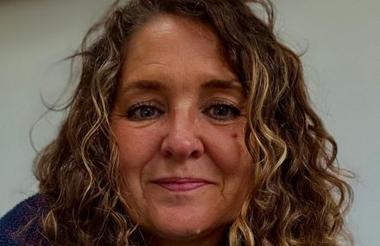
A new episode of the Civil Society Podcast has been published with Caroline Gillwood, assistant director of equality, diversity and inclusion at the Royal Voluntary Service.
In this episode, which coincides with Volunteers’ Week, Gillwood discusses the RVS’ recently launched digital volunteering platform, GoVo, and issues surrounding accessibility across the volunteering sector.
You can listen to the interview now below or on streaming platforms including Spotify, Apple Podcasts, Amazon Music and Pocket Casts.
AI-generated transcript
Emily Moss (EM): Hello and welcome to another episode of the Civil Society Podcast. I'm Civil Society’s junior reporter, Emily Moss, and on today's show, I’ll be speaking with Caroline Gillwood, head of equality, diversity and inclusion at the Royal Voluntary Service. We discuss RVS’ recently launched digital volunteering platform, GoVo, issues surrounding accessibility across the volunteering sector, and Caroline’s hopes for the future of inclusive, accessible volunteering.
I hope you find this conversation with Caroline interesting and useful, and I'll speak to you again at the end.
EM: So, I was wondering if you could just start off by explaining what your role is at RVS and chatting a little bit about GoVo, which launched last October, obviously, and I was wondering if you could talk me a little bit through that as well, and how that's going, so yeah… without much further ado...
Caroline Gillwood (CG): Okay. Well, let's start there. So, thank you so much for inviting me along today. I'm really happy to be here, and I'm really glad to be having this conversation, actually, as well. So, my name is Caroline Gilwood, and I am the assistant director of equality, diversity, and inclusion at RVS, and I've been here for about four years, and my role spans the whole organisation, and my purpose really is to a ensure that we are focusing strategically on equality, diversity, and inclusion, but also supporting the whole organisation to be able to understand what equality, diversity, and inclusion really means in the workplace and beyond. So, yeah, that's my role. And so, to kick us off, in terms of talking about GoVo… so as you mentioned, GoVo was launched in October last year with funding from— very generous funding from— the People’s Postcode Lottery that helped us to be able to do that, and in terms of thinking about GoVo, in terms of accessibility, which is what we are here to talk about today. I can talk a little bit more about how it's going at the end of me talking it through the accessibility points, so the commitments to become more accessible with global really have started from the very beginning. We were very clear that accessibility had to be built in and it wasn't added on later, so from some of our very early considerations, things like reducing friction to the journey, making it easier for people to find opportunities, and creating space for people to share access needs in a way that felt comfortable and safe. One of the key things for us was also around aligning our approach, recognising standards like the WCAG, the WCAG 2.2 double A standards, which really help ground that digital accessibility and practical principles. So, thinking about whether something is perceivable, operable, understandable, and robust for different users is something that's been really very important in the development of GoVo before, but alongside that, we've worked really closely with partners, so we've worked with RNIB and volunteers with lived experience to really help shape the platform, and that was really important in making sure that we weren't designing based on assumptions, and I think one of the biggest lessons that we learned around accessibility is that it's never finished. So every new feature, and obviously, because we started in October, it's a very, it's a very new platform, and as a result, we're adding new features all the time, we're learning, and we're developing, and with each and every one of those new features, you have to then have new considerations. So we've definitely had moments where we've had to stop and rethink things, and that's part of I think really doing it well. And talking about GoVo in particular, I think for me that good accessibility in our digital volunteering platform is really about making it as easy as people as possible for people to take part, so of course you know that includes the technical things that you would expect, so things like clear language, good contrast, compatibility, for example, with assistive tech, but really it's that overall experience for the end user and WCAG, whilst it's been really helpful because it focuses us on those fundamentals of usability for a wide range of people, not just for one type of need. It really is about whether people can navigate confidently, understand what they need to do, and feel supported through that process, but also have fun and really enjoy, you know, all of the options that GoVo have got on offer for, you know, for volunteers who are either volunteering for the first time or we have people who want to navigate across a range of different volunteering opportunities in terms of issues that are really important to them, so that's been really important for us, and I think, as I've said at the beginning, it really is about aiming to make volunteering more simple and more accessible for everybody, and, like I said, that innovation has been made possible because of the players of course called lottery. And so, how's it going? So, more than more than a quarter of a million people have visited GoVo since its launch, which is a great number. Yeah, and we've also been able to welcome charities, large and small, to the platform, and there are currently about 1700 charities represented, sharing over 10,000 volunteering opportunities.
EM: So I suppose going back to the word accessibility, why do you think accessibility in the voluntary sector has become such an important conversation right now? Because I feel like it's always been such an important topic, but it's only more recently that it's getting discussed so much, and the words being thrown around a lot more. So yeah, why do you think I might be unlike to what extent did that inspire GoVo?
CG: So I think what we're starting to see now, Emily, is a real convergence of things that many people across the sector have been highlighting for some time. This isn't a new issue, as you mentioned at the beginning of the question, but I think there's a much stronger recognition that accessibility isn't a niche issue. It does affect a significant proportion of the population, and it directly shapes who is able to take part in volunteering at all.
Though there's also growing awareness, I think, of the structural barriers that exist, whether or not that's digital access, whether or not that's financial pressures, or the way that opportunities are actually even designed, and there's a shift away from seeing participation as purely an individual choice, I think, alongside that many organisations are responding to the real challenges around participation and engagement, you know, seen in recent years we've seen volunteer numbers drop, for example, and you know, I think we all recognise that if we want to reach more people, we really do need to design more inclusively.
So I think in some ways this isn't a completely new conversation. It really is about the sector collectively reinforcing and acting on what we've been learning over time and really starting to embed that more consistently into practice. So, for example, I'm part of Shaping the Future, which is a network of over 40 of the large UK charities, and we've done quite a lot of work around disability, starting way back in 2022 when there was a report written about disability in the sector, and some recommendations, some great recommendations came out of that report, and one of those was that we needed a tool, for example, that would really help those frontline services to be able to understand a range of different interventions that they could adopt in order to make their services more accessible, so whether that be around attitudinal barriers, for example, whether that be to spaces and places, and how you design them, or how you make them more accessible to people with physical disabilities, for example, but that's a great tool that we developed, excuse me. In partnership with Enhance the UK, which is a UK disability charity, and it's a, it's a resource that's available on Shaping the Future website. Anybody to go and have a look at, and to be able to download, and to be able to use, and it gives lots of really concrete advice and information about how you can make those changes, but it also gives a lot of education around inclusive language, but also gives a bit of a background in terms of data and statistics, so people really start to understand, you know, how many people are actually affected if these types of practices are not actually adopted, and the barriers then that people face.
EM: That's brilliant. Thank you. And across both, like the research that the RVS has done, and things that you've taken part in, slash your own experiences or experiences of people that you work with, where do you think organisations sometimes very unintentionally hopefully exclude people during their volunteering journey, you know, whether that's through recruitment, onboarding participation itself, and I suppose, how are you hoping that a platform like GoVo will combat that?
CG: That's a great question, so I think a lot of the exclusion in volunteering, whether that be around disability or any other kind of barriers or exclusion that people face, because I think intersectionality is a really important for us to remember, because people, we aren't one dimensional, and you know, there can be a range of different barriers and issues that people face, and I think it's often built into the way that things are designed, rather than it being intentional. So, as you've mentioned, it can start right from recruitment, so with long and complex application forms, or the language that assumes a certain level of confidence or experience. Experience, for example, then in onboarding it might be a lack of flexibility or not giving people a clear way to talk about their access needs, and actually that's something that we've done on GoVo, which is really quite exciting, because it means that what we've offered volunteers is the opportunity to actually articulate what their access needs might be, and they then get transferred over to the charity that they're interested in volunteering with, so that they already have an understanding of what some of those needs might be, and those access needs actually get stored on somebody's profile, so that means that they're stored there and they don't need to keep sharing that information every time, and then day to day participation, I think things like fixed hours and unclear communication or assumptions about what people can and can't do, that all creates barriers, so definitely having some kind of flexibility in the way that roles are outlined, and what is people are expected to do is really important, I think, as well, and I think it's important to recognise that those barriers often overlap, so if we don't understand that properly, then we can end up unintentionally excluding people without even really realising it. I think in terms of what organisations can do, I think there are actually some real practical changes that can make a big difference quite quickly. So, whether or not you're able to look at your processes and ask whether or not there might be an unnecessary barrier, and quite often those things can be simplified or made more flexible, and I think a second one is maybe to involve people with lived experience. I think that's so important, so not just feedback, but in shaping how those things are actually designed, and then also I think not just for folk with disabilities, but I think just generally making sure that our language is clear and welcoming and inclusive, and that people know that they can ask for that support or those adjustments, because sometimes I think, you know, it must create quite a lot of anxiety for somebody to have to, you know, consistently say, you know, I need this kind of access, I've got these access needs, or I wonder if you know, and if that information is made much more public and much more open and just embedded into day-to-day practice, it can make us all feel a lot more comfortable about asking for adjustments or support, and the things that people might need.
EM: Yeah, yeah, of course. In the same way that it's become so normalised in, like, the recruitment process now, for the vast majority of jobs, to say things like, in the job description, ‘tell us about any additional needs,’ like, and the whole Equality Act spiel, like that's so helpful, I imagine, to people, but I feel like that's not normalised in volunteering the same way.
CG: Yeah, no, it absolutely isn't. And you know, and sadly, in terms of for folk that volunteer, things like access to work isn't available to people who volunteer, you know, so access to work will allow financial support for people if they do need additional equipment, or you know, any other sort of access needs that they might have that incur financial cost that's available to volunteers, and I think that that's something that it would be great if we were able to change that as a sector, or we were able to campaign for that, so that there was an adoption of some kind of framework or system that would allow that to happen, but I think so. What we're doing with GoVo, as well as people being able to put their access needs into their profile, so that that's clear and transparent to for folk. The other thing is it's about offering the charities themselves templates and resources around making your role descriptions more accessible and more inclusive, so making sure that they're really clear, so that we can start to perhaps standardise, you know, those application forms and those role outlines, so that they are really easy to understand, and they don't have too much sort of technical information in there, and then they just become more accessible for people.
EM: Yeah, absolutely. And I suppose turning towards the wider state of accessibility and volunteering, in your opinion, where do you think the volunteering sector on the whole has made a lot of real progress on accessibility in the recent years.
CG: Yeah, so I think there's been some really positive progress across the sector in recent years. I think there's definitely good, much greater awareness now. So, accessibility solutions being talked about more. Much more openly, and more organisations are starting to build that into their strategies, their policies, and their digital services. For example, I think we're also seeing more collaboration and more willingness to learn from people with lived experience, and I think that's really an important shift. But that said, I think there's still a gap between awareness and practice, so in some cases accessibility is still seen as something separate or additional, rather than being built into how opportunities or services are designed from the start, and there's still quite practical barriers in the system, whether that's complex application processes, inflexible roles, or those digital platforms that don't fully meet those different access needs, and I also think that there's more to do in understanding that intersection between those different barriers, because you know, as we've already said, we know that people's experiences aren't one dimensional, but I think overall I'd say that the direction of travel is really positive, but the focus now needs to be on embedding that progress more consistently in practice and in that day to day experience, because I think that's where we'll really start to see the real difference.
EM: Yeah, for sure. I definitely agree with that.
CG: Sorry, it got me started now, but also there's some really important work that's happening across the sector, and to improve how we share and use data, for example, so that can be a huge barrier for platforms like GoVo and others, in terms of, you know, how we're able to share that information across the secto. So for example, the Open Data Institute is leading on some work currently to create a shared standard for volunteering data, so that information can flow more easily between organisations, so and the reason for that is that at the moment data often sits in silos, or it's structured differently, which means that it really creates barriers in itself, both for the people trying to find opportunities and the organisations trying to reach them. So, what's really encouraging is that this work is being done collaboratively across the sector, rather than creating a single solution, so I'd say that the direction of travel is really positive, but the focus now needs to really be on embedding that progress more consistently in that day-to-day experience of the end user and the people that we all exist for.
EM: Yeah, of course, absolutely, and just specifically in terms of volunteers who have a disability, do you feel like there's been progress in terms of like quite literally making opportunities more accessible in terms of like adjusting the recruitment process for example deaf or blind volunteers or making the application process easier for them and onboarding and things like that.
CG: So I think that firstly there's a lot of information out there, so there's a lot of information in terms of different parts of your organisation, so we all know that it's not just one team, so whilst volunteer management is absolutely crucial and essential in terms of helping volunteers navigate their journey and have a really good experience when volunteering for your charity, we know that there are a range of other parts of the organisation that contribute to that each day, so whether that be things like social media, whether that be things like your policy department, in terms of your policies, in terms of how you communicate externally on social media, and those platforms, etc. And all of them have got a role to play to make sure that everything is accessible as it can be, so things like ensuring that you know your text is, you know, a good size, and making sure that it's clear and your colour contrast is good, you know, putting alt text on your, putting alt text on your images, for example, so that really user friendly for screen readers, for example, and then you know putting money in budgets, particularly for those accessibility requirements that are needed, so for example going to places like your fundraising department, or you know, it's really important to make sure you know that you're including that in your bids, so that you've got an accessibility budget line, so you're able to evidence what's actually needed, and the fact that it does actually have a cost, and if we haven't got money in the budget for it, sometimes can you know sort of slip to the wayside and get overlooked. And we actually really do need to invest in that way and make sure that we articulate that really well in funding bids and things like that. I think that's really important. I also think another important thing, but one thing that we find with GoVo, is that you need to consider your third-party suppliers as well, because you know, whilst it might be within our gift to make our part of the platform that we're responsible for, in terms of designing, as accessible as it can be, that if we're using third party suppliers for other parts of that platform, and they're not quite as inclusive as we are, are not quite as compliant with the WCAG standards, for example. Then that can be a challenge, but then we can, you know, we can use our influence there to support them to move along that journey and to make improvements in their own systems as well, and so I think that it's that kind of whole system that we need to be looking at, rather than, you know, targeting it just at the volunteer management team, or just in one particular area in the organisation, and also with your leadership as well, ensuring that they understand, you know, the importance of it, and that they're given, you know, their sign off to make sure that these things happen.
EM: Yeah, lots of food for thought. And I suppose on a more hopeful note, what gives you optimism right now about the future of inclusive accessible volunteering, perhaps GoVo aside, and I mean GoVo could also be what gives you the hope, but what else?
CG: So I think for me that a truly inclusive volunteering sector is one where people with different access needs are represented everywhere, and that includes leadership. And so that's about looking at your recruitment and ensuring that people are, you know, represented all areas across your organisation, and that takes work. And that could be right from the trustees, you know, as well. But it's also about people feeling that there's a place for them and that they do belong, so that's how you speak about your services, how you not just talk about your commitment, but how you demonstrate that commitment and actions as well. And I think what gives me optimism is that more organisations are willing to listen and to learn and be honest about where they can improve, and I think that's where we will really, you know, where the real change starts.
EM: Yeah, that's brilliant, Caroline. Thank you so much.
EM: Thank you for listening to my chat with Caroline. Please like and subscribe to the Civil Society Podcast wherever you get your podcasts. Look out for another episode in the coming weeks, and in the meantime, I hope you stay safe and well.