
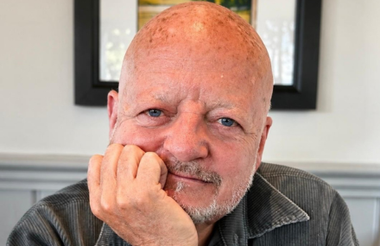
The latest Civil Society Podcast episode has been published with James Lewis, founder and chief executive of Action for Elders.
In this wide-ranging interview, Lewis discusses why he thinks trustees should be paid and why there should be fewer charities, among other things.
You can listen to the interview now below or on streaming platforms including Spotify, Apple Podcasts, Amazon Music and Pocket Casts.
AI-generated transcript
Léa Legraien (LL): Hello, and welcome to another episode of the Civil Society Podcast. I’m Léa Legraien, senior reporter for Charity Finance, the essential resource for everyone interested in the financial side of running a charity. On today’s show, I’m speaking with James Lewis, founder and chief executive of Action for Elders, a charity that supports and encourages older people to exercise and become active, improve their social lives and reduce their isolation and loneliness.
LL: Hi, James.
James Lewis (JL): Hi, Léa. How are you?
LL: I’m very well, thank you. You?
JL: Good. Yes, I’m better than I deserve, I think. But you know, it’s also very warm here at the moment, and that’s the way I like it. And hopefully, it’ll stay that way for a few days.
LL: It’s quite warm indeed. Right. Well, thanks for joining me today. So, you’ve been in the charity sector for quite some time now. So, how did you get into it?
JL: Well, I guess that was very delicately worded by you. Yes, it’s been a long time, but I, you know, I guess I came into it probably kicking and screaming would be an expression I’d use. I never thought, you know, looking back at my life, that I’d devote so much of it to the sector. And I was many years ago, in a very, you know, well-paid, successful job. Our child at the time had a very rare form of cancer and died just before he was five. And even then, we’d set something up, but I was reluctant to embrace the sector full time. I knew nothing about it at all. I was very, very green around the edges. And eventually it was the trustees that I was involved with then that said: ‘Look, if this charity, we’re taking more requests than ever, and you know, across the country, if this charity is going to be sustainable, you’ve got to make the decision to leave your, you know, your very well-paid job and leave the charity, which is what I did. So it wasn’t an immediate decision, and I suppose I don’t know whether would I be in the sector if our child hadn’t had a very serious form of cancer and died. The answer is I don’t know. But what I do know is that I’ve had an eventful and full life, and still do. And I’ve really enjoyed the challenges that sector has presented to me. Maybe ‘enjoy’ is not the right word, but I certainly thrived on those and the experiences that I’ve had since.
LL: Yeah, I’m sorry to hear that. You’re talking about the Christian Lewis Trust, and that’s a children’s cancer charity that you set up in 1989. Is that right?
JL: Yes, that’s the case. I mean, it’s funny how these, you know, the things develop because we recently, on, synchronicity, something which I’m quite interested in, and we recently, this is Action for Elders now, where I’m the founder of that charity, which we may talk about, but we were recently asked to do a piece for ITV News, and the cameraman who was recording the piece that we did said to me: ‘You don’t know me, but I was involved with the Christian Lewis Trust and your excursions when you took all those children from Great Ormond Street to Disneyland Paris when it first opened and it’s left an impression on my life ever since.’ And you know these things still happen. So, so long after the time, you just don’t realise – I think this is one of the things that impresses me about the sector – you think, am I making a difference? And then you get people that come up to you and say ‘you won’t remember me’, but and you know that is heartwarming, I think.
LL: What a small world. So, you mentioned Action for Elders, which is a charity for the elderly. This is a charity that you established in 2012, right?
JL: Yeah, it was in the process of 2012 was when we formally established the charity, but we’ve been involved with research, or I’ve been involved with research with Sheffield University and the Department of Sheffield Institute of Studies on Ageing for a number of years before that, and we were researching and had been given a brief by the government to look at this challenge of people were living longer, but actually they weren’t living healthier, and the cost to the economy and NHS and everything else that went with it. So, out of that piece of research, which I’m happy to talk about, but you know, it’s really up to you. The charity was then formed, and what I’d forgotten, I think, from the formation of the Christian Lewis Trust, and then obviously Action for Elders, is how difficult it is to actually take something from nothing because again, elders had no money to start with. And you make a charity sustainable and have an impact, which thankfully Action for Elders has done. It’s positioned itself to be focused on positive ageing and preventative health, which are huge issues for the economy and for obviously older people themselves.
LL: Yeah, and it is a small charity, isn’t it? But it has a big impact, right?
JL: Yes, it’s a small to medium-sized charity. Obviously, we’ve development plans to make it larger than that, but everything has changed since the pandemic hugely in lots of ways for the sector. But and I think this is probably true of most charities. Actually, I mean it’s the smaller, medium ones where the majority of what I’d say the beneficial work goes on, and the pressures against them are huge to become sustainable and survive. And you know, this is one of the reasons. Hopefully, we can go on to this. So, I think that there is a that there should be different categories for charities where people understand exactly what their charities are funding and what type of charities they are and where they get their money from, etc., etc., etc.
LL: Right. So, what do you mean by categories? Do you think that there should be more information on the Charity Commission’s website? Like, what sorts of categories are you thinking of?
JL: Well, I mean, what I’m thinking and proposing and working with various MPs on at the moment to bring it to the attention of government is that: ‘Okay, so we have a perception in our society that the charities are charities and charities are charity, where in fact there are huge differences.’ I know this from my work and experience, and also from my work with the Cranfield Trust as a mentor. There are no two charities, and they’re not the same. So, and there’s a huge gap between the larger charities that you know of this world and the medium-sized charities. There’s different ways of working. Then we have charities that are associated with health boards and local councils and all of that sort of things that have come into fruition in the last 10 years. And of course we have what I would call ‘the voluntary groups’, so which are pretty small, always in the community, lasts probably about five years, but also do sterling work. And I would just like to educate the public and others into: Okay, so you can’t compare one charity to another. So, can we have these different categories of charities which fully explain what sort of charity it is, what sort of impact it has, and what sort of funding is required to keep it sustainable? There’s a whole range of issues, I think, which are hugely confusing, and I don’t think the sector helps itself at times in regards to this. But there’s an educational role that’s needed by the sector to explain exactly what sort of charity category you’re in, and you know exactly how you get your funding.
LL: So, you do think that the public misunderstands then charities and how they operate, and that, sorry, and that having those categories would obviously help them. And you said there’s a lack of education, so is that what you’re saying?
JL: Yes, I don’t think that the public fully understand how charities work, and you know how they fund it, and this word ‘voluntary’ is, you know, bandied around so, so often. When, of course, the majority of the sector isn’t voluntary. And that’s a huge misconception, and that sometimes is derogatory to actually the work of particular charities. And you know, I’ve not heard it so much now, but I used to hear it way back in the day: ‘Well, how much money do you spend on administration?’ Well, you know, if you read Dan Pallotta’s book Uncharitable, he makes a very, very strong argument that for charities the emphasis should be on impact, not on where your money is going for administration. Because obviously, again, you have these other organisations where administration can be quite low because they may be a membership organisation, whereas for other charities, administration has to be done to make it sustainable and make it professional and prove its impact. And all of these things aren’t explained to the public enough and I do think that the educational role that the sector has to have in tandem and maybe categorising charities into these different bands would be part of that problem.
LL: Right, so the term voluntary that you’re not a big fan of, what would you replace it with then?
JL: Yes, I would probably go for third sector.
LL: Okay. Which is already used.
JL: It’s used, but even then, you know, and I see it on a daily basis of, even with the word ‘voluntary’, it comes up time and time again. And I’d just like to see, because again, I can give you a couple of examples here, which are frustrating. So, when and maybe, you know, this emphasises the point I’m trying to get over. There are charities, usually the smaller ones, usually community-based, that are voluntary-led and do good work. That’s not what I’m saying. What I’m saying is, if the perception is that the whole sector is voluntary, and there’s all always some sort of media comment about how much a chief executive is getting paid, or how much you know, etc. etc. I mean, even the Charity Commission website, one of the first things when you go and look at a charity, one of the first things you see is that nobody gets paid over £60,000. Well, you know that again is something which is building into the subconscious of people to say: ‘Oh, oh! If you’re paying somebody over £60,000, then that’s a waste of money. No, it’s not a waste of money. It’s actually probably improving the impact that that charity has if they’re effective managers. So, this whole confusion, I was going to give you an example. So, when I started in in in the sector, I had a friend who was chair of a hospice, and he said to me: ‘Look, if you’re going to get the charity to survive, you’ve got to pay for a fundraiser – and we got a fundraiser – and I’ll, you know, give you the name, and we make an introduction, and all of that.’ And so that’s what we did, but gradually this other charity, as I said, was a hospice; my friend was astute enough to realise that it wasn’t sustainable. So he, first of all, got the NHS to pay for the salaries of the medical staff in the hospice, and then he actually sold the building to the NHS and the land, so all they had to do was raise money. He died in a car crash, way too early. But the committee which he left behind, which, you know, he was very much the leader of, have now basically one of the main points is to say: We’re voluntary-led. We’re voluntary, etc., etc.’ Well, of course they are, because, you know, they don’t have to pay staff, it’s all paid for by the NHS. But it’s that sort of confusion which doesn’t help. And if that’s coming from the charities themselves, you know, again, putting these categories and bans into place, I think would help all of that. And it’s only very competent.
LL: Right, I see what you mean. So, you talked about the challenges because you’ve seen pretty much everything since you entered the charity sector. So, what are the biggest changes you’ve seen over the last years, decades?
JL: I think the biggest changes are that there are more charities. There’s more competition. People are duplicating services more, and this has really happened since the pandemic, more than previously. And I don’t know why that is. I think it’s because people are chasing money, and that goes on in the sector. And that’s something I’m again against. You know, the organisations that change their perspective, or because there’s more money in this area now than there was in the area that they were previously serving. I mean, one of the things that Action for Elders is proud about is that we have this core, and this core has been there in terms of improving the health and well-being of older people since the start, and we won’t defer from that. You know, there may be pots of money for other things, but we won’t go down that route because we believe that what we have is a product that’s benefiting society and benefiting older people. So, I think one of the changes has been this increasing competition, particularly health and well-being side, where, again, perception is that we’re all doing the same thing. No, we’re not all doing the same thing. And if you market yourself well, then people will understand that. But there’s a whole range of people that don’t. So, I’d like to see when charities are formed, more due diligence done on why they’re being formed, and that includes: is there another charity out there that’s doing the same thing? And I don’t know what’s the new chief executive of the Charity Commission, but the one that left last year, I think, or 18 months ago, did actually state: ‘It’s not our responsibility to do that.’ Well, if it's not their responsibility to do that, whose responsibility is it? So, I’d like to see the commission take that responsibility on board, and I’d also like to see more partnership working. Not necessarily charity to charities, but the local authorities or the health board working with charities rather than saying: ‘Okay, we can do this. No, you can’t. First of all, and we’ll get money from the government to do this.’ Well, that money should be actually going to the third sector. So, I think there’s a huge lobbying campaign to tell the government how important the third sector is, and how without the third sector, we probably collapse like a pack of cards as a society. And it’s interesting, you know, I’m based in Swansea in South Wales, and we have a Welsh government, a new Welsh government here. It’s interesting to see that they’ve actually appointed a minister that’s responsible for preventative health, and they’ve also got a commissioner for older people. These are, you know, hugely advances. I think in how we need to go forward to make our society less reliant on the NHS and more understanding of the impact charities bring to everything in our society. It’s not just health and well-being, it’s other areas as well, and that's not recognised enough. And I think that again you have this lack of recognition of the true worth of charities because nobody’s really explaining it. The focus is desperately on, you know, funding and keeping alive, keeping you survive, particularly medium and small-to-medium charities. It isn’t enough on educating the public about the real value of the sector and what it needs to thrive.
LL: Yeah. So fewer charities, more collaboration, potentially more mergers, and then more education from the sector, the Charity Commission, the charity regulators, and then the government. I guess.
JL: Yes, I think so. I’m not keen on mergers. Because I don’t think there’s an equal. There was a merger that was lauded by the Charity Commission as being the perfect merger. It was two cancer charities. Okay, I’m not going to mention the names.
LL: Sure.
JL: I knew the founder of one of them, of one of these charities, and he said it was the worst thing that ever happened. It never should have happened, and yet it was lauded as a perfect example of how two charities merge. And that was many years ago, by the way, but, you know, I think it’s still relevant. But the, I mean, mergers, you always have a stronger partner, and the other thing about and usually is the partner with money, or has more, you know, financial impact. But the other thing about mergers is this, and I think this is where charities also need to focus more on than they do is culture. If you don’t have culture as a charity, what’s the point of setting a charity up? Because culture is your passion, it’s your values, it’s why you’re doing what you’re doing. And if you’re merging with somebody else, which might have different cultures, if it has a culture at all, then that is lost, and that’s what was lost in that merger I gave you an example of, was the culture, the fact that one charity was looking at everything from the family and the child’s perspective, and the other one wasn’t.
LL: So, do you think that lots of charities lack culture then, or is it just when it comes to things like mergers?
JL: No, I think lots of charities lack culture. I don’t think there’s enough emphasis placed on culture in charities. I mean, if you look at it from a business perspective, the most successful businesses, and I had the luck to work with Disney actually, so they’d a tremendous culture. You know, it’s all based on pixie dust and all of that sort of thing. But it actually goes into the – I can see you smiling there, but it's true. You know, one of the things that Disney did in the university was everybody that was new when they came into classroom, you had Tinkerbell there sprinkling pixie dust over them. But it was symbolic, and it was symbolic because they then gave the power to these people to say to them, you can do anything that you want to do, provided it’s in the customer’s interest. But I might have wandered off. The thing is, I think it’s more important for a charity to have a culture than a business, and it’s really, really difficult for a charity to retain that culture. I mean, I was, you know, I was talking to a grants manager yesterday who’s become a friend. He’s retired now, but he was saying: ‘You’re never going to retire? Are you?’ And I said: ‘No, I’m not.’ But, you know, he said: ‘Well, because you’re so passionate about what you’re doing. I said: ‘Yes, I am. But you know, it’s all about being a founder. It’s about the legacy of what you want to leave in the work that you’re doing and the way that the organisation is putting the older person first before anything else. I mean, we’ve gone through hard times as a charity, particularly before the pandemic. When really, if we were a business, we’d have closed some of our programmes down. We couldn’t, but because, you know, people have become dependent on it, people is part of their life. They look forward to it. All of these sort of things that we’re about. And if you haven’t got that, and, you know, organisational stage development, you have to, when you get to stage three – sorry, Léa, this is relevant – when you get to stage three, that isn’t the stage to be at, because at stage three you’ve lost what you started at stage one with, which was the passion, you know, the drive to do things in the interests of whatever you wanted to, you know, whatever your mission was. So, in organisational terms, no, you should not be in stage one, but you should be in stage two with a very, very positive focus culture, which is all about bringing about change in our case the lives and the health and well-being, getting people to live a healthier, longer life, which can be done.
LL: This is interesting, and on culture, I just wonder, is that why you think that charities are set up to fail because of the lack of that culture that you mentioned?
JL: I think that yes. I think that internally and externally charities are set up to fail, but there’s again, you know, without repeating myself, there’s not enough attention to culture. But also the funding environment and how charities are funded, particularly small to medium charities where you’re reliant on grants predominantly, and you haven’t got the money to invest in other income streams because the grants need to be actually, delivering the projects. So, you know, you very rarely come across a funder that say: ‘Look, you know, take this away and develop a legacy policy, or take this away and, you know develop another income stream.’ So, I think that, and even from the government right now, although again, the Welsh government are beginning to deliver funding over five years, which is never done before, but it’s all short-term funding. I mean, you know, we know that in November we’ll get a call saying: ‘Oh, we’ve got some slippage money here. Can you deliver it by, you know, can you deliver it by March?’ How ridiculous is that? And it’s absolutely ridiculous. So again, we need to get away from these sort of restrictions that are holding charities back. And that includes the perception of people and how charities operate, and also how government thinks charities operate, how health boards and all of these external institutions. So, there’s a huge educational job to be done, but, you know, when you look at some of these stats, a charity is very, very lucky if it survives beyond five years, and that’s for a number of reasons. But it’s again it's all of these internal and external factors. And if you haven’t got the passion, if you haven’t got the culture, then you’ve got to just, you know, say because I mean, some of the mentoring work that I do right now, I mean, there are themes. One is all charities are different. I mean, I got one that I’m mentoring that’s gone through five chief executives in five years. Yeah, five chief executives in five years.
LL: Yeah, that’s a lot.
JL: Obviously a problem. But most of the leaders are burnt out. Most of the leaders are lacking the confidence of leadership, and I think, again, all of these things come into it. Very quickly, I tell you this one also, which is relevant, is that many years ago, when I was doing the Sheffield University thing, I got to know a professor there as head of the department, very ambitious person, and she said to me: I know you’re chair of Age Concern.’ I said: ‘Yeah.’ (It was Age Concern at that time, not Age UK). I’d just been starting as trustee of Age Concern in Sheffield, and I said: ‘Well, why did you do that?’ She said: ‘Well, I didn’t realise that charities could be taken to employment tribunal, and I don’t want to hold in any of that.’ And I think: ‘Okay, so here’s a person that’s highly intelligent, pretty intelligent, and a professor in the university, and doesn’t understand the world of charities, and doesn’t understand the world of charities, if they’re involved in an employment tribunal, which obviously is part of life, because we are.
LL: Yeah, true.
JL: [Inaudible]
LL: Yeah, I get it. So yeah, it’s a tough operating environment, and you mentioned competition. So, you’re an executive board member of the Gwent Association of Voluntary Organisations (GAVO), which is, as I understand, the largest county voluntary council in Wales. So, I understand that you think that CVSs are now competing with the charities they were meant to support. I wonder if you could elaborate on this.
JL: Well, okay, so, I mean, I’m an executive board member of GAVO, and one of the reasons I joined that board is that they do support the sector, so they don’t do anything which competes against the sector. So, it’s not every CVS that does this, but there are quite a few, both in England and in Wales, that are actually setting up services that charities should be running. And they’re doing because they have the link, and they’re stopping charities also contracting the, you know, from the local authorities, contracting the local health boards because they’ve set up these links. And, you know, everything should go through these links, and then as a result of these links, they’re setting up the services, so which charities are already providing or can provide, so some of these CVSs, and I emphasise not all, have become self-serving to themselves. People also in the know will back that up, and some of them also have a very strong ethos, which says: ‘We’re not going down that route. We know it goes on. We were set up to support charities and support them in terms of advice, in terms of how to go about setting a charity up, and all, you know, the financial support that that is needed. And you know that’s enough for us. We don’t want to get involved. Why should we compete with charities that are in a tough environment anyway?’
LL: Yeah. So, just, sorry, I wanted to go back to small charities in general. Why do they matter, and what changes would you like to see so that they can continue to thrive, have a greater impact on society, and address the challenges they face?
JL: Well, I think there’s no one simple answer to these questions, Léa, which you know ever is, is there? But I think that I’d say small to medium rather than just small. I think this is where the real charitable work is done and because it hasn’t lost sight of why the charity started and what the mission of the charity is. But it doesn’t necessarily get the funding that larger charities get. And I know that, having spoken to an ex-chair of Children In Need yesterday, that they’re actually now looking at corporate sponsorships because they’ve seen that the donations from their telethon have gone down, so they’re looking at other routes for corporate sponsorship. But when you’re a huge conglomerate brand like that, and you go to the likes of, let’s say, Tesco and Asda, you’re going to get a mutual kind of coming together. If Action for Elders went to Tesco and Asda and said: ‘How about a corporate partnership, guys? That’d be, you know, really beneficial because your customers’ demographics are in our age crew, and you know we can do so many things together.’ They’d say: “Well, who is Action for Elders?’ So, again, you have all of these things that are working against smaller to medium-sized charities, where the larger charities don’t have. I mean, they have, you know, massive departments to market themselves and all of this. I’m not saying that I’m against that. What I’m saying is that’s a huge barrier in terms of being at the same level as they are to get the doors that small to medium-sized charities want opened.
LL: Does that mean that you’re going to go to Tesco and Asda and ask for a corporate partnership?
JL: It’s in our plans. Never say never, but, you know, I think that one of our development plans is really to focus on more philanthropic donations. We know that’s not easy either, and more corporate support, because we, you know, we particularly for companies that have that demographic of, you know, older adults. I mean, we’re talking to a huge finance company in Edinburgh at the moment, and obviously they’re dealing with endowments of older people, so there’s a link there. There's a synergy, but these things take time, you know. And obviously, we’re lucky enough that that introduction has been made, which always helps, you know. Again, coming back to a recent conversation, people don’t give to necessarily the organisations; they give to the individuals that run the organisations. The relationship building. Am I against that? I’d like to think that they’re giving to the organisation, of course, I am. But I do recognise the value of building relationships to get the appropriate funding.
LL: Yeah, I mean, yeah, there’s a lot of competition, as you said, especially between large and small to medium-sized charities. But in fairness, there are also lots of companies that partner with small to medium-sized charities, and I think this number is increasing as well. So, I know that you think that trustees should be paid. Why?
JL: Well, this is a hugely controversial area, isn’t it? I’m not the only one who thinks this, by the way.
LL: I know. But I’m keen to hear your views on that.
JL: This guy he’s got so many practical ideas. First of all, I believe that the recruitment of people will be of – and I want to word this carefully – of a higher standard in terms of due diligence. And there’d be a greater investment in the individual in terms of the charity itself, because you know there’d be a financial reward, or they’d get paid to do it again to do it. Again, you know, there’s lots of evidence out there to suggest that what I’m saying is absolutely right. I don’t think that the sector attracts the right people. And to develop charities.
LL: Thank you for listening to my chat with James. I hope you enjoyed it. Please like and subscribe to the Civil Society Podcast and look out for another episode in the coming weeks.