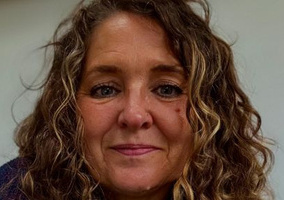



The latest Civil Society Podcast episode has been published with Keon West, head of reparations at the Joseph Rowntree Charitable Trust (JRCT).
In this interview, West discusses the challenges in doing reparations work, why other charities should follow suit and what organisations should expect when trying to contact affected communities.
You can listen to the interview now below or on streaming platforms including Spotify, Apple Podcasts, Amazon Music and Pocket Casts.
AI-generated transcript
George Hayes (GH): Welcome to our latest episode of the Civil Society Podcast. I'm joined by Keon West, head of reparations at the Joseph Rowntree Charitable Trust, and author of best-selling book the Science of Racism. Keon, a social psychologist and visiting professor at the London School of Economics, delves into why charities should formulate policy around reparations, the challenges he has faced to his work so far, and why he has chosen the tough job of addressing misconceptions in a relatively new field of work. Okay, great.
Thanks Keon for agreeing to be on the Civil Society podcast.
Keon West (KW): Thank you for inviting me. That's fantastic.
GH: No problem. And first of all, do you mind just sort of introducing yourself briefly and explain what you do for those who may not be aware of your work prior to joining the Joseph Rowntree Charitable Trust?
KW: Okay, well, well, that was a lot. So I've had a few different careers. So I'm Keon West. I'm still sometimes called Professor Keon West, although not all the time. I used to be an academic. I used to be a professor of social psychology for some time. So I worked in academia for 15, slightly more years than that. Then I also had some experience as the head of research of a DEI consultancy called Equality Group, which is also which is great. That was a great time. And then I was the head of research for the Runnymede Trust, which I think is generally called the UK's foremost race equality charity think tank. So it's been a lot of different experiences. And then my most recent appointment is as the head of reparations at the Joseph Rowntree Charitable Trust.
GH: Okay, perfect and obviously, we're very interested about that intersection between academia and the charity sector. What motivated you to make that switch, or what motivated you to want to do work in both areas?
KW: Well, I was always interested. Academia, I suppose, as a psychologist, many people think of me now as just a person who studies race and racism, and that's true. I have no problem with that. I did write a book, The Science of Racism, which I'm very proud of. However, there's whole realms of other people who know me as someone else. There's realms of people who know me as someone who primarily looked at things like anti-gay prejudice. I did that for 10 years or so, and I still keep up with people who do that. I've looked at anti-immigrant prejudice. I've looked at sexism. Generally, you'd find a lot of things. I would study them to see how we can measure what's going wrong with the world and how we can make the world a better place. The specific moves to specific places have to do with the generally more practical concerns: the quality of life, the work-life balance, how people are treated, how much of a difference you can make. And I started the consultancy because I felt that this was a place. Well, I didn't start the consultancy. I joined the consultancy, so I started doing consulting because it seemed like a place where you could make real differences. And I think that's true, actually. I know there's a lot of flak around a certain kind of consultancy, but there are companies with a lot of power and a lot of money who make very fast-moving decisions. And if you're in the room at the time, you can change those decisions even slightly, and make things better. I think the Runnymede Trust has its own reputation as a very powerful voice when it comes to the British conversation about race and racism. So I don't think that requires much explaining. And I think, in the same way, the Joseph Rowntree Charitable Trust is a powerful, influential, important funder making the world a better place, and so joining them was in many ways just a no-brainer. It was a great-looking place to work, and has turned out to be a fantastic place to work. So no regrets.
GH: Yes, and you've already answered this quite well. But in terms of your actual the specifics of your job at the Joseph Rowntree Charitable Trust, would you mind just again running through that for someone who may not familiar with?
KW: I don't think I don't think I have answered that actually at all. I think that's a thing to tear apart. So, what does it mean to be the head of reparations at the Joseph Rowntree Charitable Trust? So, the trust, the JRCT, at some point started becoming more acquainted with some of the more difficult aspects of the trust history, particularly with where the finances for the trust came from. These finances came from the Rowntree Company, and that's true of all the Joseph Rowntree trusts, so there are three of us, and we're kind of the middle one, and it's true for the other two as well. So all the money comes from the Rowntree Company. It doesn't come from the Rowntree Company now, which is a confusion that many people make. So sometimes if JRCT does something and people like it, they'll say, "Oh, I'll buy more of the sweets". I mean, you can, but it doesn't affect us. We're not really connected to the company anymore. You could boycott the sweets again. This does not affect us. We have been separated from the company for some time. But the money originally comes from the company. But when you dig into the history of the company, you find some very unpleasant things. So the Rowntree Company made an awful lot of money on things like sugar and cocoa in the 18 and 1900s, and you don't do that without doing some bad things in the middle. Not in the historical climate that we understand where we are in Europe, in the UK, vis-à-vis places like the Caribbean and Africa. And so, when you stretch the history, what you find is some pretty unpleasant things. So the company was either involved in, or, if it was not involved in, it profited from things like slavery, indentured servitude, colonialism, and apartheid. And the apartheid one being the most recent one, because that's how top history works. The trustees really took a very serious think about this. They wondered what they should do about it, which is a hard question. And led by the Quaker values, and then in line with the things that we can do and should be doing according to the Charity Commission, they decided that one of the ways to contribute to the good of the world was to do reparations, which was a fantastic decision. So this was made around 2020. There was an official statement released in 2021 in which it was clarified. We know these parts of the history. We acknowledge these parts of the history now. We understand that the company from which we got our funding benefited from or participated in slavery, indentured servitude, colonialism, and apartheid. We're very sorry. And then there was a commitment made to do reparations. The tricky thing is, what is doing reparations? That's quite hard, and that question took up quite a bit of time. I wasn't there for that part, so the trustees had a lot to discuss, and I imagine these are incredibly difficult discussions. And at some point, they said, "Let's hire a head of reparations". Someone who knows how to do reparations will set it up. We'll give them a budget, give them a salary, allow them to have a team, and they can do it. They can actually do the reparations. So I haven't actually told you anything I do yet. This is all background. This is essentially the. I'm probably going to say it wrong, but the Silmarillion. You haven't got to the Lord of the Rings yet. This is all the background of where the rings came from. So here now we have entered the head of reparations, and that's me. And now my story starts with the Joseph Rowntree Charitable Trust, and my job is to figure out what doing reparations means and to get it done. And I should be cautious about that. Officially, I don't really make any decisions. Officially, I advise the board. So the trustees are the ones who legally hold the power. They're the ones who legally make decisions and who hold the responsibility. So I'm an advisor, an expert advisor, and that's why all that other stuff is very useful. So it's good that I, you know, I was a professor before. I know all this stuff about racism. It's good that I worked with other kinds of companies.
It's good that I worked with the Runnymede Trust. It's good that I've done previous work on reparations, because now we're sitting on funding. That's what we are. We're a funder, JRCT. We do philanthropy. We have money. We have resources, and we've decided that we should do reparations. How do we do it? So the trustees cut aside a portion of the budget. They just said, "Well, we're going to set this aside for reparations. The rest will continue to do all the good stuff that we normally do, and the other part will do reparations. And Keon, you get to decide what we do with that part. Well, not decide. You get to advise on what we do with this part". Yes, I do that. I do that advising, and I've come up with a set of principles. I've, you know, I've read a lot about how the trust approached it. I've read a lot by other experts in terms of what they think about it, what the best things to do are. I spend a lot of time thinking. I am not a Quaker, but we do things in line with Quaker values and with a certain kind of discernment. And you think about what's the best way to do these things, and do I have the best way of doing these things? I'll actually go out on a limb and say absolutely not. I do not have the best way of doing it. But I tell you what, I do have. I do have a way of doing it, and I think that's progress. I think a lot of people talk about reparations, and they talk about them in terms of can they possibly be done, as if it's a future dream, as if it's something that might happen later. For JRCT, reparations are not a future dream. It's just a thing we're doing. It is a project we are now managing. We do reparations now. We have a budget. We have a plan. We have a series of plans in a programme, and we're enacting those plans. So I'm going to guess that your next question would be, what are those plans? And unfortunately there are details of that that I can't tell you because these plans involve real people, real people who are alive and who have their own concerns and who deserve better than me spilling, you know, their dirty laundry or their worries. Also, fundamentally, we're not doing this for glory. We're doing it because it's the right thing to do because where our harm is. Done. You should repair the harm. That's what we're doing. But practically, what it looks like is going and meeting with who we call the affected communities. And I don't like that term. And I've had a lot of other people, particularly black people, who don't like the term. Like the hairs on the back of their necks go up, and there's something about. I also understand that when people say words like communities when they just mean black people. It makes everybody a bit nervous. Why can't we just say black people back? And that it's not just black people. It is quite literally the communities affected by the harm done by the Rowntree Company at the time when we were financially entangled with them. We know where they are. There are seven different affected communities in seven different countries, so we have an idea of where they are. We know to a greater or lesser extent, depending on the country, where to find them and what that means. And of course, this varies by history and by time. So, in some cases, some of them are still alive. In some cases, all the original people who were involved with the company are now dead and have been dead for a century or so. And so, we have to ask ourselves questions about geography and descendants and all sorts of other questions. But sometimes we don't. But the model is very much the same either way. We locate the affected community, and if anyone has a better term, do send it in. Send me an email. Tell me what you think the better term is. We locate the affected communities, and after that, we follow a set of principles that to us are incredibly important. There are five of them.
I'm going to try and remember all of them without looking at a piece of paper, which I always encourage people to do. When they say that they really care about the values of an organisation, well, list all of them. So we want material change, not just narrative change. We like systemic change, not just individual change. So we'd rather buy someone a house than pay their rent. We think that's a way of thinking about things. We value the expertise of the communities. We are prepared for a difficult iterative process. So we don't do it because we expect anyone to turn and turn around and say "you've done it right or you fixed it". We expect people to be angry at us, to not forgive us, to hold it against us. What happened, you know, between the Rowntree Company and us? That's fine. We're not doing it for praise or for glory. We're doing it because we think it's the right thing to do and we plan to do it. So it's not just the expertise of the communities. It's a collaborative, community-oriented process. So what do we mean by that one? By that one we mean it's different from regular philanthropy, which very much positions ourselves as a benevolent force in the world going around doing good, which I still think we are. That's what JRCT is. We go around, we do good things. That's what we're supposed to do. That's in line with our charitable goals. That's great, but we are also in this case a force that recognises that harm has been done. So it's not our job to tell other people what the best thing is. We have to approach it with a different kind of humility, and the way I like to explain that is in normal life. If you imagine me as a representative of JRCT, I'm walking around and I have 100 pounds, and I'll give you 100 pounds, and I want to do that because I want to make your life better. But that allows me to, and in fact, it demands my duty is then to make sure that the 100 pounds is going to the best place. So I need to know that you're the person who's most in need. I need to know that you're spending it well. I need to say, well, what's the health benefit to you, or else I won't give you the 100 pounds. I'll give it to someone else who's in greater need or who has a better plan. Essentially, reparations is different. Reparations is I turned up at your house yesterday and I beat you up and I took 100 pounds from you. I acknowledge that some harm has been done, and in that case, it would be incredibly rude of me if you were to say, "Could I have 100 pounds back, please?" It would be incredibly rude of me to say, "Well, what are you going to spend it on?" I mean, that would make me a ridiculously immoral person. It does not matter what you're going to spend it on; it's yours by right. And so, as long as I can find a legal way, a safe way to get that money back to you. I should now sit with you and work with you and say, do you know what? I think it might be a better idea for you to spend this money on medicine rather than I don't know what those things are. Tangfastics. I love Tangfastics. So it would probably be better if you spent it on medicine than Tangfastics. Because fundamentally, it's your money. If you want to spend it on Tangfastics, that is a choice you can make, and we're working with communities in the same way. And I want to preface that also by saying I don't think communities will spend their money on Tangfastics. I think that they know better what they need than we know. I think there's some humility we have to approach it with. But I also think we have to stop thinking of ... we can't think of reparations as just regular philanthropy. What it is, it is repairing the harm, and some of that comes with the humility of saying it is your money by right. Whatever you want to do with it, we will support you so long as it's legal.
GH: I just picked up on something that you said, and you also discussed it at length at Faith Charities Forum earlier this year, and this point about if say for example charities are struggling to contact these affected communities, or they have concerns about money being misspent, something that you just touched on. As reparations policy is a relatively new area, I guess what advice would you give to those organisations who may not have these principles in place yet, or may not be as confident with the subject matter as you are?
KW: I'd say when it says trouble contacting affected communities, I think I'd have to know more about who they're trying to contact. So in some cases, this is easier than in other cases. I think we often talk about reparations as if it's all concerning things that happened two centuries ago. This is not true. A shocking amount of terrible things have happened within the last few decades, and a number of the people to whom they happen are still very much alive. They have email addresses and phone numbers. They are searchable individuals. Sometimes, depending on who they are and what's happened to them, they have actual community groups of their own, and they get together. They talk to each other. They know how to be contacted. And in fact, I would actually say, depending on the communities involved, there is a likelihood that they have already reached out to your company or to your organisation to say you've done these things. Would you like to do something about that? And I would say that's definitely the case for us. That we've had people reach out to us. So if a company is willing to go back through its own records, you'll probably find people who've already done this themselves. They've done half the work for you. So that's sometimes what happens. In other cases, I do admit it gets much trickier. So if everyone who's directly involved has been dead for 200 years. Now you have a serious set of questions. There are a number of different models. Some people, like there are some universities, for example, in the U.S. who have actually paid people, and you can find people who do this. They will track down the individual descendants of every single person involved, and this seems like it should be harder to do than it is, but apparently it can be done. One of the unfortunate things about a system like chattel slavery is that human beings were interpreted as property, but property, especially expensive property, comes with receipts. And so, if you know which libraries to look in, you can find the receipts. And I know that Georgetown University has done this. I know that Harvard has done this, and they've had a surprising level of success looking up these specific names of specific people who were enslaved or who were sold, and finding who their specific ancestors were. And so that is one way you could do it. Another way you could do it is decide that specific blood relatives are not philosophically the way you'd like to approach it, but you'd like to approach it in terms of geography, so you know where the communities were. So if you, as an organisation, had an estate or a plantation, you know where it was. You have the records for that. Go look, find it, see who's living there now. It is likely that that community is still being affected by the damage that was done at that time. And actually, as some of the experts that we have advising us have said very clearly, there is an aspect to the individual descendant model that misses out on the damage to the place and the land. It's not just a matter of blood, but you have damaged a place, and you have to consider that geography in terms of how you do the work. So I'm not saying there's no debate within that. There are lots of debates, but it depends on if you approach it with a mindset of "I plan to do these reparations. I'm going to do it." If you make it your business to find people, you will find them. You might have to spend a bit of money, although less than you'd imagine in most cases. You might have to check your old emails, but if you're determined to find them, you'll find them.
If you don't want to find them, you will find many excuses not to. But they're still there, and in some cases, their voices are already out there asking for us to do something, and so we should best respond to that.
GH: I'm just curious generally about what the response has been. I know your role was publicised quite widely in the Guardian. I think they did a news story about it, and I was just wondering if what the reception has been sort of in the sector and more widely to news of your role and maybe suggestions that more charities should be taking this up. I mean, do you think enough charities are taking reparations seriously?
KW: Gosh, oh, tricky question. Do I think more? Do I think more charities should take reparations seriously? Yes, I'd say yes. More charities should take reparations seriously. I think the responses were varied, so I do understand that reparations is a bit of a contentious issue. British society at the moment. Some people, of course, were really quite happy. So I've had conversations with other people doing reparations. You know, the Church of England is famously doing reparations. The Guardian's doing reparations. Some other people are doing them, and we can talk to each other. And it's always great when people decide, oh, we'd like to go on a journey that's similar to the journey that you're going on, and they've been doing it longer, so I can learn from them and I can get their experiences, and that's fantastic. But it's always nice to have someone else in the field who you can talk to, and these are people I respect and who have healthy. And they don't have the same opinions as us. You know, we are guided by other things. They're not Quakers, for example. But at the same time, we have a lot we can learn from each other. Some people react negatively to reparations. Invariably, I find some of that negative reaction is based on either a misunderstanding or a misrepresentation of reparations. So I I I think there's a very small number. I never say there's nobody because there will always be someone who surprises you. But if I were to say to the average person in the UK, if I went over to your house and I beat you up and I stole 100 pounds from you, should I give you that money back? And then they'd say, of course, that's not it's not a difficult question. And I'm like, okay, well, on some fundamental level, you agree with the principles behind reparations, but if it's misrepresented as something else, then they don't agree with it. But generally, the model that we're doing, so some people would write in and say, for example, "I'll never buy Rowntree sweets again," which again we don't sell Rowntree sweets, so we don't care. But the idea is that well, it's not that we don't care. I mean, there are several complicated questions around the company, and you do what you want. That's between you and the company. That is not a relationship that involves us. But they misunderstand the JRCT funding as from taxation, for example, which it's not, or from the sale of the suites, which it's not at the moment. So we we're not we're not affecting the suites that you're buying. We're not affecting your taxes. This is money that's already in the trust. We're just deciding what to do with it. And I think when people learn accurately what's happening, they're much more likely to agree with it.
GH: Yes, no, that's an interesting point you just made. And actually, I recently had a conversation with a relative, and they had this idea about reparations being as, as you sort of touched on, being totally taken from the state and then just coming at the expense of the average person, which is obviously not the case when it comes to charities. And I guess within the sector, what would you say to certain charities that may not be as well financed as Joseph Rowntree Charitable Trust, and maybe say that they don't have the money to pay these reparations? Is there anything that they can be doing instead if they don't have the finance at this at this stage in time?
KW: Well, first of all, there are lots of charities with more than us and lots with less than us. What I would say is, I grew up, so I didn't grow up Quaker, and I'm not Quaker now. I did grow up in an evangelical church in Jamaica, and as a young boy, I wasn't very rich. But what I was taught was that you can always tithe. That if you have no money, tithing is very easy because 10% of zero is zero, but if you have one pound, 10% is 10 pence. And the question there, the the richest person in the church and the poorest person in the church, they're having the same conversation with God, and they it I my telling the pastor I only have one pound is not interesting because we can all calculate 10% of one pound, and that I still think there's some truth to that. Now I won't say exactly what our number is, but I'd say for a religious society, I think a religious society is accustomed to the idea of tithing. Many religious societies are, and whatever your budget is, I think you can put aside about 10% of it. Doesn't have to be exactly that, but could be a bit more, could be a bit less. But this is in theory something you've grown comfortable with. So I think religious organisations, in particular, should be accustomed to the idea of tithing, and I would say a good starting point might be 10%, just 10% of whatever else it is, and it could be more than that. Again, I won't say what our number is, but I would say that's not a terrible place to start. I do understand that some people say, "Well, you know, reparations, the calculations in which the UN says that if the UK were to pay for slavery, it'd be this many trillions of pounds." People say we couldn't afford that. I hear that. There are lots of people in my community who are not wealthy who give to. Of what they have to the church, I could do it as a child. You can do it, and there are organisations bigger than us. If all the organisations like us in the UK gave about 10%, that would be a massive difference around the world. It'd be such an important change, and it's something I know that we can do. The question of whether they should do it. That's a question they have to wrestle with with their own consciences, their own consciences. But I think the question of whether or not it can be done is a different question, and the answer is yes.
GH: You've spoken a lot about philanthropy and the sort of distinction between reparations and doing philanthropic work at Faith Charities Forum. You sort of touched on something about the competitive. You didn't like some of the competitive aspects of philanthropic work. If I'm not paraphrasing too much.
KW: Oh no, I like the competitive aspects. Yes. So I don't want to say I don't like the competitive aspects. So it's coming back to the example. So if I have 100 pounds and I say I want to make the world a better place, then it's fine if you come to me and say I think the best way to do this is to invest that 100 pounds in a thing for fly-tipping, you know. And then I could say, all right, that's an interesting idea. But then someone beside you says, "oh, I think the best way to do that is to invest that 100 pounds in this I don't know flu vaccine". I'm like, okay, well that's great, and then these ideas compete with each other. But as I said, reparations is different. It's not just that I have 100 pounds, and I'm trying to find the best thing. So you apply with your fly-tipping idea, and someone else applies with the flu vaccine idea, and someone else applies with a general litter pickup idea, and someone else supplies to clean up the waterways. Like no reparations, we start from. But I, there was some harm involved. I took your money. Yeah. So to make you then compete with other people, and to you know, for me to say, well, I don't know if you're going to spend that money well enough. You know, I don't like what you're doing with it. You must compete with other people. Is offensive. We start from understanding harm was done, and we're going to repair it. It's your money. We took it from you yesterday. We're here to give it back. And so it's not the same kind of model where you have to present an idea that's good enough to be deserving of it in competition with other people. In some fundamental way, you're already deserving of it because it's your money. Now, does that mean that we'll do anything? No. We will, of course, always do things in line with our charitable goals. We will always do whatever is in line with the law, in line with the charitable commission, with the charity commission. That's how we do everything. That's how we do all our philanthropy, including this. So there are some legal limits on what we can and can't do, and I could see that applied to the other example as well. So there could be, for various reasons, you know, legally, sir, you can't do certain criminal activities to get that 100 pounds back to the person who you beat up and you stole from yesterday. We obey the law. We follow the Charity Commission. We do things within our charitable goals, but once we understand what's in that rubric, our goal is to do the repair. Our goal isn't to make you compete or to prove to us that you're good enough. This isn't. This isn't about that. This is about fixing the harm.
GH: Yes, and again, you mentioned about the need for this work to be sort of, I guess, structural is my interpretation. Sort of addressing long-term change rather than just going in and doing something performative or to make a big flash of it, something that could actually lead a particular community into being more self-sufficient. If that's correct?
KW: I'd say that's too different things. So they're not flashy, and we're very serious about this. Although we have had some genuine pushback from some very intelligent people. So I entered this really planning to run a lot more quietly than I think I'm going to end up running in the end because I said, "Why do we need to make a big song and dance about this?" That you know, you go to someone's house, you beat them up, you steal 100 pounds. I should just go to your house and quietly hand you back the 100 pounds. If I start putting it in the news and saying, "Look at me, I'm giving back the 100 pounds," I think my heart's not in the right place. I should just focus on getting the good work done. I've had some really interesting challenges, so I've had a conversation with professor Hakim Adi, who reviewed the work that was done before when all the Rowntree Trust actually. So there's three of us, and we all, with the Rowntree Society, we all reviewed the history of the company, and he did some reviewing of that to you know check on its historical accuracy and the robustness of the research, and I was talking to him a bit about what we're doing now, and he said, "Well, you can do this quietly, but if you are doing good things, so if you are doing good work, then you also have a duty to explain what your practice is". Explain why it's good practice. If you don't do that, then you are doing the world a disservice because you are not showing people what good practice looks like. So you really do have to then shout a little bit about what you're doing, just so that people can learn from it. So I'm struggling a bit with that. We're coming between those two different value systems. So flashy, I'd say, is bad. But I'd say that probably for all philanthropy. If you're doing philanthropy, you know, I'm pretty sure Jesus was fairly much in line with that. You know, beware of the person who hands money and who gives to his neighbour or gives to someone else and says, "look at me, look at the good things I'm doing". Beware of the person who prays in the public square. You know, think more kindly of the person who's praying in the privacy of his own house. Do good things. Do them quietly. You don't. You don't need praise. But at the same time, set a good example, and you have to balance those two things out. And that's what we're trying. So that's the flashy thing about the systemic idea. I think the best way to explain it is Monopoly. Have you ever played Monopoly? I assume you have.
GH: Yes, but I'm not particularly good at it.
KW: Well, do you know, it is a more strategic game than people realise. People think it's luck-based. I had a friend who was a Monopoly champion, and he explained to me there are certain rules you have to play by. So, for example, never buy the dark blue properties at the end. Just don't do it. If you can avoid it, don't do it. They're very expensive, but nobody ever lands on it. Like, so apparently you have to buy the reds right after the second corner. There's all sorts of things. Right. Yes. But it's a strategic game. But sorry, I got diverted. So if you play a game of Monopoly, and let's say there's someone who was negatively affected at the beginning of the game of Monopoly. So I take all their money, so they don't own any property, and all they do is go around the board giving to other people. So I could give this person a pile of money. I could give them 1000s of pounds of Monopoly money, and I could feel really good about myself. But if that's all I've done, I have created a cycle of dependence because all they will continue to do is land on everyone else's hotels, and then they will have to come back to me and say, "Could I have more money, please?" And I can be like a really good person just giving them money every turn, but I have never fixed their problem. If I want to fix their problem, I buy them the reds on the corner, and I put some houses on that, and I say that's yours now. Then a few turns from now, they don't need to ask me for anything. They don't need to ask me for anything. They have the reds and they have their own houses on it, and they can build their own power structure. They can change society the way they want, and so we're thinking of that. We're not trying to pay rent. We're trying to buy houses, and systemic change is a difference between a programme or a project that, for example, gives people a bit so they can get by for a few years, versus really getting some assets, some power, some community wealth done, so that people don't need to come back to us. Which is not to say that we won't keep doing it, but we're not trying to do it in an atmosphere of dependence or repeated need; we want people to be stronger, to be independent, to be able to really feel the power that this transfer can do, because power was taken away, agency was taken away, options were taken away, and repair means giving them back.
GH: I think the Monopoly example is a very helpful and clear one. So I started to think back about when I used to play Monopoly with my dad, and he was very, very good at it. And I was in that exact same position where I think he had hotels on the Reds or the Greens.
KW: Ah dangerous, dangerous.
GH: I would get there and have barely enough to pay, and you'll say, "Oh, don't worry, you can pay me next time, and I'll go round and only have 200 pounds, and still be in debt.
KW: Pay me next time, but you'll never have money to pay him back unless you have land of your own.
GH: Exactly. So there's no point me still being in the game, to be honest. So yeah, it's an interesting point to make, but I guess in terms of, you've touched on this before, future planning, you're not able to give specific targets per se, but do you have any sort of particular plans next for sort of doing reparations at the charity?
KW: So tell you what, I'll say, I can't tell you any specific future plans now, but I want to say that doesn't mean nobody knows the future plans. So part of our respect for the communities that we're working with, we are open and honest with so they know our budget. They have a much clearer idea about what our actual budget is than the general public does because that's fair. I couldn't come to your house and said, "Oh, I stole some money from you. I should give it back. How much money exactly? Oh, I don't know. Oh, you know, we'll see. What, what do you plan to do with it? Let's talk". That's silly. I want to say this is a budget. Here you go. So we're as open and transparent and respectful about that. But we don't need to tell everyone. That right now we're working with the people we're working with and they know those things, but the plan is really to maximise transparency, maximise respect, maximise collegiality and collaboration. We are reaching out. We're, I mean, finding people like we said, it takes work. I wish it was a thing we could do instantaneously. It isn't. It does take work, so we are putting that work in. We found some. We know that there are others left to find, and we are going to find them. And then sometimes that's work, not just a finding, but a definition. So we continue to do that. We know that there are seven places where we need to work. We found some. We're going to find the others, and when we do, we will repeat the cycle that we've already set up. We will talk to them, explain to them the situation, discuss the budget with them, say we're very very sorry. And by the way, I will say a lot of people, when they hear about my work, they kind of giggle at what they perceive to be the absurdity of what we're doing, that you can't just email people and say, "I'm sorry about slavery," or "I'm sorry about apartheid," or "I'm sorry about indentured servitude or colonialism," and they say, "What a ridiculous, what a ridiculous thing to do." And I would say this is only because they are not on the receiving end of such harms. You can tell people sorry for anything if you really mean it. You can tell them sorry for anything. If you've had a genuine moment of reflection, if you realise that what you did was actually wrong, or what your representatives did, or even if your past representative did, if you realise that a wrong was done. You can call up and say, "We are sorry." That is the first step to repairing anything. As small and as humble as it might sound, is the first step. And once you do that, you'd be really surprised at how people respond to it. There is no sin big enough that people aren't willing to say. And I can't speak for everyone. Some people, of course, will say, "We'll never forgive you, never forgive, never forget, all that kind of thing." But you know, a lot of people aren't like that. A shocking number of people are not like that. And I would say the responses we've had have been overwhelmingly positive. That people have been kind, they've been generous, they've been forgiving, they've been incredibly open-minded, they've been willing to trust us. People hug us. They call us. They call us pet names. That they're nice to us. They want to see us. They, and this is this is before a lot of the substantial work has been done. But I think people can see when you're being honest with them. They can see what your goals are. They can see when you're trying to do PR. They can see when you're trying to skirt around something. They can see when you're trying to just put a salve on your own conscience, and they can see when you're trying to do the right thing. And if you approach it saying, "I'm trying to do the right thing, the right thing," we're not doing it perfectly. We don't know what we're doing entirely yet. We understand that we have limitations, but we understand that what happened to you was wrong, and we're here to do some repair together. If you want to work with us, people normally say, "Gosh, thank you. We'd been waiting a very long time for someone to say that.
GH: And with regards to sort of giggling and people not taking it very seriously, do you refer to just the sort of wider social climate? You know what we see in the news and about sort of divided society, or is that kind of within the sector? Obviously, not naming any names, but just yeah, I'm just curious.
KW: I'm not saying I don't want to in any way suggest within the sector. I'm not trying to badmouth anyone. I'm talking literally my friends who I talk to at dinner parties and on the train. They say you can't just email people. I'm sorry, you know about slavery. I'm sorry about apartheid. I'm like, well, you have to start somewhere. So if you're not going to start with an email, you have to call them and say it. But you can't do reparations without starting with an I'm sorry. You have to do that part. Which, by the way, JRCT has put out a statement saying, you know, we acknowledge that the Rowntree Company benefited from or participated in slavery, colonialism, indentured servitude, and apartheid. We are sorry. You have to do that part. I have to say to you. I mean, could you imagine? I go to your house, I beat you up, steal your money, and I just say, "Oh, here's 100 pounds." How how dare I? I must start with I am sorry for what I did. Here, I'm trying to repair it. At that point, we can have a discussion about your medical bill, inflation. So whether the 100 pounds still worth what it is, what it was worth. But we have to start with that. With the I'm sorry. So I general people, and what I would say is people also they get very nervous. I think there's a lot of emotionality around the term reparations, and I think that comes from many places, but I also think it comes from in some places a deliberate effort to contort what reparations are to make them deeply unpalatable. Like I said, I've never met anyone anywhere. Actually, I met exactly one guy at a party who suggested that if I, you know, beat you up into 100 pounds from. I shouldn't give it back, but he was an interesting guy. But only that one person. Every other person I've ever asked that question to has agreed immediately. Well, of course you should give it back. Yes. The objections are usually about I would say things that are misinformation, like we were going to take this money from, let's say, for example, poor working-class white people and transfer it to people abroad, not true. In our case, that's in a trust. It's part of the philanthropy that we would do anyway. So that's that doesn't count. Even in the case of national reparations, which we are not doing, but I think there are other people who've spoken very very eloquently on it. So I I am not I I I'm going to say this. If I am misquoting this person, I apologise. I just saw it on the news, so I could be not exactly giving his ideas exactly as he said it. But the former mayor of Bristol, Marvin Rees, he points out that he's mixed. He is mixed race, so he has white working class family, black working class family, and people always go up to his white working-class family and say, look, look out for the reparations. They're trying to take your money and give it to the black working-class people, and he says that's not true. We know more about British history than that. We know that when enslaved people were finally, when we finally stopped doing slavery in the UK, the people who had been captured and tortured and enslaved received nothing, not a penny of compensation from the British state. The people who received the compensation were the people who, quote unquote, owned the slaves, as if they should be rewarded for their brutality rather than punished for it. And that this compensation came from regular working white people in the UK, the other people who had the money was taxes. And in fact, not only came, came is I guess true because it was the past, but continued to come up until 2015. So our taxes, you have paid taxes to contribute to this fund. It was an enormous debt. So we have paid off slave owners for their slavery. To me, that's that's bizarre. And I think if the average UK person thought about that for a moment, they would be rightfully quite angry. Why did my money? Why did your money? Why did the money of all those poor working-class white people go to pay off a group of very wealthy elites who were torturing people? That should have happened. And I don't, I don't know anyone.
I mean, maybe, maybe some people out there are, so I'm not speaking for everyone. But I don't know anyone who's suggesting a model where we go raid the homes of poor working-class white people in the UK. No, I think Marvin Rees quite sensibly suggested some of that money should come from the elites. In terms of JRCT, that money is coming from us, from our endowment, because we know where our money came from. It came from the Rowntree Company, and we know what they did. I think the people responsible should pay, and I think that's fair. I think that's how it should be done. I don't think I think I can't think of a single person suggesting the most aggressive, divisive form of reparations that is often brought up as kind of a straw man argument to suggest, oh well, this is what they're doing. Coming from, you know, Sheila down the street, you will have to pay millions in reparations. But we know Sheila down the street doesn't have millions to pay in reparations. The money went to a very specific place, and that's where it should come from.
GH: There's definitely, I think, an intention to misdirect and misattribute reparations and kind of politicise it and make people angry. To be honest, I think that's something that's intentional. Is that something that the charity is trying to address? I saw that you've recently recruited, well, not you personally, but the wider organisation, a communications and engagement officer for reparations.
KW: If I can advertise for a moment, JRCT is a wonderful place to work. Please do apply if you're interested and you have that kind of skill set. It'd be a great post. So do look on the website, find the application. You know, throw your CV in if you're interested. But yes, of course. So we would like to clear this up, and we've had lots of advice. Again, some from very, very intelligent people who I really respect. And one of the things one of them said to me was, "You have to think about this carefully, maybe don't use the word reparations. Use a different word". I did think about that. I like the things that are true, the things that are accurate a lot. I have been told that I have. I think one of my my former employees actually said "you have a religious a religious belief in the value of the truth" and I thought that was an interesting thing to say since that's kind of what religious people should believe anyway they should have a belief in the value of the truth and this has come up before so, like I said my book is. The Science of Racism, and my editor did, "I don't think you should use that title. It makes you sound like a eugenicist or a Nazi". I said no, but that's what's in the book. It is science on the topic of racism. That is literally what's in the book. That's what I want on the cover. And they could be right. I think the marketing team has come back and said, I'm not sure this is helping with the sales of the book. It's done fine. It's been published in four different countries. It's done, but the marketing team has come back and said you might have wanted a snappier title. And actually, the French title does not say the Science of Racism. The French were not interested in my arguments and changed the title to what essentially translates as "I'm not racist, but," and that's what they sold it as. I do think you should just say the truth. You should say what's what's in the tin, and what we're doing is reparations. We've been criticised for that, both externally and sometimes like from the affected communities themselves. The suggestion being that, you know, all you're doing is money. You think money can solve everything. We don't think money can solve everything. We think money can solve money problems, and we think we're not just doing money. We we're doing the first thing we're doing is acknowledging. Second thing we're doing is apologising, and the third thing we're doing is working with people with the resources we have to repair. And that repair can be whatever you want it to look like, so long as it's legal. So this is not one of those things that it can be missold as being. This is something that we're that is repair in all the forms that we can bring with all the skills and all the resources we have.
GH: Yes, and I think you've covered everything really, really helpfully and clearly. And yeah, the book title. I can see why the publisher might want to change it, but if it gets across the message and that's what the book reflects, then surely that's the whole point.
KW: You must protect yourself against misinterpretation. I do understand. I can see why people would say there are better terms like reparative justice or repair because reparations has now become tainted. I do sometimes think though that language is not just a way we say things. It is a battleground, and that if to retreat from the word reparations and then take up a new word is to lose some ground, and the new word will be tainted as well by misunderstanding. And no language system is perfect, and there are good arguments for doing things both ways. The way I like to do it is to say what a word is, to say what it means. When people say, "Oh, reparations," you mean you're going to take taxpayer money and do this. I mean, that's not what we mean. What we mean is that it's the money in the trust, and we're going to do it this way. And they say, "Oh, well, you mean you're going to be divisive?" And I could say, well, nothing we do is divisive.
Everything we've done has actually clearly and tangibly brought people closer together. It is for community and forgiveness, you know. But we can address what people say, and I think there is a power to clarifying the misconceptions people have rather than just retreating from them.
GH: I just had a couple more questions, and one of them is just about what it's been like working with the board at Joseph Rowntree Charitable Trust, and sort of getting that messaging across first of all, and then second of all, trying to put forward a tangible reparations policy. You know, we've been talking for nearly an hour, and it's been really helpful and instructive to me as someone who's relatively not an expert in the field. But I can imagine trustee boards historically aren't always, I would say, historically as open to new ideas. You know, how has that been to sort of get that messaging across? And I'm not saying the Joseph Rowntree board; I'm just sort of talking in general terms. But yeah, how have you found that ... what sort of process has that been like for you?
KW: So it is a different process in some ways. So I've mentioned I've had other roles in my life, and of course you always have a boss, you always have someone you adhere to. So no one is free. You think even people who say things like academics can do whatever they want. Yes, they can, but unless they get these teaching scores and publish in those journals, they will not be academics for long. So there, you have to do certain things. There, there are rules you must adhere to. One of the big adjustments for me is that thing that I said at the beginning that I have to constantly remind myself of, because sometimes I say, "Well, I'm doing this," and then I have to hold myself back and say I'm not doing that. I am an advisor. The board does all the things. So that's a big change for me, which I think people in philanthropy are much more accustomed to. They know that the legal power, the financial power, rests with the board, and that everyone else. So I could be head of reparations, and you could be head of something else. But technically, we're not making these calls. We are advising now. The board generally does take our advice. They will question, they will challenge, they will push, and that is their job. It is their responsibility. But I will admit that in my previous roles, so if I also were to give myself like the job of an author, I had an editor who would say, "You can't say this. This chapter is boring," or "I don't understand.". Understand this, cut it out. But essentially, I get to write what I want. I don't advise my editor on what will be in the chapter. They advise me, and now it's different. Now I'm the one doing the advice, but I can't make the calls. And so that is interesting. I would also say the board has expertise, but they have different expertise. And the board, for the most part, isn't representative of the affected communities that we're working with. The board is half Quaker, which is on purpose. We're a Quaker organisation, and we want to keep Quaker values in, and that's very important. And what that means is that they have their own expertise, but they know they knew they didn't have expertise on reparations, but that's that's why they hire people. In fact, that's how every organisation works. There are lots of things I do not have expertise on, so I'm really not great on financial systems. I can draw up a budget, but if I do, I would have left out some aspect of tax or national insurance. I would have misunderstood something about inflation, I'm not that good at it. But we hire people who have expertise in it and who are very good at it. And the board said, "We know we have discerned what the right thing to do is. There was harm. We're going to repair it. We don't know how to do it." So they hired someone who hopefully does, and that's me.
GH: No, that's that's very helpful and yeah, useful to know. I don't know if you will be able to say this, but are you able to say how much money is being set aside for this work?
KW: I can't say that now. I do think at some point we will say it.
At the moment, we're not, and that is because we are being somewhat cautious and somewhat quiet, and you know we're figuring a lot of these things out. And some of the finances do genuinely need to be figured out. So in all philanthropy, there is a balance between various things like how much you give and what your operating costs are. Like every philanthropy organisation has operating costs, and that affects how much actually ends up going out to communities, and so there are questions like that. So, I won't say how much we're doing. I would say if anyone would like to guess, I would not stop people from running with the idea of well, you know, as a religious organisation or as a religious community. I would say I would advise people to think about starting from the 10% place, while very carefully saying that's not our number, and we're not going to tell you what our number is. You can guess what our number is, but that would be a good place to start if you're going to be a good moral religious organisation. And I would not fight you on that. And what I would also say is that, like I said, the affected communities know how much money there is. They understand that. We have been as transparent as we can about our budgets, because that is one of the basic acts of respect that we can offer them.
GH: I just had one more question, and again, it's something that you've referenced. But I was just wondering, has your perception of reparations work generally changed since you started your role earlier this year? You mentioned a few adjustments before, but just, in a broad sense, yeah, has your own sort of perception changed over that?
KW: No, I would say my perception of operations has changed enormously over my life, and I think this is an important thing for me to acknowledge. I'd say actually, a lot of my perceptions of a lot of things have changed over my life. So as I said, I grew up in Jamaica. Jamaica is a majority-Black country. I grew up, I don't like using the word privileged, but that's probably just because it makes me feel very uncomfortable. But I grew up. I grew up comfortably enough, you know, as the son of very educated people who went to a good school and had a good life, you know, as an able-bodied majority member in almost every way, you know, religious and sexual orientation and race and culture and all sorts of things, I generally perceived the world as fair. It wasn't until I started living in other countries. I, you know, I lived in the U.S., I lived in France, I lived in the U.K., and then I thought, oh my goodness, there are entire systems of oppression I did not notice, which is silly. You'd think as a as a black man I would know better than that. But it's amazing how privilege masks what society actually works like. And when you move to different places, you say, oh, I see it now. I see what I see what all those other people, those minoritised people, have been talking about. And that is why I studied these things in university, and why I went on to be a professor of social psychology, and why I did my own experiment, and why I wrote the book. Because I think many people just don't know what the evidence is, and if you can explain it to them, intelligent, honest people will change their minds. And in the same way, a while back, I didn't think reparations necessarily made sense either. So people would ask me questions like, "Oh, what do you think about reparations?" I'd say, "Oh, very confusing." You know, what do you do with mixed-race children? Do they pay or do they get the money? And I clap myself on the back because I said something very intelligent. And of course, people who actually do reparations, this is not a serious argument against doing reparations.
If you actually tear them apart, very few of the arguments against doing reparations stand up to a kind of basic moral scrutiny. So you know, when people say, "Well, we can't possibly do reparations until we know exactly how much money we should be giving back. I say, would we do this in any other case? So if I went to your house and I beat you up and I took some money and we had no idea how much it was, would we say, well, I can just keep this money forever until we can determine exactly how much money I should give? We would not say that. What we would say is repair should be done as soon and as well as possible. So we'll make an estimate as quickly as we can and effectively transfer that back to you. That's how we'd react in any other situation. So I think when you think about the reparations, the arguments against them, the moral and the philosophical arguments, I've experienced great change. What I would say the biggest change is now is that working at JRCT? I no longer really spend much time on that kind of, I was going to say philosophical fluff, but I don't want to sound dismissive because some of that's real philosophical work. And I would recommend reading some of the work of people who care about things like effective philanthropy and you know who who want to make these plans? So this is important, but for me, reparations isn't a philosophical argument. It's a project to be managed. It's something we do. We have a budget, we have a plan, we have collaborators, we have advisors, we have timelines. We're just doing the reparations now, and I think maybe that's the biggest change: the understanding, the shift from saying reparations is definitely not a dream or a hope or an aspiration. It is simply something you can do. If you've taken money from someone, if you went to someone's house and beat them up and took it, you don't have to sit around dreaming or planning how to get it back. You can give it back. You can give it back imperfectly. You can give it back with errors or with flaws. You can make mistakes. You can be self-aggrandising. You can mess it up. Just don't break the law and follow the Charity Commission. But you can start giving it back today.
GH: Well, I think that might be the best place to leave it. Yeah. Thank you so much, Keon, for a very sort of insightful conversation. And yeah, monopoly analogy really helped me to fully understand and get to grips with reparations and the work you do.
KW: I really appreciate that. I find analogies and metaphors so strange because you're describing something by saying what it's not, but it seems to help. So I'm glad it does. Thank you very much.
GH: Thank you. If you made it this far, thank you very much indeed for listening to our conversation with Keon West, and I hope you have taken something away from an insightful discussion. Please keep an eye on civilsociety.co.uk for more content like this. We hope you enjoyed this podcast, and rest assured there will be many more to come.