

I have fond memories of last summer’s Delivering Change Together summit at the launch of the Civil Society Covenant. Sitting alongside colleagues who helped shape what was to be unveiled as a tool of transformation for civil society and government, there was a collective sense of pride, empowerment, and hope that this marked a turning point after over a decade of shrinking civic space in the UK.
We heard from then-prime minister Keir Starmer, culture secretary Lisa Nandy, and other senior ministers on how the covenant signalled a long overdue reset of the relationship between government and civil society, one rooted in partnership, recognition, participation, and transparency.
Working with my fellow members of the Civil Society Advisory Group, time and effort were spent drafting and shaping the covenant into a framework that had the potential to be genuinely impactful. After discussing lessons learned from the Compact, the covenant had to be rigorous but accompanied by the accountability and enforcement tools that previous attempts lacked.
A year on, and under a new prime minister, Britain continues to face significant challenges, including cost-of-living pressures on communities and charities, rising social polarisation, and escalating far-right terrorism and anti-Muslim hatred.
In this context, the covenant is an indispensable tool for developing effective policy responses and strengthening trust and partnership.
Strengthened engagement
The covenant has created a culture of openness and dialogue, encouraging forums for collaboration between civil society and government and giving organisations greater access to policymakers.
The establishment of a partnerships unit at Number 10, as well as the Civil Society Council, served as important steps in formalising this partnership, enabling sector leaders to engage directly with government.
MCF’s own experience thus far has been an encouraging one, with the government proactively consulting civil society on issues affecting charities and the communities they serve, whether in response to the impacts of the Iran war or rising anti-Muslim hostility.
This reflects a shift in both culture and practice, through which civil society is increasingly recognised as a trusted partner in identifying issues and devising solutions.
Meaningful inclusion
But despite these clear improvements in engagement, concerns remain about the breadth of individuals and organisations being consulted.
The Civil Society Council, for instance, still does not adequately reflect the diversity of the sector or the population it serves. This matters because of the distinct challenges facing ethnic minority communities; racism and discrimination, disproportionate levels of poverty, higher rates of infant and maternal mortality, and unequal employment outcomes, among others.
Meaningful inclusion is crucial as people from across civil society bring expertise, insights, and lived experiences from their organisations and the communities most affected by these structural challenges. A broader group of voices would therefore strengthen the diversity of perspectives informing policy and help ensure that decisions reflect the realities of all communities.
Furthermore, while the government has consulted a handful of Muslim organisations on tackling anti-Muslim hostility, their inclusion in mainstream policy discussions remains the exception rather than the norm.
This was particularly evident in the absence of Muslim-led organisations at the Downing Street roundtable on the Iran War.
Anti-Muslim hostility typically increases during periods of geopolitical crisis, and rising energy and fuel costs due to the conflict have disproportionately impacted Muslim households suffering from high levels of poverty and deprivation.
This increases demand for Muslim-led charitable services such as food banks and mental health support, placing an additional burden on organisations already operating in a challenging environment.
Without Muslim community representatives at the table, these crucial insights were missing from the discussion.
Chance to renew commitment
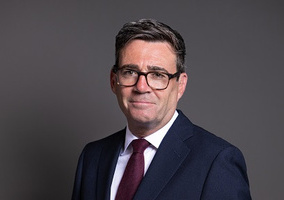
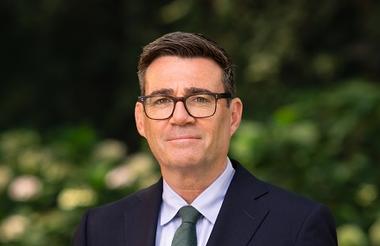
As we commence a new premiership under Andy Burnham, inclusion is essential, not optional. Travelling across the country, I witnessed first-hand how local grassroots organisations are vital to understanding community needs and shaping tailored, place-based solutions.
The covenant commits to government and civil society working together “on the ambition to co-produce solutions with those communities and citizens that are most affected.” This must be better reflected as the covenant enters its second year.
The Civil Society Covenant has strengthened recognition, participation, and collaboration between government and civil society. While this progress is encouraging, gaps remain around representation and cross-sector engagement.
The change in prime minister offers an opportunity to solidify commitment to the covenant and embed its principles across policymaking, and this transition cannot afford to become a distraction from its implementation.
Burnham’s commitment to devolution can also shape the covenant’s next phase, entailing meaningful engagement with trusted, locally rooted organisations recognised as essential partners in shaping policy and placing power back into communities.
MCF urges government to prioritise civil society engagement that is inclusive, representative, and grounded in co-creation, ensuring the covenant's promise is fully realised.