
Voluntary sector leaders have attended a government roundtable in Whitehall to discuss the impact of the US-Iran war on charities and the communities they serve.
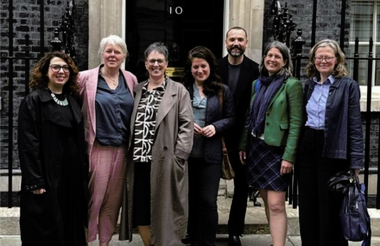
Yesterday, eight representatives from infrastructure bodies including ACEVO, NCVO and the Charity Finance Group (CFG) met ministers and government officials at Number 10.
The meeting began with remarks from civil society minister Stephanie Peacock and economic secretary to the Treasury Lucy Rigby.
The group said it shared insights on the voluntary and charity sector’s “vital role in building cohesive, trusting and equitable communities” and reflected on the Civil Society Covenant.
It said ministers recognised “the substantial and impactful contribution to society” made by sector organisations and that taking into account their needs “was vital to supporting the people and communities” they serve.
The group highlighted the sector’s financial and funding challenges, including rising pressures on public service contract delivery, fundraising, and inflation.
Financial and time constraints faced by volunteers, in light of increasing fuel costs and cost-of-living pressures, were also discussed.
The group shared evidence of charities reluctantly reducing support for vulnerable people and examples of some using their reserves to meet operational costs.
‘The door is open for future discussions’
Clare Mills, co-CEO of CFG, said the roundtable was “timely and very positive”.
“Between us, we were able to share the current and potential impact of the war in Iran, set against the broader challenges that charities and their communities are already responding to,” she said.
“We’re encouraged that government is listening to the sector’s concerns and making sure that the Civil Society Covenant is upheld.
“By working in partnership, we can continue to support the thousands of charitable and voluntary organisations that do vital work in communities across the UK and overseas.”
Mills said the group understands that “the door is open for future discussions”.
Jane Ide, CEO of ACEVO, said: “This meeting gave me hope that this is the start of a genuine, ongoing dialogue with government about the pressures facing ACEVO members and charity leaders – not just in response to the current crisis, but for the long term.
“It also underlined the importance of the Civil Society Covenant as a framework for building a stronger, more effective partnership across all areas of government.”
Leigh Brimicombe, chief influencing officer at NCVO, said: “The voluntary sector is under significant strain, and the knock-on impacts of the US-Iran war are adding further pressure at a time when many charities are already stretched to their limits.
“At the roundtable, we reflected the real challenges our members are facing – from rising costs and increased demand, to the impact of community tensions and reduced capacity for volunteering.
“It was encouraging to have the opportunity to share these issues directly with government and to see a clear willingness to listen, engage and act.
“This is the ambition of the Civil Society Covenant in action, and continuing this positive engagement, on both sides, will be essential to ensure charities have the support they need to continue holding communities together during a period of uncertainty.”