
The 2026 Charity Finance Investment forum will be returning on 1-2 June.
The pre-forum reception and dinner provides the perfect setting in which to network with peers from other charities. This is complemented by a full day's programme of expert sessions giving insight analysis into a range of investment strategies and crucial investment topics.
Designed for finance directors, chairs, trustees and chief executives responsible for investment portfolios, the forum helps charities shape their strategies and maximise returns. The Charity Investment Forum is an invitation only event for charities with investment assets in excess of £5m.
If you are interested in attending, please contact our events team via email at [email protected]
Worskhops
|
Opening keynote – Oil, Allies, and Aftershocks: The UK Economy in the wake of Trump’s war W1: “Cents & Sensibility” - the 2026 macro story for charity portfolios Ajay Johal, client director and Sid Mehta, investment strategist, CCLA W2: Charity investment policy best practice Tom Holbrook, portfolio director and Tom Montagu-Pollock, co-head of charities, Cazenove Capital W3: Aligning investment with values: how charities can navigate rising human rights risks Global democracy has been in steady decline for more than a decade, while conflict globally has been increasing. Investors are more exposed than ever to human rights risks embedded in their portfolios. At the same time, expectations of investors are shifting. Regulators, beneficiaries, and the public increasingly demand accountability for how capital is allocated and the impacts it enables. Human rights risks are no longer peripheral ethical concerns - they are material, salient, and financially relevant. This session offers a practical guide to integrating human rights due diligence (HRDD) into the investment process. Matt Crossman, stewardship director and Agnes McAfee, senior ESI researcher, Rathbones W4: Balancing mission, ethics and returns If you are a charity trustee feeling the pressure to generate sustainable returns while remaining true to your organisation’s purpose and values, this session is for you. It will explore how charities can take a structured, well-governed approach to investment decision-making - balancing financial resilience with mission-based ethical considerations. This includes approaching controversial sectors thoughtfully and defensibly, rather than prescribing “right” or “wrong” answers. The discussion will focus on governance, proportionality and decision-making processes, helping trustees evidence that decisions are informed, considered and aligned with their duties. W5: Global markets in 2026 seem more complicated than ever In a market driven by AI headlines and geopolitical conflict, what should investors really be worried about? Answer: productivity gains. Come listen to Barclays’ Chief Market Strategist, Julien Lafargue, who will explain in simple terms why the question of productivity is so crucial in order to better understand how to position charity investment portfolios over the coming years. W6: Risk, resilience, and opportunity: Investing in an era of disruption The world is changing at an unprecedented speed. AI, new technology, and global uncertainty are creating both challenges and opportunities for investors. For charities, this can make it harder to balance short-term pressures with long-term goals. In this session, Bhavin will look at how charities can respond to a more uncertain investment environment. He will share practical ideas for managing risk, staying focused during periods of market volatility, and building balanced, robust investment portfolios for long-term outcomes. Bhavin Shah, portfolio manager, mixed assets and charities team, BNY Investments Newton W7: “A Room with a Yield” - Why property pays for charities Why property remains a compelling source of sustainable income in 2026. We’ll discuss rental resilience, valuation dynamics, sector trends and how thoughtfully managed property allocations can support predictable cashflows and long‑term funding needs for charities. Matthew Meaden, deputy head of property and Richard Sankey, client director, CCLA W8: Navigating a more uncertain world The global investment environment has entered a more complex phase. Heightened geopolitical tensions, including the recent Middle East conflict, and renewed supply chain pressures have reintroduced inflation risks just as markets were anticipating easier financial conditions. We will explore what geopolitical risk means for inflation, interest rates, and asset markets; how recent volatility should be interpreted by long-term investors; and where risks and opportunities are emerging. We will also examine strategic implications for charity portfolios, including diversification, liquidity, and maintaining discipline during uncertainty. Drawing on experience with charities, foundations, and endowments, we will discuss how trustees and executives can stay focused on long-term objectives while remaining flexible in changing conditions. Tom Montagu-Pollock, co-head of charities, and Hugo Ure, portfolio director, Cazenove Capital W9: Markets in a Fractured World Geopolitics is now a core driver of market behaviour, influencing inflation, energy security, supply chains and volatility. This session provides trustees with a practical framework for understanding geopolitical risk, stress testing portfolios, and avoiding reactive, headline led decisions while still responding appropriately as global risks evolve. Ian Burrows and Alex Dow, senior investment directors, Rathbones W10: Understanding private equity: what the asset class means for charities It’s hard to ignore private equity – now a significant part of the global investment landscape. Global private equity outperformed public equity by approximately 4.5% a year between December 2006 and December 2024 (source: MSCI), yet many charities remain cautious about how it fits within a diversified strategy. On the one hand, trustees are drawn to the potential returns, on the other, they are concerned about liquidity, risk, cost and ethical alignment. This session offers a clear, balanced and practical introduction to private equity. We will provide a whistle-stop tour of the asset class, exploring its growth and why charities might consider an allocation as part of their overall investment strategy. The discussion will cover key issues such as liquidity, risk, governance and time horizons, and how these relate to charitable objectives and spending needs. Howard Jenner, executive Director and fund manager of the Quilter Cheviot Global Income & Growth Fund for Charities and Caroline Simmons, chief investment officer, Quilter Cheviot W11: Collective decision-making for charity investments: behavioural insights and guidance for more productive discussions and outcomes Charity trustees, leadership and finance executives bear responsibility for investments without full economic ownership. Every effort is made to make decisions for the benefit of the charity, but these decisions are largely driven by individual emotions, social context, and accountability structures. Outcomes are also judged not just on returns, but on process, prudence, and values alignment. How, therefore, should charity’s address these challenges without succumbing to behavioural biases that could undermine their investment and sustainability objectives? W12: Risky Business (But not that kind!)” - A trustee’s guide to risk in 2026 Rorie Evans, client director, CCLA W13: Growing income in a volatile world In a world where volatility is the norm, delivering reliable income without compromising long-term growth is an increasing challenge - especially for charities balancing today’s needs with tomorrow’s. This workshop explores how thoughtfully constructed portfolios can navigate uncertainty while generating sustainable income. Nicoleta will highlight where global income opportunities are emerging, how flexible portfolio design can build resilience, and the trade-offs trustees should consider when seeking both stability and growth. Designed for charity trustees, this session aims to spark fresh thinking on whether portfolios are truly aligned with a rapidly changing world. Nicoleta Dumitru, investment manager, Baillie Gifford W14: From volatility to stability: the case for property as a portfolio diversifier In an era defined by geo-political uncertainty and shifting macroeconomic cycles, UK real estate offers investors a compelling route back to stability. As a tangible, actively managed asset class, property provides resilient, contractually backed income and the potential for sustainable rental growth. Its low correlation with equities, gilts and cash enhances diversification, helping portfolios weather uncertainty while accessing a predictable income stream. With sustainability now central to tenant demand and long‑term value, high‑quality, climate-resilient property stands out as a compelling diversifier. This session explores why UK real estate continues to deliver balance, resilience and impact for charity and endowment multi‑asset portfolios. Simon Martindale, fund director, PITCH, Tim Munn, co‑CEO & CIO, Swiss Life Asset Managers UK and Laura Sweet, fund manager, PITCH W15: Artificial Intelligence, Real Accountability Artificial intelligence is advancing quickly, but so too are the ethical questions surrounding it. For investors, the challenge is no longer simply whether AI will create value, but at what human, social and environmental cost. This session will consider the key areas of concern for responsible investors, including bias, surveillance, labour disruption, misinformation, energy demand and the growing concentration of technological power. It will ask what real accountability looks like when innovation moves faster than governance. Rev Dr Andrew Harper, deputy chief executive, Epworth W16: Cutting the rope in the sustainability versus profitability tug of war Nick Stansbury, head of climate solutions, L&G Closing keynote – Who Decides? Rewriting the rules of investment This thought-provoking session reflects on recent work by Friends Provident Foundation to challenge how investment decisions are made, and who gets to make them. Even though investment impacts young people and future generations the most, they are often the most excluded from decision-making; this work seeks to change that. Focusing on the power of collaboration and participation, the session will explore what happened, what was learned, and what charity investors might do differently to create more inclusive, future-focused approaches to investing. Speaker TBC |
What to expect at the Forum...
- Welcome drinks reception
- Formal three course dinner
- After-dinner networking reception
- A choice of 16 expert sessions
- Opportunity to network with leading sector professionals
- A complimentary room and access to venue facilities
Sponsors
Headline Sponsor:

Associate Sponsors:
|
|

|

|
|

|

|
||

|
|||
Supporters:

|

|
||

|

|
||
Location
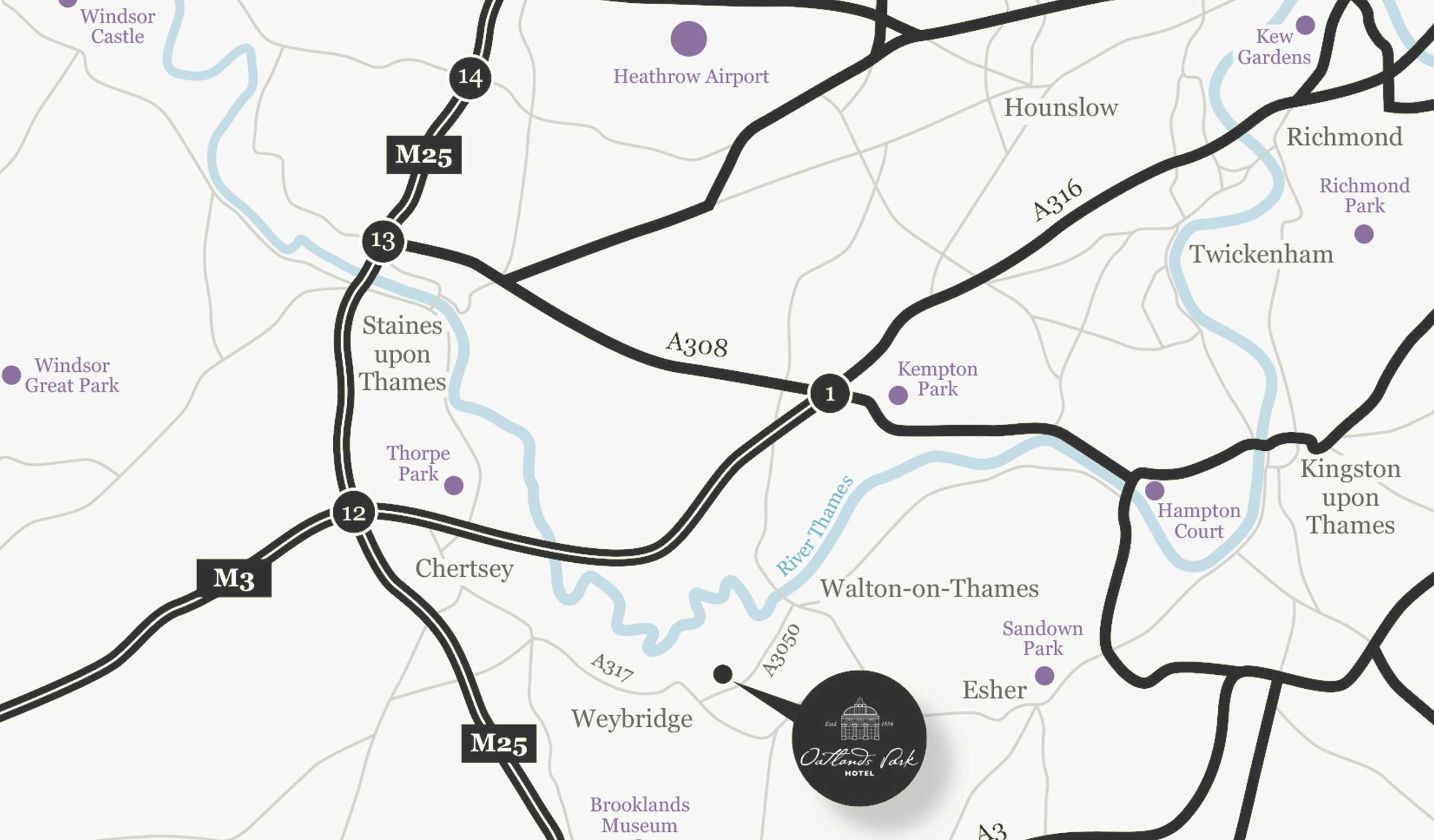
We are delighted to announce that we will return to Oatland Park Hotel in Weybridge for Summer 2026.
Set within 10 acres of picturesque Surrey parkland and only a 20-minute drive from London Heathrow airport, Oatlands Park Hotel offers a countryside escape with fast transport connections to central London.
Oatlands Drive
Weybridge
Surrey
KT13 9HB
Oatlands Park Hotel is on Oatlands Drive, directly opposite Oatlands Park Recreation Grounds and between Weybridge High Street and Oatlands Village.
Getting there:

By train: The nearest railway stations are Weybridge (1 mile) and Walton-on-Thames (1.8 miles). South West Trains take 30 minutes to Weybridge and 26 minutes to Walton-on-Thames from London Waterloo. Taxis are available from the station.
By Car: Oatlands Park Hotel is 2 miles from the M25 (Junction 11). Continue to Weybridge High Street and follow signs to Walton-on-Thames. At Monument Hill roundabout, take the second exit onto Oatlands Drive (A3050). Drive 40 yards and turn left onto Churchill Drive and then follow the road to Aspen Square. We are also minutes from the A3 and M3 motorway.
The hotel has a secure, private car park with plenty of parking.
There are 4 points for charging electric vehicles located at the parking bays at the front of the hotel. To pay for electric parking, simply download the EVC Plus app from the App store. Plug your electric vehicle into the charge point, scan the QR code on the side of the charger, and select ‘start charging’ on the app. Wait for the icon on the charger to turn blue and your electric vehicle will now begin charging.