

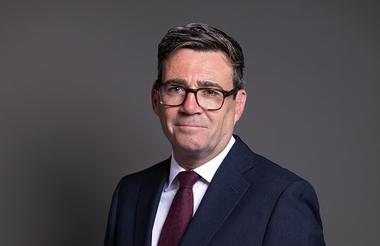
In his maiden speech as prime minister last week, Andy Burnham pledged to build a “more preventative state, investing in people’s success, rather than paying for failure”.
For many years now, it’s been a truism that prevention is better than cure when it comes to public services. Yet this truism has never filtered through into a meaningful change in the way we organise and deliver those services.
At the Social Insights Panel, we have found that while the economics of prevention are undoubtedly complex, the culture shift required is even more profound.
To help government make that profound change, we identified six “mindset shifts” which, taken together, would enable investment in a preventative state to succeed. These shifts are not new but they are fragile, and nowhere near widespread enough.
The devolution at the heart of the prime minister’s agenda is surely an unprecedented opportunity to strengthen and broaden take-up. If devolution happens without attention to our proposed mindset shifts, it risks being a wasted opportunity, and could even further embed the problems we identified.
Our plea is to avoid prioritising structures over culture. Public sector reorganisations do not tend to kick-start innovation in the wider system, especially not in civil society where the key to true prevention lies.
Another word of warning to the PM. If civil society is not a full partner right from the start of the work you initiate on devolution, you won’t just be missing out on some fantastic thinking; you’ll be missing a vital means of achieving your ambitions.
The small, local, super-responsive organisations and groups that can build trust and bring devolution to life are on a precipice. Capture their knowledge before it’s too late – and, better still, act urgently to prevent even more of them disappearing.
Sense of belonging
I want to explore first our finding that prevention relies on meaningful opportunities for belonging. The new PM would be well advised to mark his predecessor’s words in his first King’s Speech debate, where he said: “The fight for trust is the battle that defines our political era.”
It might feel like a live fight in Westminster, but for local communities – particularly those already marginalised or stigmatised – it can feel like one that’s already been lost.
We can only prevent the challenges that individuals, families and communities encounter from arising in the first place if people freely seek help. Most of us will only do that in circumstances or environments where we feel we belong.
Take the example of domestic abuse. According to the charity SafeLives, victims have on average experienced 50 incidents of abuse before seeking help from the police. Yet just one example from our evidence demonstrated that a simple bring-and-share meal, with no expectation of any “service provision”, often heard early disclosures. That’s the power of a sense of belonging, but it’s also an example of the kind of support that we heard time and time again is the first thing to be cut when local commissioners are looking for savings.
A young person we spoke to challenged the whole premise of the question: “Where do you feel a sense of belonging?” He felt that, as a young man from a minoritised community, there was nowhere classed as a public service where he even felt welcome.
No community, local authority area or region can help that young man if he feels he has nowhere to turn, until he no longer has control – at which point we’ve moved beyond prevention and into crisis and “cure”. That’s why without the hyper-local, community- or identity-based groups and organisations that make up civil society at its richest, that shift to prevention cannot be achieved.
Managing risk
The second shift I want to focus on is perhaps the most basic: focus on people’s needs rather than being triggered by risk.
I say it’s basic because, by definition, once you reach a high-risk threshold, the opportunity for true prevention has gone. However, risk assessments, thresholds and ever tighter eligibility criteria are exactly how public services determine when to provide support. As public spending retreats, interventions are focused on high-risk, high-harm, emergency situations.
The Social Insights Panel heard compelling evidence of this across the board, with support for young people a case in point. The young people we spoke to were all too well aware that their mental health or behavioural struggles would have to be at a dangerous level before they received any help at all.
The problem is that by the time a highly dangerous situation has been reached, the time and space to listen, reflect and make choices is acutely limited. The experience for the individual or family is traumatic, damaging trust and making people even less likely to seek help the next time. It creates situations in which the systems people encounter compound their trauma.
Both the mindset shifts I’ve highlighted, and all the others, lead to the inescapable conclusion that the way in which civil society organisations are commissioned, both nationally and locally, needs a complete overhaul.
This is the golden opportunity that devolution provides. We heard time and again that people certainly care about how public services affect their lives. Preventative public services are the acknowledged gold standard. They just hardly ever happen. I’m hoping the new prime minister is seriously minded to change that.
Baroness Polly Neate is chair of the Future Governance Forum’s Social Insights Panel