

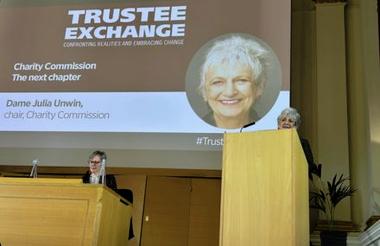
Julia Unwin has criticised a lack of open recruitment for trustees in one of her first speeches as Charity Commission chair.
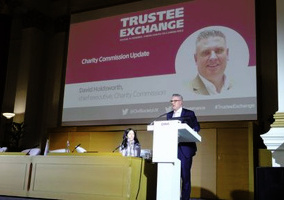
Unwin made the comments yesterday at Civil Society Media’s Trustee Exchange in London, saying that she was “saddened but not surprised” to learn that the majority of trustees are appointed through personal contacts rather than via open recruitment channels, with only 6% of trustees surveyed saying they had applied for their role via an advert.
“That is a great loss. It prevents people contributing, it narrows the mindsets of boards, and it deprives vital organisations of the best, independent engagement that a truly diverse board offers,” she said.
“This of course, creates an ongoing barrier to widening the pool of trusteeship. And this matters. It matters because the best protection against risk is the 360-degree vision that you only get with a genuinely diverse board.
“And it is also a missed opportunity to raise awareness of trusteeship – to explain what it means, entails, and the rewards the role brings.”
Unwin’s comments are the latest in a series of criticisms levelled at the trustee recruitment process.
In June last year, trustee diversity charity Board Racial Diversity UK called for an end to informal trustee recruitment, arguing that it “inevitably perpetuates the status quo” of charity board members being largely white, older, and from more affluent socioeconomic backgrounds.
Need for charities to disagree respectfully
Unwin also said that charities must model how to disagree respectfully with both other charities as well as the public, particularly in the current political climate, and “to seek to persuade those who have different views, rather than to attack them”.
“Charities should not be expected to be cosy, uncontroversial, unpolitical,” she said.
“Charities have always pursued controversial and contested causes, supporting marginalised groups, promoting progressive causes, or indeed supporting causes that are considered by others as regressively conservative.
“There is no common view within the charitable sector – and nor would you expect there to be one. Charities reflect the hugely diverse society we are. There are causes which are undeniably charitable which some of us would support.
“There are others we wouldn’t but they remain charitable, because if as citizens we want to benefit from a healthy, rich, vibrant charity sector, we must also offer something in return: namely the willingness to work alongside people who feel and think differently about things that matter deeply to us.”
Unwin said that although charities can’t prevent the attacks they face from beyond the sector, they can model to other charities and the general public “a mature awareness and appreciation of difference, including through the ability to disagree respectfully”.