
Charities have been urged to improve the transparency and inclusivity of their “nebulous at best” processes for recruiting trustees.
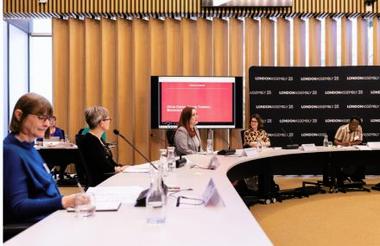
Priscilla Tomaz, from the Young Trustees Movement, made the remarks when addressing the audience at a City Hall Roundtable event on removing barriers to trusteeship yesterday.
“The recruitment process for trustees is, I would say, nebulous at best,” Tomaz said. “Most of the trustees that I know were appointed without any sort of formal recruitment process.
“They were chosen to be part of those boards because of their contacts and their connections, which obviously hinders a certain group of people who don’t have those contacts and connections from being able to become trustees.
“But even when charities do advertise those roles online, the recruitment can be quite confusing.”
Tomaz cited a personal experience in which she was led to believe an informal chat about becoming a trustee at a charity was not a formal interview, when in fact it was.
“There is a wider point to be made here about making sure that the recruitment process for trustee roles is more transparent, more independent and more unbiased,” she said.
“I don’t think trustees should be selected based on their contacts, but I also don’t think they should be selected by one person without a written application, [based] on a 10-minute call.”
Younger applicants ‘intimidated’
Tomaz told the panel session that the recruitment and application process is often more difficult for younger candidates, saying that it can be “quite intimidating for a young person”.
She said a younger trustee might feel intimidated when viewing a charity’s website in which most trustees have significant governance and work experience and could “feel like maybe being on a charity board isn’t for you”.
On increasing the diversity of charity boards, Tomaz said: “I find it really difficult to see how that can happen if charities aren't really opening that and addressing that barrier to entry that comes from a lack of representation, which puts people like me off from applying.”
Tomaz added that she believed it was helpful for charities to advertise trustee roles openly online, and to “explicitly say” that they are open to people without governance experience, and for charities also to offer governance training as part of their onboarding process.
“I think that shows that they’re open to breaking this barrier of entry, allowing people who don’t have governance experience to enter their boards, but also that they’re willing to invest time and effort into making sure that their trustees feel supported and comfortable and actively able to contribute to the boards that they sit on,” she said.
However, Tomaz said: “From my experience, not all charities do that, or they do one and not the other.”