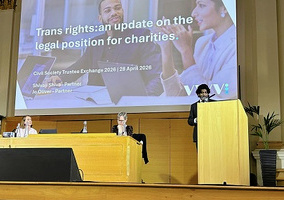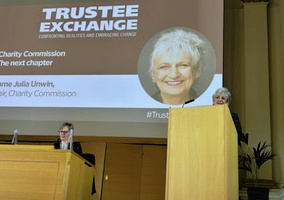



When we invited lawyers from VWV to use their session at G&L’s Trustee Exchange conference to cover the current legal position for charities over trans rights, we knew we risked tension in the room. Stories abound of campaigners turning up to charity conferences to put their case on this most toxic of culture-war subjects. As it turned out, our audience was perfectly well-behaved, and the (highly informative) session passed without incident.
This brought to my mind some of the key messages from other speakers at the event, namely Krish Kandiah, founder of the Sanctuary Foundation refugee charity, and Julia Unwin, new Charity Commission chair.
Kandiah used his opening keynote to emphasise the importance of unity, for charities to see each other as allies rather than competitors, in order to fight poverty and injustice together. He shared his strategy of building bridges with right-wing media to find common ground and promote understanding, and concluded by advocating for “proximity” – getting closer to those we disagree with. “Let’s get to meet the people that are actually angriest with us, and find out what’s really going on.”
Similarly, Unwin urged charities to model “respectful disagreement” with other charities, even where they differ politically. If we want to sustain the “social contract” that charitable status confers, she said, all charities must demonstrate “the willingness to work alongside people who feel and think differently about things that matter deeply to us”.
“We can model, within our organisations and in our relationships with other charities and organisations, a mature awareness and appreciation of difference,” she said.
Attempt to detoxify debate
I wonder, then, what Kandiah and Unwin would have made of Kezia Dugdale’s recent apology for comments she made on a podcast about JK Rowling, the Harry Potter author who is notorious for her gender-critical stance. Dugdale, the incoming chair of Stonewall who describes herself as a trans-inclusive feminist, said on the podcast that she respects Rowling, and that the writer’s life journey, from single mum to hugely successful writer, was “phenomenal and an inspiration to many women”.
Told by the interviewer that Rowling’s gender views were “cruel and dehumanising” to many trans people, Dugdale said: “I understand that, and I’ve also heard JK Rowling and other people who hold a different position on these issues to me, describe with a similar rawness how they’ve experienced being opposed for their views. And I just think, the days of these culture wars, about sitting in polar extremes from each other, should be behind us now.”
Apparently, they are not. Three days after the podcast landed, Dugdale issued an apology on Stonewall’s website. She was “truly sorry” that the interview had caused “worry, anger and upset” and she “should have been absolutely unequivocal that I would never condone behaviour from anyone that seeks to or causes harm to anyone in our community”.
Dugdale had also used the podcast interview to call for a kinder debate on transgender issues: “We want to be in the position of persuading people. We’re not dogmatic and sitting in silos. We want to be in the messy, grey bit […] because that’s where progress and consensus is found.”
This goes to the heart of Unwin and Kandiah’s points. But it illustrates the difficulty that charities face. Stonewall exists to support members of the LGBTQ+ community, including trans people, and finds Rowling’s stance abhorrent. So Dugdale’s efforts to detoxify the debate and acknowledge an opposing point of view were unacceptable to many of its supporters and/or beneficiaries, who feel under sustained attack from the anti-trans lobby.
If the Charity Commission seriously wants charities to “work alongside” those with different views, then maybe it needs to issue guidance to help them do this in practice. Because in reality, it is much easier said than done.