
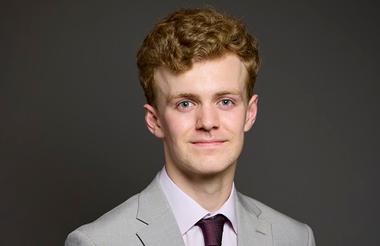
A backbench Labour MP has proposed chairing an all-party parliamentary group (APPG) to provide a forum to lobby for changes to religious organisations’ charitable status.
Sam Carling, a former Jehovah’s Witness, is putting forward his name to chair a potential new APPG “against spiritual, ritual and cultic abuse” and with a focus on “gaps in charity law”.
Speaking to Civil Society, Carling referenced a recent report by the National Secular Society (NSS) called Mission and Misogyny, which includes several examples of faith-based organisations being contacted by the Charity Commission over comments made on their premises.
NSS’s report calls for “the advancement of religion” to be removed as a charitable purpose, although Carling has not specifically voiced support for this proposal.
He did, however, reference NSS’s report in a parliamentary question to the prime minister, Keir Starmer, in December and now plans to discuss “fundamental changes” to charity law in his proposed APPG.
“The UK has a fantastic array of charities doing important work to benefit our society – including many faith-based charities that run impactful programmes to alleviate poverty or provide other significant public benefits,” Carling told Civil Society.
“However, their reputation and work is being increasingly undermined by organisations claiming to be charitable, and which are legally considered charities under the current legislative framework, which in reality cause active harm.
“Many such examples from various religious traditions are outlined in the National Secular Society’s recent Mission and Misogyny report, which highlights shocking cases of organisations telling women to stay in abusive relationships, promoting the subservience of women to men, and denying the existence of marital rape.
“This cannot go on. Gaps in charity law allow virtually any group which describes itself as a religion to obtain charitable status, and through that garner access to public funding through gift aid, as well as various tax exemptions.
“Fundamental changes are needed to increase the strength of regulators to act, and to prevent these issues arising in the first place.”
Carling said he hoped the proposed APPG would provide a forum to lobby for change “with the ultimate aim of safeguarding children and vulnerable people from harm”.
‘Don’t mischaracterise the entire sector’
The proposed APPG comes as the government’s plans to expand the commission’s powers to strip charitable status, disqualify trustees and remove senior managers at organisations suspected of harbouring extremism.
Charity sector figures including Muslim Charities Forum chief executive Fadi Itani have voiced concern over the plans to expand the commission’s powers and called for a consultation, which the government has mooted but not yet opened.
Itani said in response to Carling’s APPG plans: “Faith organisations are at the heart of community and voluntary work across the country, driving initiatives tackling issues such as poverty and food insecurity and creating opportunities for young people.
“In a moment of heightened division, their work plays a crucial role in strengthening social cohesion and supporting the most vulnerable.
“As vehicles for bringing communities together, it is vital their contributions are recognised and protected.
“The actions of a tiny number of wrongdoers must not be allowed to mischaracterise the entire sector, as doing so risks reinforcing harmful narratives and undermining public trust.”
Commission ‘in active dialogue’ over powers
On the proposed APPG, a spokesperson for the Department of Culture, Media and Sport said: “The vast majority of faith-based charities, across a wide range of faiths, are doing vital work furthering their charitable purposes and supporting their communities.
“Unfortunately, in a small number of cases, some charities are misused for non-charitable means.
“As part of efforts to tackle extremism, we are planning to strengthen the Charity Commission's powers to ensure it has the tools it needs to tackle abuse of charitable status.
“Anyone with concerns that a particular charity's activities are unlawful or harmful should raise these with the Charity Commission, which can investigate and, where appropriate, take regulatory action.”
A commission spokesperson said: “Mr Carling is absolutely right that all charities should be safe environments and that regulators, including the Charity Commission, must have sufficient powers to tackle instances where charity status is abused.
“Every application to register a new charity is robustly assessed against clear legal tests set out in the Charities Act 2011.
“Advancement of religion is one of the charitable objects set by parliament and religious charities have a proud history of providing support in local communities.
“The need to protect that invaluable work, and all those who come into contact with charities, is why we remain in active dialogue with the government to ensure our powers and corresponding resources are fit for the present and the future.”
Editor's note: The comment from the Charity Commission was updated on 30 April.