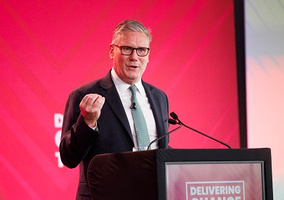


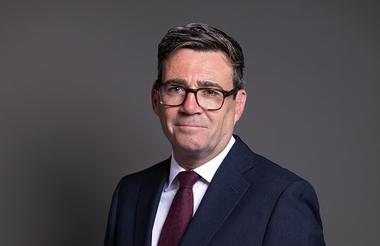
In November 2024, when speaking at Locality’s annual conference in Manchester, then-mayor Andy Burnham was asked by a member of the audience during a Q+A session when he would be standing for the role of prime minister.
In response, amid a round of applause and laughter, Burnham said: “The thought of going back down on the West Coast Mainline doesn’t fill me with any joy, but I wouldn’t rule out one day maybe going back.”
Just under two years since he made those remarks, Burnham is doing precisely that. Today, after many months of speculation, one by-election and one uncontested leadership bid, Burnham is being appointed prime minister.
Charity sector bodies have shared their hopes for Burnham’s premiership, while some voluntary organisations in Manchester offered insights on the former mayor’s approach.
Long-term thinking
Over five years ago, Burnham made his views on the relationship between civil society and government clear in a 2020 essay on the subject that he contributed to the collection published by think tank PBE as it launched the Law Family Commission on Civil Society.
As Anoushka Kenley noted in PBE’s most recent blog, Burnham placed a real focus on involving civil society in “co-designing and co-delivering” government and community services.
In doing so, he argued that both the public and private sectors need to recognise that there are areas, such as equalities and community engagement, where civil society isn’t just a potential partner, but a real expert.
In the essay, Burnham also emphasised the need for shifting power and resources closer to communities, and called for procurement processes that place genuine weight on social value.
Some of these concepts such as co-design and co-delivery were already being received positively by Manchester-based charities.
As mayor, he oversaw the introduction of the Greater Manchester Accord to signal partnership working with the voluntary, community, faith and social enterprise (VCFSE) sector, which was updated this year following the national Civil Society Covenant.
Adrian Ball, CEO of Manchester Settlement, a charity working to support urban communities in the city, tells Civil Society that many of his colleagues had experience of sitting on sector panels which used co-design, and had positive feedback.
Ball says that Burnham’s leadership in the city region more than anything had brought about changes to “soft power” and positive cultural changes in the Greater Manchester Central Authority.
He says that what has tangibly come from the city’s former mayor is “that real sense of leadership and direction that often gets missed in the short-termism in local authorities.”
Ball praises the “long-term perspective” that Burnham brought, “through the devolution agenda, through funding activities”, and cited examples such as the Places for Everyone strategy and the Greater Manchester land use strategy as all playing into “the need for long-term thinking”.
Burnham’s mooted “10-year plan” suggests his long-term approach may now extend far beyond Greater Manchester.
Sector’s role in public sector reform
Writing in a blog post on the change in leadership, NCVO’s chief executive Kate Lee wrote: “Andy Burnham and his team have the opportunity to radically reorganise government and how it works, and it’s vital as this happens that civil society plays a vital role to ensure the voice and experience of communities is at the centre.”
If Burnham’s previous track record is anything to go by, a focus on closer collaboration could be on the cards.
In his speech at the Locality conference in 2024, Burnham was critical of “Whitehall silos”, which, he said at the time, are only able to see “part of a person” and therefore are unable to truly empathise with the causes of many civil society organisations and fail to empower the sector.
Burnham added: “You spend your time bidding – imagine if you didn’t have to do that because you were just trusted to deliver? Imagine the difference that that would make.”
“What does government – national and local – need to do? Let me make it really plain and simple: it needs to start backing you all with core funding. Not project funding, core funding.
“Give people the money that you need to build in your communities and so you can do what you do, day in day out, without constantly looking over your shoulder, worrying about sustaining your organisation and the people you employ.”
In a charities and volunteering APPG over a year later, attended by Burnham, he repeated this sentiment, emphasising that civil society must be “absolutely at the heart of public sector reform.”
Meanwhile, a spokesperson for Mustard Tree, a Manchester-based homelessness charity, tells Civil Society that Burnham “put his money where his mouth is” in terms of donating a percentage of his salary towards supporting the city’s homeless community as part of the Greater Manchester Mayor’s Charity.
“[Burnham] involved people outside of the public sector – including the voluntary (charity) sector, faith sector, local businesses, people with lived experience at the highest level – on boards, and gave opportunities for different voices to be heard,” they say.
Lee concluded in her NCVO blog post on Friday that the national charity sector must now “support [Burnham] to translate this understanding from mayoral leadership to national government, so that every community can benefit”.
She advised the sector to be clear about what it offers, and emphasised the importance of collaboration within the sector and “understanding what the new Burnham government is trying to achieve and demonstrating how civil society can help deliver those ambitions”.
Editor’s note: An earlier version of this article incorrectly identified Adrian Ball as chair of Manchester Settlement. This article was updated on 22 July to identify him instead as CEO of the charity.