

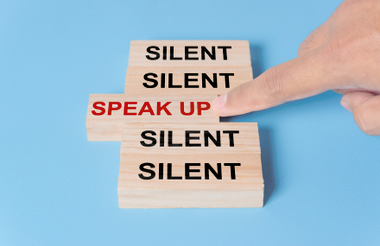
Some charities are now taking a “bolder, riskier” stance in an era of heightened political polarisation and amplified public voices, an event has heard.
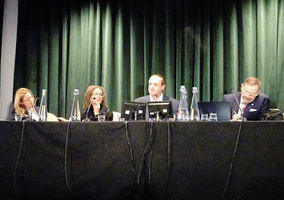
Speaking on a panel at Fundraising Magazine’s ELEVATE this week in London, Andy Taylor-Whyte, interim executive director of brand, marketing and fundraising at Crisis, said charities are increasingly denouncing hate and division.
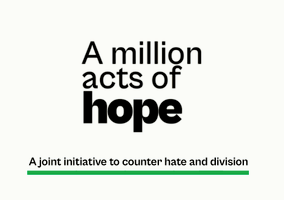
Using Crisis as an example, Taylor-Whyte said the charity has endorsed A Million Acts of Hope, partly because many of its supporters think “it’s unacceptable what’s happening and they want to see us channelling it”.
“The people we have are going through this daily. We see that in our centres when people are coming in – they’re living this division. So, we’re taking a bolder and slightly riskier stance,” he told delegates.
“We’re standing up a bit more, saying: ‘That’s unacceptable sentiment and we’re willing to risk a new narrative about that.’ We’ve got to judge it carefully, but we want to get into that space because that’s what everyone who supports us, and the people we support, are telling us they need.
“There’s a bit of a boldness which is also slightly terrifying when you do it, because – especially for our chief executive Matt Downie – we now see CEOs regularly on media being asked these questions. We’re taking a much bolder stance in that space, and that’s going down well with our supporters.”
‘Hope is a powerful thing’
Panellist Mel Oley, director of fundraising and communications at Freedom from Torture, said that “boldness” is probably why charities like hers and Crisis were established.
“Let’s remember our roots and why we established ourselves in the first place,” Oley told delegates.
“We’ve got a real role to build connections as well. It strikes me when I speak to our clients who are telling us they can see the rise of authoritarianism here in the UK – they’ve come from authoritarian regimes, and that’s why they were tortured and fled their countries.
“We owe it to them to be bold and tackle this, but do that through building connections.”
Oley added that charities can give a platform to individuals with lived experience to tell their stories and provide opportunities for people to build that understanding.
“Hope is a powerful thing and people are crying out for that. We need to be leaders in that space.”
Charities focused on division rather than unity
Panellist Eleshea Williams, social media officer at Amnesty International, said charities are the main storytellers of the people they support, so it is incumbent on them to play a greater role on that front.
“I’m seven years in this industry, I don’t have a whole load of experience, but in my experience, we’ve focused way too much on the division as opposed to unity,” Williams told delegates.
She said her charity focuses on hope-based communication, adding: “Instead of constantly fearmongering or contributing to the doom and doom scroll, we try and dig out those good news stories.
“We look at images of protests where protests have led to real legislative change to show people the world we want to see, instead of constantly messaging around the world we’re scared to see. Incorporating hope is important.”
She argued that hope-based communications should give people autonomy and “something to do” or tell them what charities are doing about an issue.
“I’d like to think it contributes to closing that gap of polarisation because there are those people, the persuadable middle, or people [...] on either side who want to learn more. That’s key and our role in that.”
Thinking ‘beyond organisational silos’
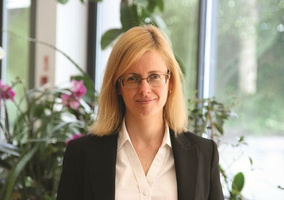
Also speaking at ELEVATE, consultant and writer Jo Atkins-Potts said the political context in which charities operate “has shifted dramatically across many countries, including our own”.
Atkins-Potts told delegates that “we’re seeing rising authoritarianism, more misinformation and conspiracies than ever before”, alongside a rise in hate crimes and attacks on equality and human rights and growing hostility towards civil society and social change.
“For a long time, many charities operated within a fairly stable political environment, one where influencing government policy was often the primary route. But now, many analysts are arguing that those assumptions no longer hold.”
She said in the face of a shifting landscape, charities must think “beyond organisational silos and towards movement”.
“Many of the challenges we face – climate migration, inequality, disease – are interconnected, and working in isolated issues and silos weakens our collective power.
“Stronger collaboration across movements and organisations is essential, and building power, not just influence. Influence is important, but influence without power is fragile.”
She argued that many organisations still operate with strategies built “for a more stable political environment”.
“In volatile contexts, organisations need scenario planning, adaptive strategy and stronger ecosystem thinking and intentionality.
“Investing in narrative power and facts alone rarely, sadly, change public opinion. Organisations need to think seriously about storytelling, culture, narrative and how progressive values can be communicated in ways that resonate beyond existing audiences.”