

Charitable organisations have become “obsessed with survival” due to systemic failures, according to the chief executive of a small charity.
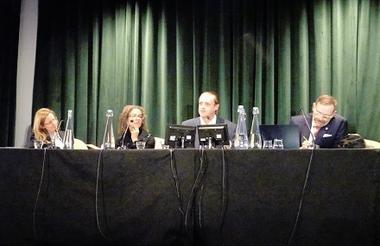
Yesterday, Civil Society held its annual ESG Imperative event in London, which featured a panel discussion on charity leadership in an age of hostility.
Panellist Wanda Wyporska told delegates that if we all took a systemic view, “most of the organisations in this room shouldn’t have to survive”.
“The problem is that we’ve become obsessed with survival because we have to do the work that we need to do because corporations aren’t paying people a living wage, so we’re having to pick up on that,” the CEO of the Black Cultural Archives said.
“Tax isn’t being paid […] in the manner that it ought to be most optimally, and so the state is starved of funds, and there are all sorts of disparities in terms of education, resources and housing, that our whole national stock has become depleted over the last 10 or 20 years.”
Charities ‘divided’
Asked how to build allyship across a broader group of civil society organisations, Wyporska said the charity sector is divided.
“The charity sector doesn’t have one charity for each issue,” she said.
“We’re dividing ourselves by not looking at things in an intersectional way. I had the privilege of leading the Equality Trust – my first CEO role – and at that point, I realised and was able to articulate that economic inequality is at the heart of all of the issues we’re facing.
“The failure of capitalism is at the heart and is creating all of the problems that we’re facing.”
She said the problem is that “we aren’t tackling the issues at the root; we’re talking about systemic change, we’re not enacting systemic change”.
“To do that, we have to come together as a movement. Now, every charity says: ‘We’re building a movement.’ I’m sorry, you’re not.
“We need to come together by recognising that we’re all part of a big mosaic and have to make up that picture.
“We cannot have our own mosaics in piecemeal because otherwise, we’re going to be here, our kids are going to be here, our descendants are going to be here in another 30, 40, 50 years, and we won’t have done anything.”
Closing down of the civic space
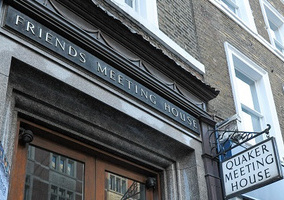
Discussing last year’s police raid on a Quaker meeting house, recording clerk Paul Parker said this “shocking incident” is part of a pattern of the closing down of the civic space.
“It’s part of a pattern of a closing down of the ability of members of the public and the organisations that advocate for or represent them to make a case to people in positions of power or hold those people accountable for the decisions they’ve made,” Parker told delegates.
He said this includes things like “the use of hostile complaints to the Charity Commission”, “labelling of some peaceful protesters as terrorists” and legislation such as the Police, Crime, Sentencing and Courts Act 2022.
“When you take all of those things together, to me and us at Quakers, it stops looking like there are a few issues with the campaigning environment and it starts to look like a systematic dismantling of the structures we have in place in our democratic society for holding the executive to account.”
He cited research by CIVICUS that has downgraded the UK to being an “obstructed” society in terms of civic freedoms, which he said “puts us in pretty bad company globally”.
“There’s a massive issue here that we need to be looking at in terms of the ability of our organisations to operate,” he said.
Parker added: “We need to be in a place where we’re concerned about the future of our ability to operate and deliver what we’re trying to do on behalf of our beneficiaries, whoever they are, and whatever sector of civil society you’re part of.”