

Equality, diversity and inclusion (EDI) policies are “under attack”, leading charities to scale back their efforts, an event heard yesterday.
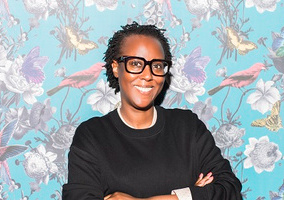
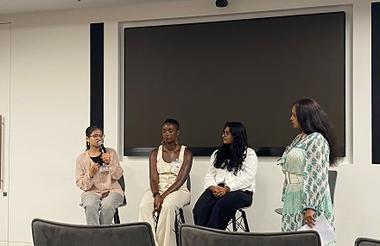
Yeme Onoabhagbe, Board Racial Diversity chief executive, opened a panel discussion at PwC London, stating that inclusion is often the first casualty when systems face strain.
“Across the non-profit sector, organisations are facing extraordinary pressures, shrinking resources, rising expectations from service users, funders, partners, increasingly complex needs from the communities they serve, and growing scrutiny and accountability,” she told the audience.
“When systems are under the strain that they are in, like this, inclusion is often the first thing to be deprioritised.
“It shows up [in leadership discussions] as: ‘We don’t have time for this. We haven’t got the budget for this. Let’s come back to this later’.”
Amid wider financial pressures, some charities have also faced lawsuits, including the 10,000 Interns Foundation which was sued for one of its programmes aimed at aspiring Black lawyers.
Aqsa Suleman, Runnymede Trust senior policy officer, said that attacks on EDI were not surprising and that power in the sector has always been in the hands of the “elite and wealthy [and] white”.
In April 2025, a Charity Commission and Pro Bono Economics report found that 8% of trustees came from minority ethnic backgrounds, compared with 17% of the wider population.
“Power and the seeds of power have never been neutral,” she said. “It‘s embedded into who sets the tone and agenda of meetings, who controls the resources […] [and] whose ideas are parachuted and become decisions.”
Suleman added that charity boards can decide whose voices are consistently heard, or overlooked.
“Boards can make or break whether power is a dirty word or a word of enrichment and fulfilment for those around the board.”
The board as revenant
Kishma Smithurst, consultant and trustee, said that when she first attended a board meeting, she felt intimidated.
She said: “For one of the first charities that I worked with, the board was revenant.
“You know, it was: ‘The board are coming, the board are coming.’”
Smithurst said she faced barriers to getting her voice heard, an experience that reflected on the wider problem of trustee exclusion from key debates.
“I’ve had experiences or exposure to boards where it felt like the trustees were actually just a tick box,” she said.
“There was no space for discussion, and then you don’t, as trustees, feel valued. You don’t feel like you’re actually having any input. It doesn’t feel safe.”
‘I don’t think I have seen an inclusive board’
Talycia Nayee, EDI consultant and facilitator, said that in her years on charity boards, she has yet to see a “100% inclusive board”.
“I’ve seen people, a couple of organisations, that I’ve partnered with in the past that are really on their way, but I don’t think at this point in time we’ve got best practice in place,” she said.
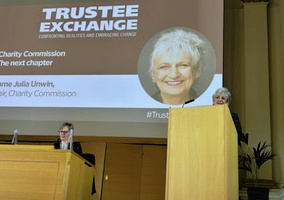
In April, commission chair Julia Unwin said she was “saddened but not surprised” to learn that the majority of trustees were appointed via personal contacts.
Just 6% of trustees surveyed said they had applied for the role through an advert, which Unwin said “narrows the mindset of boards” that a “truly diverse board” offers.
Kishma added that the lack of board diversity prevents charities from understanding and best serving communities.
“Something fundamental isn’t going to work if everyone is a middle-class implant from somewhere else working in a [for example] historically working-class area – it is just a mismatch.”