


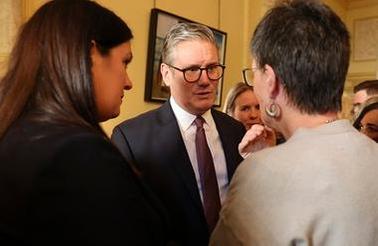
Much has been said, and indeed written in this magazine, about the warm words that this current government had for the charity sector, both during its election campaign and after coming into office. The creation of the Civil Society Covenant was heralded as a resetting of the relationship between the sector and the corridors of power.
However, it appears that this relationship is facing what could be its first real test.
Recently, there has been a government consultation on Home Office plans which include making volunteering a route for migrants and refugees to earn settled status in the UK. These proposals have led to Kate Lee, CEO of NCVO, writing an open letter to Shabana Mahmood, the home secretary, not only criticising the plans but also suggesting that the process has gone against the spirit of the covenant.
She writes: “This proposed policy was announced without prior engagement with the sector, undermining the commitment to early engagement and open communication set out in the Civil Society Covenant that was launched by the prime minister in summer 2025.
“The covenant explicitly states that: ‘Government and civil society [will] work together to facilitate and create the conditions for active participation in society, such as volunteering or social action’. Whilst we welcome the constructive engagement from officials since the announcement, for the covenant to be successful, civil society should have been engaged prior to the launch of the consultation to support better policy outcomes.”
Prime minister Keir Starmer might be feeling more rattled by high-profile criticism of other actions. However, the charity sector can play a unique role in helping overcome societal problems – and any government would be wise to factor the expertise and knowledge of charities into its thinking.
While this government may still have the aim of true and meaningful interaction with the charity sector, examples like the above could weaken the trust that charities have in the process and the sincerity of the government’s attitude. If so, the government will have wasted an opportunity to increase its impact.
That all said, as our impact investing feature shows, the government seems to be keen to boost its work through the impact economy – including charities.
Tristan Blythe is editor of Charity Finance