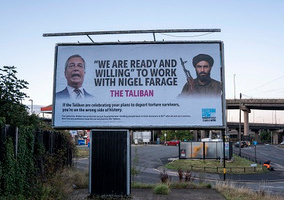




Across civil society, many organisations are facing growing levels of criticism, disinformation and coordinated attacks.
These attacks are not simply reputational challenges. They affect whether people donate, volunteer, become members, support campaigns, trust evidence and ultimately whether organisations retain the legitimacy they need to operate effectively.
And as we know, public trust is becoming more fragile, donations are under pressure, and aggressive, polarising populist political movements are becoming increasingly influential.
One way in which charities can respond to these threats and protect their power is through narrative resilience.
Narrative resilience is the ability to withstand these challenges by building trust, legitimacy and shared public understanding.
It’s about protecting reputation, and our ability to influence decisions, mobilise supporters, raise funds and create change. And it involves challenging hostile and inaccurate narratives in a way that doesn’t reinforce them before they become normalised and embedded in the public psyche.
Framing
Charities describe themselves as trusted organisations that bring people together, support communities, expose injustice and create positive change.
Media coverage, however, often tells a different story – frequently framing charities as political activists, out-of-touch elites and as wasteful organisations that are against national interest. Charities are communicating in a frame they control internally, but not in the frame that the public is increasingly encountering externally.
This mismatch in frames has the potential to be damaging for civil society. If hostile narratives become normalised and embedded in the public conscience, they can shape what becomes politically possible and make it much easier to cut funding, restrict activity and remove protections.
We only need to look to USAID as an example. The climate that enabled this to happen did not appear overnight. For years, narratives about aid being wasteful, elitist and contrary to national interests were allowed to grow. Then when the cuts arrived, many people didn’t view them as shocking – they saw them as logical.
The lesson for charities is clear: by the time a crisis emerges, the narrative associated with that issue may have been embedding itself in the public psyche for years. By that point, no press release, social media post or crisis statement can reverse years of accumulated narrative change. The time to act is now.
Legitimacy
Charities need to think about narrative resilience in the same way they think about any other form of risk management.
One thing to consider is your charity’s “legitimacy reserves”, which are the beliefs people already hold about your organisation. Do they see you as trustworthy, effective and acting in the public interest?
To build these reserves, charities must engage beyond existing supporters as the people who shape the environment in which they operate are often not the people already in their corner.
Charities should also think about leading with values rather than organisational priorities or policy positions. People most want to see that a charity is motivated by the same principles they share, even if they do not agree with every campaign or policy proposal.
Narrative monitoring
Many charities monitor media coverage and social media mentions but far fewer delve into the narratives that sit beneath them.
Narrative monitoring means paying attention to the assumptions that are becoming embedded in public debate. Just as leaders monitor political, financial and regulatory risks, so too should they pay attention to the stories shaping public attitudes. Narratives often change long before policies do.
For example, what language is becoming more common? What accusations are appearing repeatedly? Which narratives are moving from the political fringes into mainstream discussion?
This can involve regularly reviewing media coverage, political speeches, opinion pieces, influencer content and online conversations for recurring themes. A narrative tracker can help patterns to become visible, risks to emerge early and communications to be adapted before hostile narratives become accepted wisdom.
Responding to criticism
How we respond to criticism matters as much as whether we respond at all. Too often charities fall into one of four traps: they deny; they defend; they debate or they repeat the accusation while attempting to reject it. All four approaches have something in common: they keep the conversation inside their opponent's frame.
If someone says “this organisation is political”, and your response begins with “we're not political!”, you've already accepted their framing of the debate. People are still thinking about politics and are still thinking about the accusation. The frame remains intact.
Instead, charities should consider how they can reframe an issue so that their values and frames dominate. To do this, they need to think about what values and fears are driving the criticism and trying to find common ground.
This does not mean agreeing with hostile views. It means recognising that people rarely arrive at positions through facts alone.
Consider the claim that a charity cares more about migrants than British people. Beneath the accusation may sit concerns about fairness, belonging or pressure on local services. Values-based communications focus on shared goals – such as safe communities or access to public services – instead of arguing inside the opponent's frame.
This approach is often more effective because it speaks to identity, belonging and values rather than simply presenting more evidence – as we know, facts don’t always change people’s minds.
Protecting your power
Narrative resilience is not about becoming quieter. It is not about becoming less ambitious. And it is certainly not about avoiding difficult conversations. If anything, it requires organisations to be more confident in who they are and what they stand for.
The charities that thrive in hostile environments are rarely the ones that avoid criticism altogether. They are the ones that have invested in their reputations, paid attention to emerging narratives and developed the confidence to communicate from their values and frames rather than their opponents.
Because ultimately, the success of a charity is not just about resources, supporters or political influence. It is also about whether people believe you belong in the conversation. And in an era of increasing hostility towards civil society, that may be one of the most important communications challenges we face.
Becky Slack is co-director of Agenda