

The charity sector needs to improve how it adapts to change in order to tackle the challenges it’s currently facing, a group of chief executives of major charities including Macmillan, Dog’s Trust and NSPCC warned at an event in London yesterday.
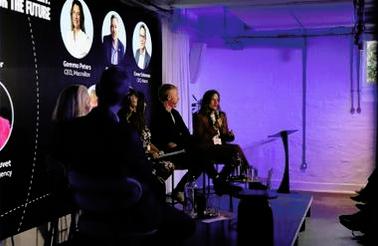
Speaking on a panel at the inaugural GOOD Summit, Macmillan’s chief executive, Gemma Peters, said that the sector has to meet “more unmet needs than there have ever been” but it is “not great at change”.
“I think there are probably very few sectors that would say they’re very good at change,” she said.
“I think we are particularly bad at it as a sector, and I think that is something to do with some of our strengths – we hold our mission and our cause very deeply, and we hold it individually.
“And that can mean that sometimes the necessary change to respond to a fast pace of moving, [a] tumultuous environment – we don't necessarily respond to that very well.”
NSPCC chief executive Chris Sherwood agreed that “we're not that great at doing change in our sector”.
“I think that our governance models reinforce this inherent conservatism in the sector as well, which can be a good thing, because it means thinking about things and taking your time,” he said.
“But it doesn't always lend itself to that agileness that we need in a fast changing world [and] I think the level of scrutiny on us as well.”
Sector urged to offer hope
Sherwood also stressed the importance of showing supporters that charities are actively working to provide better futures.
“We're selling a set of values,” he said.
“We're selling a picture about the kind of society that we want to be, you know, and that I think is really important, because the reason why I work in the sector is because it's not right out there [...]
“And we're part of the organisations who bring that hope and optimism that a better future is possible.”
Enver Solomon, CEO of social justice charity Nacro, said charities have to “give people hope” amid bleak news cycles and current sociopolitical and geopolitical climates.
“We've got to give people a vision of communities and a country in a world which is different to the one that is simply being said that we're all going to hell in a hand cart, and everything's in crisis and there's no hope,” he said.
“(…) We need to give a narrative of hope that's around our core values in the voluntary sector, of what we believe in, values of shared community, values of treating people with compassion and dignity, and we need to articulate that.”