
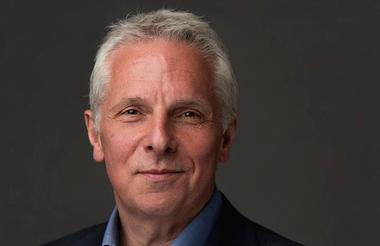
A year ago, Richard Hawkes decided, after a decade as the British Asian Trust’s first chief executive, that he had earnt a break.
The charity launched by King Charles as a prince in 2007 had grown from an organisation without any directly employed staff to one with a nearly 50-strong workforce under Hawkes’ tenure as its income rose significantly.
Hawkes planned a “bit of a break” when he stepped down at the end of 2025 and considered a trip to visit his son in Australia.
Then in December, Oxfam GB’s previous CEO Halima Begum left the charity suddenly.
Begum claimed she had been “forced to resign” and her exit brought the charity back under intense scrutiny from mainstream media for the first time since its heavily publicised Haiti safeguarding scandal broke in 2017.
The possibility for Hawkes, who previously led Scope and Sense International, to step in soon came up, which he says was “too big an opportunity not to look at”.
“Oxfam is arguably one of the very few organisations in the world that genuinely has the ability to do something about many of the crises that we’re facing at the moment, and the opportunity to be involved in that is just the absolute privilege of my whole career,” he tells Civil Society.
The response from other charity leaders when Hawkes was announced as Oxfam’s interim CEO in March was overwhelmingly positive. He says he “really appreciated” the warm response, which he puts down to the connections and experience he has built over the course of his career.
“But the other thing I’ve realised since I started, the whole sector wants Oxfam to succeed. I think Oxfam is such an important charity in the UK, and it’s really important for the whole sector that Oxfam is doing well.”
Back to basics
Hawkes began at Oxfam at the start of April, taking over from acting leader Joyce Idoniboye, who has now been appointed to work alongside him as the charity’s deputy CEO.
He had inherited a large, high-profile charity that had been destabilised by Begum’s exit and that of its former chair Charles Gurassa, against whom she had raised a complaint.
The pair’s departures had followed a restructure at the charity, which included 142 redundancies, in an effort to tackle increasing salary costs.
This restructure led to the Charity Commission opening a compliance case, which is ongoing and is also now considering the events surrounding Begum’s departure.
Oxfam commissioned its own board review in January, which was undertaken by an external senior lawyer.
The review concluded that Oxfam’s trustees acted “in good faith and within their powers”, according to a brief statement from the charity’s board this week.
Asked whether it had been a difficult time to join Oxfam, Hawkes says: “People just wanted to have that stability and wanted to start looking at how we are moving forward from this and which direction we are going.
“Obviously it was a challenging period, but for me, honestly, I’ve been here just over three months now and I don’t think I’ve had one negative conversation with anyone internally.
“Everybody is so positive and so optimistic about the future, and there’s that absolute determination to get Oxfam back to where it needs to be.”
He says Oxfam is one of the few organisations with the power and influence to tackle challenges such as the global disasters to which its staff are responding as well as the “rise of the far right and shrinking of the civil society space” closer to home.
“When you work in that organisation, that puts a huge responsibility on you to get that right,” he says.
“What we’ve been really working hard on in the last couple of months is just reminding everyone why we work at Oxfam, what a privilege it is to be here, how successful we can make the organisation, and just getting things back to those basics.”
Hawkes says he has had no discussions with Oxfam’s current board about making his appointment permanent, with the charity now in the process of recruiting its next chair along with other trustees.
People power
Campaigning has been a core part of Oxfam’s activities since it was set up during World War II.
The Oxford Committee for Famine Relief formed in 1942 to lobby, with other groups, prime minister Winston Churchill to lift a blockade and allow food parcels into countries occupied by Germany.
Eighty-four years on, Hawkes says the charity now aims to act as a catalyst for its around 200,000 supporters to advocate for social change.
“Looking at how we galvanise the power of that support base will absolutely be front and centre of everything we do,” he says.
The government’s pledge to respect charities’ right to campaign formed a key part of the Civil Society Covenant, backed by outgoing prime minister Keir Starmer, and was warmly welcomed across the sector.
Hawkes says the covenant is important in encouraging a “safe space where the sector can feel that it can be a critically constructive partner” to the government and hopes it endures under Starmer’s successor, expected to be Andy Burnham.
“I think the way that civil society approaches that is really important. I don’t think any government is going to listen to people who just shout at it and criticise it. So, you have to be engaging constructively, building relationships, working at the areas that you can agree on, and having a mature relationship where you’re able to disagree as well.”
Like most international development charities, Oxfam is more critical of Starmer’s government’s cuts to the aid budget from 0.5% of GNI when it took office to 0.3% now, despite a pledge to return spending levels to 0.7% when possible.
“I would really like to think that despite the many fiscal pressures that will be on whatever the government is over the next five to 10 years, they would want to reclaim that space of the UK being a real global leader, respected internationally in the development space.
“Of course, that’s going to require funding, and I think we’ve all got to make a stronger case for why investment in long-term development actually leads to far greater financial outcomes for the country overall by doing that in a preventative way.”
Hostile environment
In recent months, charities have reported growing hostility from some members of the public to their work.
Research published this week by the Charity Commission found that more than a quarter of charities had been directly affected by social division including threats to staff and vandalism.
On the situation at Oxfam, Hawkes says: “It’s really important that we keep trying to provide the safest space possible as an organisation to enable people to feel safe, to flourish in their work and to be themselves.
“We have an absolute duty as a rights-based organisation to call out those situations and to make sure that our staff feel comfortable in doing so.”
In May, Oxfam, and its hundreds of charity shops, took part in A Million Acts of Hope – an initiative led by Hope Not Hate to combat the “chilling effect” of the hostile environment on the sector.
“The great thing about that was getting everybody to focus on hope and optimism and be forward-looking and think about things that we can do together and I think that that’s the kind of approach the sector overall needs to keep taking.
“We need to find ways to play that role of making people genuinely feel that they can hope for a better country, and for a better world, and we’re not going to achieve that by being negative.”
In terms of speaking to people who hold different views, Hawkes says he would not in any way seek to engage with Tommy Robinson but would do so with Reform UK.
“A lot of the country are supporting Reform at the moment, and therefore it’s really important that as a charity sector we’re seeking to understand why that is the case.
“As a sector, we absolutely should be engaging across that political spectrum, seeking to see how we can influence in areas in which we can work together to try and bring about a better country.”
As part of its social cohesion strategy, the government laid out plans to increase the Charity Commission’s powers, enabling it to strip charitable status and disqualify trustees of organisation suspected of harbouring extremism.
Oxfam was among a group of major charities that expressed concerns about these proposals in a letter to culture secretary Lisa Nandy, warning that the sector’s campaigning and advocacy work could be suppressed without sufficient consultation and safeguards put in place.
However, on the regulator being given greater powers more broadly, Hawkes is “all in favour” as he believes that would benefit charities themselves.
“For me, over the last 30 years, I would say there have been times when the commission hasn’t been as strong as it could be but, with very tight financial constraints, has been able to do a good job.
“I would want a sector where the commission was stronger and had more resources and more powers as well.”
Transforming aid
Begum, who worked for ActionAid and the British Council before Oxfam, wrote a piece for the Guardian in May accusing international development charities broadly of failing to localise and decolonise their operating models, despite publicly stating their aims to do so.
Hawkes penned a response, also published by the newspaper, arguing that Oxfam itself had made steps towards shifting power closer to communities.
An example he gave in his article of this shift in action was Oxfam’s Women’s Rights Fund, which was the overall winner at last year’s Charity Awards, organised by Civil Society Media.
Prior to his Oxfam appointment, Hawkes was sat on the awards judging panel when the charity’s fund was recognised for its innovation.
Hawkes says he “argued really strongly” that the fund should win the award as it had the power to be “transformative both within Oxfam and in the wider sector”.
“There are core principles at the heart of it – it’s equal partnerships with local women-led organisations, it’s flexible funding, which basically means that we're trusting them to know how to spend the money correctly, and it’s long-term.
“It’s not like most funding that goes to local organisations, where it’s restricted and they’re told exactly what they’ve got to spend it on and how they have to report it.
“It’s going to be the right thing to do, and the examples that are coming out of that, of the successes of basically trusting people to do that, have been absolutely brilliant.”
Asked why such a funding model is not common practice in the sector, Hawkes says “ultimately, it’s about control and trust”.
“I think that international development, for the whole time it’s been in existence, has predominantly been about actors in the global north controlling the agendas and deciding what’s going to happen and actors in the global south being seen as recipients of aid funding and having to jump through a whole load of hoops.
“So we’ve got to start trusting people, and we’ve got to start giving up that control.”
Fear of failure
Chief executive of P3 Mark Simms recently described the rise of “beige leadership” in the charity sector in a piece for Civil Society.
Some elements of Simms’ piece struck a chord with Hawkes, who says financial pressures may have created a “fear of failure in the sector and restricted charities’ ability to innovate”.
“Most successful businesses will have learned from failure, and we need that within the charity sector as well. We’ve got to be prepared to invest in things that aren’t going to be successful, and then learn from that, and not see that as a waste of money but as a genuine investment in how we improve.
“I think that those combinations of things have maybe led to a necessary more cautious approach, but somehow we’ve got to break out of that and remember what the roots of most charities were – about being radical and different and transformative and really embracing all of those agendas again as well.”