
Two charities have been recognised for jointly having the most admired corporate partnerships.
C&E Advisory has today published its annual 2026 C&E Corporate–Non-Profit Partnerships Barometer, which draws on insights from 117 corporate and not-for-profit organisations.
The partnerships between IKEA and WWF, and Greene King and Macmillan Cancer Support, were jointly voted the most admired partnership by industry professionals, with each securing 11% of the vote.
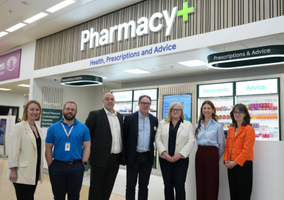
The multilateral partnership between Tesco, Diabetes UK, the British Heart Foundation and Cancer Research UK followed in second place with 9% of the vote, while Boots-Macmillan took third place with 8%.
IKEA and WWF have worked together since 2002, combining business and conservation expertise across areas including forests, agriculture, freshwater, climate and biodiversity.
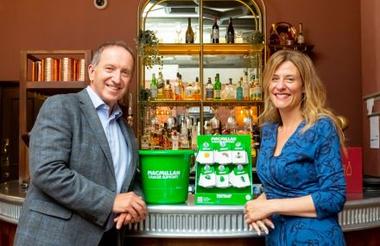
Greene King’s partnership with Macmillan began as a fundraising initiative in 2012 and has since evolved into a broader strategic collaboration spanning team member and customer engagement, community activity, health awareness and practical support for people living with cancer.
The Greene King-Macmillan partnership has raised more than £27m to date.
Respondents highlighted longevity, strategic alignment, shared purpose and measurable impact among the qualities they most valued in the winning partnerships.
This marked the first time in three years when the Tesco-Cancer Research UK (CRUK)-British Heart Foundation (BHF)-Diabetes UK health partnership was not voted most admired by peers.
Johan Degerheim, partnership manager at WWF Sweden, commented on the news: “This recognition reflects the power of long-term collaboration. For more than two decades, WWF and IKEA have combined our strengths to protect and restore ecosystems, support local communities and demonstrate how business and NGOs can drive lasting change.”
Meanwhile, Gemma Peters, chief executive at Macmillan, said: “For over 14 years, Greene King colleagues, customers and communities have gone above and beyond to help make sure nobody faces cancer alone.
“We’re incredibly proud of what we’ve achieved together and excited for what we can achieve next for people living with cancer.”
AI readiness still uneven
The report also found that while AI awareness was widespread, organisational readiness remained uneven, with just 44% of respondents considering their organisations “very or fairly prepared to realise AI’s potential” while managing its risks.
A further 39% said they were only somewhat prepared, which the report said showed that “the implementation gap is now more significant than the awareness gap”.
It advised partners to “use collaboration to close it by pooling expertise, developing shared safeguards and aligning expectations around data, transparency and responsible use”.
Regarding the use of AI, respondents reported seeing the greatest potential in improving impact measurement and reporting, which was selected by 80%, and reducing costs and increasing efficiency, which was cited by 74%.
Related articles