
On the day that the July edition of Governance & Leadership lands on desks and doormats, we could be just hours away from the investiture of yet another new prime minister, the seventh in 10 years. On or around 17 July, barring any late challenge for the top job in UK politics, Andy Burnham will become PM.
Miles of column inches are now being devoted to speculation about Labour’s new direction under a Burnham leadership, as pundits scour his speeches, interviews and parliamentary voting records for hints as to future policy positions. I went looking for comments that might indicate how charities and civil society will fare in his national vision of “Manchesterism”.
One of the first things Burnham did in 2017 as the new mayor of Greater Manchester was to set up a community foundation to tackle homelessness, and pledge to donate 15% of his salary to it. He also committed to end rough sleeping across the area by 2020.
At the Labour conference later that year, he told a fringe event that he supported longer contracts and core funding for charities that deliver local services. “One thing I am bringing through as mayor of Manchester is a new relationship with the voluntary sector, where we move away from this position of distrust where we make them compete for project funding or annual funding, and constantly retendering.
“Let’s welcome them in as equal partners in the building of our communities. Let’s give them five or even 10-year contracts, and core-fund them.”
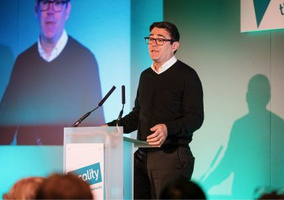
In November 2024, Burnham told the Locality annual conference that national and local government “needs to start backing” charitable welfare-to-work providers with core funding. Addressing the charity delegates directly, he said: “You spend your time bidding – imagine if you didn’t have to do that because you were just trusted to deliver? Imagine the difference that would make.
“We are calling for devolution of employment support. The money – around £6bn currently spent through large corporates providing quite a dehumanised system – imagine if that money was the new money that came flooding into the community and voluntary sector to give you that core funding, and with it, came that responsibility to get more people into work.”
And in October 2025, delivering the annual Theos lecture, he lamented the demise of “local agency” and said public services should be delivered “through places and people that are trusted”, not in a “top-down, soulless” way.
As an example, he said the Home Office spends billions of pounds procuring accommodation for asylum-seekers “through outsourced entities that don’t have any communication with local communities in terms of procuring that accommodation” and that “are making millions of pounds of profits out of our system but are providing very poor-standard accommodation”. He went on: “If you work from the bottom with communities, wouldn’t we come up with a much more humane solution to that way of doing things?”
Manchester rough sleeping target missed
Of course, actions speak louder than words and Burnham knows this only too well. While the numbers of rough sleepers across the Manchester area did fall sharply in the early years of his mayoralty – from 268 in 2017 to 89 in 2021, according to figures obtained by the Mill newspaper – they have been rising steadily since, back up to 197 last year despite millions spent on the city’s flagship A Bed Every Night scheme. It’s not an issue Burnham is giving up on – witness his new pledge to deliver the UK’s biggest council housebuilding programme in decades – but it does highlight how intractable these problems can be.
That said, Burnham’s consistent and compelling rhetoric on radical devolution, strategic collaboration with civil society, and commitment to core funding, should give us hope.
Regular readers will recall that I was also hopeful this time two years ago. That didn’t go so well. But sometimes it feels as if hope is all we have left, so I’m clinging to it.