

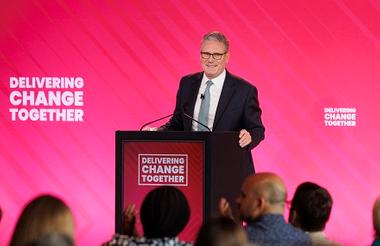
This morning, after months of mounting pressure from the media, his colleagues and the general public, Keir Starmer announced he would step down as prime minister this summer.
Just two years after leading his party to a landslide victory on a wave of optimism at the last general election, Starmer today accepted that his Labour MPs have lost confidence in his ability to lead them to victory next time.
Among charities, Starmer will likely be remembered most fondly as the prime minister who tried to mend frayed relations between the state and the sector.
But others will point to the increase in employer national insurance contributions (NICs), which, alongside continued minimum wage rises, have put pressure on larger charities and led to many making redundancies.
More generally, Starmer has not introduced the increases in public spending many charities might have hoped for from the first Labour prime minister in 14 years, with cuts to aid and welfare spending particularly unpopular.
Starmer’s departure also potentially casts doubt over his more recent plans to strengthen the Charity Commission’s powers, which are controversial among some in the sector.
Relationship ‘reset’
Less than a year ago, the Civil Society Covenant delivered on Starmer’s election pledge to prioritise “resetting” that relationship and reaffirmed charities’ rights to speak out on behalf of their beneficiaries even when it means criticising government policy.
He set up the Civil Society Council to oversee the covenant’s implementation and attended the first meeting at Number 10 in April.
Work to ensure the covenant is embedded across the country is underway with a £11.6m fund launched to invest in 15 deprived local areas in England.
There is a risk that this activity will lose political momentum now Starmer is leaving office, with the possibility that his successor will not show such an interest in charities and the sector will once again be thrown onto the forgotten pile.
This happened almost a decade ago to the day when former prime minister David Cameron stepped down along with his Big Society programme and the recently revamped Compact gathered dust under subsequent leaders.
Culture secretary Lisa Nandy has also been a vocal supporter of the covenant’s introduction and other initiatives such as the government’s place-based philanthropy strategy.
The prospect of her moving to a different role in the near future is massively increased by Starmer’s exit, which could be bad news for the sector as she has shown more interest in charities than many of her predecessors.
Unpopular policies
While sector bodies like NCVO and ACEVO have praised and been closely involved with the covenant, they have also loudly criticised the government’s NICs increase, with estimates that it could cost charities with staff an extra £1.4bn per year overall.
They have also lambasted and pledged to defy Starmer’s administration’s proposal to make volunteering a route to earned settlement for refugees and migrants.
Also unpopular among some are the government’s plans to allow the commission to strip charitable status, disqualify trustees and remove senior managers at charities suspected of harbouring extremism, which they warn could suppress campaigning freedoms without clear definitions and safeguards.
So, besides the improved relationship with government since Starmer took office in 2024, there will be hopes that some of his administration’s less popular policies fall by the wayside.
Whoever replaces Starmer, with newly elected MP Andy Burnham appearing to be the most likely, the sector will want to be reassured that the positive steps made under the current administration do not come to a standstill.
As charity staff face increased hostility from members of the public just for doing their job, a hope must be that the next prime minister finds a way to cool rising tensions rather than fanning the flames of social division.