

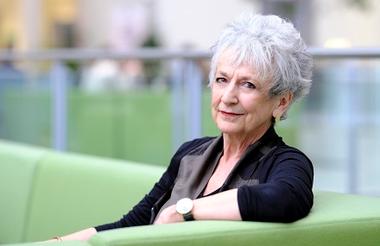
When Julia Unwin was a Charity Commissioner from 1998 to 2003, the regulator’s guidelines were littered with Latin and legal jargon, she recalls. Now, as its new chair, Unwin says she will steer a much-changed commission, with a far clearer rubric, on a steady path to maintaining public trust.
Speaking to Governance & Leadership in her first interview in the post, Unwin says that while changes in charity regulation and its legal framework have been evolutionary rather than transformative, the approach of the commission has altered “enormously”. “Our style has changed – I think we’re more open. We have to be,” says Unwin, who started as chair on 1 January.
Alongside this more transparent and accessible approach to engagement with charities, she adds that it is critical that the regulator is consistent in its rulings, especially amid such a fractious sociopolitical climate. “In these deeply divided times, it’s even more important to have a no-surprises regulator, a steady regulator.”
Increasingly, the commission is finding itself drawn in to adjudicate on complaints made by organisations on one side of a political argument about charities on another – witness transgender support charity Mermaids’ efforts to strip LGB Alliance of its charitable status, or UK Lawyers for Israel’s claim that Citizens Advice had failed to prevent staff taking part in pro-Palestine, anti-Israel activities at work, or various disputes between the League Against Cruel Sports and pro-hunting groups. While Unwin is clear that it is not the job of the commission to referee political disputes, she has no desire to fetter the right of charities to challenge others.
“Absolutely not,” she says. “We live in incredibly turbulent times, geopolitically, globally. In this country, there is huge division. The job, I believe, of the Charity Commission, is to keep absolutely steady in that context, because that’s what the sector needs.”
But she maintains that it is a vital part of the role of charities to hold other organisations to account.
“Some of the charities on our register are deeply involved in challenging other organisations, and that’s as it should be because that’s what a lively, vibrant sector does,” she says. “Sometimes it’s disruptive, uncomfortable and messy, but the charitable sector is that and it should be, because that’s how real change happens.”
Commission’s role in educating the public
In something of a departure from the views of some previous chairs, Unwin believes the commission has a role to play in educating the public about the realities of running a modern charity – albeit that the sector itself must share that task too.
“We have the commercial sector, we have government, and we have what I call wider civil society, most of which are registered charities. I think we need to be open with the public about how wide that group is, what they have in common, but also what they have that is different.
“There is no possibility of coming through the crises we're facing at the moment without charities being in existence, being strong, flourishing, doing well. Is it the Charity Commission’s job to explain that to the public? Yes, because we are the government department or the non-ministerial body responsible for that, but charities have to do that too. They have to tell their story, and they have to convey the huge diversity within the sector – not only the historic breadth of it, the depths to which charities have gone, but also the potential for charities. I’m as interested in looking forward at what charities can do in a fast-changing world as at what they have done.”
Intervening when things go wrong
That said, when things do go wrong, the commission needs to intervene firmly and clearly, Unwin insists. Referring to her promise to the Culture, Media and Sport Select Committee which approved her appointment that she wouldn’t hesitate to “show teeth” in the role, she explains: “Showing teeth may involve being very public about disapproving of something that’s happened. It may involve statutory inquiries. It may involve all sorts of things.” But, she adds: “When that happens, it’s based on good, clear evidence. It’s not about whether we like what charities do or not, and it’s absolutely not about whether politicians like what they do or not. The independence of the charity sector is vital.”
And while she acknowledges grumbles about the apparent lack of urgency in some of the regulator’s work – for example, former government adviser Lord Walney accused the commission last year of being “toothless” and moving at a “painfully slow” pace – she also contends that faster isn’t always better.
“We can get quicker,” Unwin says. “But do you want fast regulation or good regulation? You can get it fast, or you can get it really good and thorough – which do you want?”
Charities working together
In 2018, when she was chairing the seminal Civil Society Futures inquiry, Unwin said that the charity sector needed to get “really serious about where power sits” in order to tackle deep social divisions. This was a year after the Grenfell Tower disaster, in which 72 people – mostly social housing tenants – perished.
Unwin was very involved in the response to Grenfell in her role as inquiry chair, and recalls that despite the chaos and grief that marked the immediate aftermath of the tragedy, charities with vastly differing principles and heritage came together in a spirit of genuine collaboration to help those affected. For example, Al-Manaar Muslim Cultural Heritage Centre served as a critical hub, working in conjunction with the British Red Cross.
“You had small groups of people wanting to help, wanting to do things, working around the mosque to save it – and the British Red Cross. In times gone by, they would not have worked well together,” Unwin says. “I was hugely impressed by the way they did so in a crisis.”
However, she adds that the charity sector has to learn to “be better” at collaborating in the present day. Reflecting on the 2018 report, Unwin says the researchers identified a good deal of suspicion and tension between networks and movements, and between emergent organisations and some larger, established charities.
Since then, she has noted some “fantastically good” progress in bridging these gaps during some major crises, but warns that no charitable organisation can solve entrenched social problems alone.
Greater powers to ban trustees
In November, the government announced it would consult on expanded powers for the commission to ban people convicted of hate crimes from trusteeship and senior management roles. Then in February, prime minister Keir Starmer said the government would introduce “much stronger powers for the Charity Commission to shut down charities that promote extremism”.
Ahead of the consultation, which is expected sometime this month, Unwin says she would be happy for the commission to be given greater powers, provided the government sets realistic expectations.
“There are bad actors using some organisations as platforms – that’s an abuse of charity and we need to stop it,” she says of entities and individuals posing as charities to spread extremism, terrorism and hate speech. “Somebody has to have the powers to intervene there. If we have them, and we have the funding to do it, I’m happy for us to have that power.”
However, she adds that the sector itself also has a significant role to play in upholding high standards and rooting out those that would abuse charity status for nefarious ends. “We can’t do everything, and the charity sector also needs to step up and acknowledge that where bad things are happening.”
Treasury budget increase
In June last year, it was announced that the commission’s budget was set to rise by more than a quarter in 2026 following the Treasury’s spending review settlement. Unwin says this was a vital injection of funds and a “huge vote of confidence” from the government. “Without it, I don’t think we would be capable of having this conversation and talking about where we’re going. It really matters.”
She says the additional funding will allow the commission to modernise, nominally by using data to predict more accurately and streamline operations. Asked how quickly this change will happen, Unwin says: “We won’t get a second chance to do this so we will do it right, but it won’t be an instant turnaround because it never is in any organisation.”
Board diversity
The commission’s research last year found that trustee boards fail to represent the diversity of the wider population, and that board diversity had barely moved since a previous study eight years ago. Shortly after publication of the latest report, commission chief executive David Holdsworth told the Trustee Exchange conference that voluntary trusteeship was “no barrier to diversity” and that it must be protected as “the linchpin of public trust in charity”.
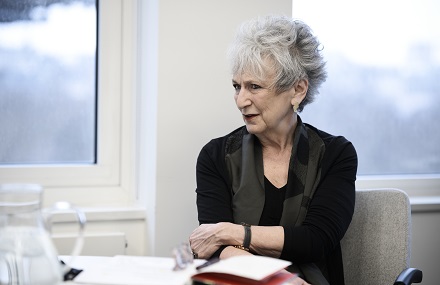
Pressed on whether making it easier for charities to pay trustees would improve board diversity, Unwin takes a similar view to Holdsworth. “There’s no evidence that I’ve seen that payment makes a difference. The corporate sector pays well for its non-executive directors; the health service pays; universities increasingly pay – it hasn’t resulted in greater diversity.”
Instead, she argues, it is more important to emphasise the importance of trusteeship to make non-executive positions more appealing. “We should talk about trusteeship as a huge opportunity, not just a service. We need some esteem for trusteeship, rather than seeing it as another tedious job. We have to be open to all sorts of different people. An effective board has 360-degree vision. You don’t get that with a board where everybody looks the same, went to the same school and behaves the same way. There’s still far too much of boards appointing someone they already know.”
‘Don’t declare war’
Unwin does not intend to send shockwaves through the charity sector as commission chair, preferring a constant, predictable approach, but promises that she will be strong and decisive enough to lead through turbulent times. While her general approach to governance could be characterised as “Don’t declare war on anyone”, she nevertheless adds: “Am I tough enough to take on challenge and controversy? Yes I am. Under my leadership I hope the Charity Commission will be supportive when it can be, and interventionist when things go wrong.”
When she was confirmed in post following the pre-appointment hearing before the select committee, Unwin was universally welcomed by the sector. She admits to feeling flattered by the warmth of the response: “I think people felt that there was somebody here who understood the sector. But I’m not complacent about that.”
Explaining her approach now, Unwin says: “We’re not cheerleaders for the sector, we’re not decision-makers. What we’re there to do is to register the right organisations – it would be madness for a regulator to think we were directing. Regulators should never lead. The commission should always enable, understand and be close to the sector – but not cosy.”
Charities’ unique role in public life
As the world grapples with geopolitical conflicts, widening inequality, and the rising cost of living, Unwin says that charities’ unique brand of public benefit needs to prevail for the good of society.
“At every moment of our nation’s history, you can see when there was a crisis, charities were formed and stepped up. Some will fail, that’s what happens; some will become household names long after I’m gone. That’s the point of charity. It’s got a longer history than any other legal structure in this country.”
She looks back on her early involvement in the sector. In the 1970s, Unwin volunteered at one of the first refuges for women in the UK, before the formation of Women’s Aid. At the time, its founders battled open hostility from those opposed to the concept of a domestic violence organisation.
“Many people thought it was an appalling imposition on some men,” she says. “I’d be surprised to meet many people who think that now – the world does change and it’s partly charities that make that change.”
Charity Commission’s contract with the sector
In return for charities upholding their side of the bargain – striving for good (and diverse) governance; maximising their impact; and adhering to high standards of responsibility and accountability – Unwin pledges that her Charity Commission will not be swayed by popular or fashionable views, but will regulate with characteristic “steadiness”. This is key, she declares, to earning and maintaining the public’s trust in the sector.
“The Charity Commission has a statutory duty to always bear in mind both the public benefit that charities provide, and the value of public trust – which I would say is the most valuable asset they hold.
“Charities are the third leg of our democracy. A high percentage are very, very small indeed, but they are the bedrock of our society.”
Under her leadership, she says the regulator will do its best to create an environment that encourages and enables innovation and ambition – even if that’s not a core strand of its remit. “It’s about creating a framework in which people can innovate and try new things, which may not work. Charities have got strong by trying things: try, fail, fail fast, start something else. Lots of the best initiatives started off being quite ambitious and scary, and we need to be able to back those too.
“But it’s not the Charity Commission’s job to think about that. Our job is to make sure that charities are well enough governed and that trustees have taken the right factors into account in the decisions they’ve made, and that they understand the risks they’re taking.”
George Hayes is a reporter at Civil Society Media
Editor's note: This article has been updated to clarify that Julia Unwin was not involved in the formation of Women’s Aid.