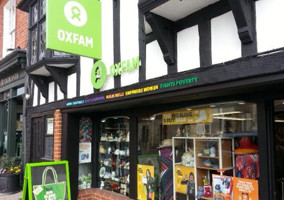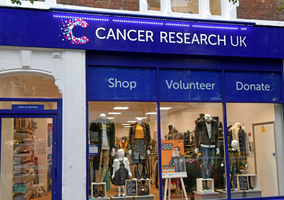



It’s been a funny old week for charity retail. First, national newspapers swallowed hook, line and sinker the untrue leak that Oxfam were planning on closing 100 shops. Then, several publications used this as reason to muse on the supposed decline of charity retail altogether.
This wholly false story seems to have precipitated a lot of negative press – never let the truth get in the way of a nice scaremongering piece which will generate a lot of clicks.
It’s unusual for me to start any kind of article with a quote from Ludwig Wittgenstein but I was instantly reminded of the famous comment at the end of his most significant book the Tractatus: “Whereof one cannot speak thereof one must remain silent.”
If only some sections of the national press took more notice of this rather obvious stricture, they would check their sources more carefully and not put out blatant rubbish in the name of accurate reporting.
Tall poppy syndrome
So, what’s going on? There seem to be a few things at play here.
First of all, tall poppy syndrome seems to loom large in charity retail from time to time, causing a bit of a pile on of doom-laden apocalyptic predictions of the death of one of the UK’s best loved institutions.
Don’t ask me why – I’m no psychologist – but it’s pretty common for success stories to be given short shrift in some sections of our media.
Secondly, there certainly have been a number of high-profile closures which have hit the headlines of both trade press and indeed the national media.
Thirdly, there is undoubtedly a bit of a crisis in the clothing collections industry, as rag prices have declined in recent years. This captures the public imagination because most people are well aware that shop donations are both increasing in quantity and decreasing in quality.
Bigger shops
So it’s probably time to set the record straight and tell a few home truths about charity shops.
No way is charity retail in crisis. Yes, costs have increased in recent years but trading is still very strong, and the public still loves charity shops, and visits them all the time.
The headline closures amongst the very largest retailers have indeed brought down the size of the estate in terms of actual shop numbers, but disguise the fact that most of our members are increasing the size of their outlets.
If our media was capable of doing simple mathematics, they would realise that closing three 500 sq ft shops and opening one 2,000 sq ft shop is not a crisis – it’s a way of consolidating and investing in a better and more profitable way to raise money for good causes.
Neither are charity shops being replaced by online retailers. Bricks and mortar remain the most popular way of shopping, and no online operation can substitute for that amazing feeling of catching a huge bargain, and finding something different, quirky and amazing which you can touch and feel – and try on.
There is no truth at all in the rumour that online peer-to-peer platforms are eating charity shops’ lunch. On the contrary, they are complementary activities which contribute to a greater public awareness of the desirability and importance of shopping pre-loved.
Saving the planet
Charity retail plays a vital role in the critically important task – although perhaps not as fashionable as it once was – of helping to save the planet. Charity shops are by far the largest facilitator of reuse in this country. If it wasn’t for their activities then probably about double the amount of textiles would end up in landfill or incineration.
Charity shops are not expensive. The average transaction value across the UK for a charity shop is £7.51 – about a pint and a half of beer. And with this they manage to raise about a third of a billion pounds for charitable causes. Not only that, but they offer fantastic value for money, selling high quality clothing and other items for far less than you could buy them new.
I feel for our 26,500 staff and 220,000 or so volunteers who are devoting their lives to raising funds and awareness for good causes. They don’t need rants, false stories and inaccuracy – they need support, celebration and the removal of pointless barriers to making money for their charities. So, to those journalists and commentators who can’t be bothered to find out the true facts – go away and think again.