
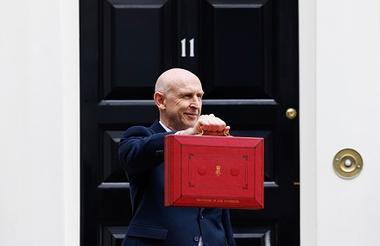
Sector bodies have expressed disappointment at the lack of direct support for charities in yesterday’s autumn budget, the first delivered by chancellor John Healey.
Organisations welcomed the budget’s measures intended to ease cost-of-living pressures, including with energy bills, support for carers and minimum wage increases, which may benefit some of the people supported by charities.
However, many also expressed concerns about the budget’s lack of direct support for charities as they face rising costs, growing demand and often falling or constrained income.
Sector bodies including NCVO and the Charity Finance Group (CFG) previously called on the chancellor last month to ensure the sustainability of charity funding as part of the budget, with such measures not announced yesterday.
Budget ‘could have gone further’
Leigh Brimicombe, chief influencing officer at NCVO, welcomed some of the budget’s emphasis on prevention, but added that “investment in outcomes must be matched by investment in the organisations that help deliver them”.
Brimicombe added: “This budget could have gone further in recognising the systemic challenges facing the voluntary sector by providing the support it needs to remain resilient.
“This is especially true for those organisations delivering vital public services, who likely will not receive the necessary uplifts to grants and contracts to cover these increases in the cost of delivery.
“We have recently discussed some of these challenges directly with Treasury, and look forward to continuing to work with government to secure the long-term investment and partnership civil society needs ahead of the spending review.”
‘No support extended to charities’
Claire Stanley, director of policy and communications at the Chartered Institute of Fundraising (CIOF), said: “In a budget designed to encourage growth, and give struggling people and businesses breathing space, there was no support extended to charities, many of whom have been a lifeline to those in need since the cost-of-living crisis took hold.
“At a time when charitable income is under unprecedented pressure, it is time for a step-change in how government works with the sector. We are therefore calling on the government to take forward the recommendations outlined in our submission to the budget.
“Our proposals are designed to tackle the three core challenges holding charities back from raising sustainable income: nurturing legacy giving to ensure it maintains its growth trajectory, encouraging wealthy individuals who have the capacity to support causes right now to do so, and ensuring that charities have the skills and tools available to make the most of emerging technologies including AI.
“We will continue to work with relevant departments and regulators to ensure our members’ views are heard and to foster a resilient giving landscape in which charities and the communities they serve can thrive.”
‘Civil society barely featured’ in speech
CFG co-chief executive Clare Mills welcomed the “small steps” taken by the chancellor to alleviate financial pressures faced by many individuals and families around the UK and acknowledged that the budget did not introduce major new costs for charities outside of the minimum wage increases.
However, Mills added: “As CFG and the Civil Society Group outlined prior to the budget, there were many low-cost steps the government could have taken to ease pressure on the sector.
“Though the government has made efforts to work more closely with charities through the Civil Society Covenant, charities and civil society barely featured in the chancellor's speech, despite the significant and vital role the sector fulfils in supporting the government's missions and contributing to the much-mentioned ‘good growth in every postcode’.
“We will continue to work to secure closer engagement between the sector and government. Ahead of the announcement of the prime minister’s 10-year plan and next year's spending review, the prime minister has focused on a preventative agenda for addressing some of the biggest challenges facing society, and civil society has a huge wealth of expertise and innovation to support that approach.”
Meanwhile, Luke Hall, CEO of Charity Tax Group, said: “We are pleased to see the government act on VAT reform for social housing, a change CTG has advocated for and one that will help organisations deliver greater public benefit.
“This is a positive step, but there remains a significant opportunity to modernise the tax system so that more charitable resources can be directed towards frontline services and beneficiaries.”
‘Breathing space’ welcome
Shareen Patel, policy and influencing officer at ACEVO, welcomed the “breathing space” provided by some of the cost-of-living measures, but added: “Many people and communities continue to face significant financial pressures, and charity leaders are working hard to support people through these challenges, often with limited resources.
“Government must work in partnership with civil society to ensure that policies and funding respond to the needs of communities and build on the sector’s knowledge and expertise.
“It is vital that the government builds on these measures to deliver lasting improvements to living standards and help create a more secure future for people and communities across the country.”
Call for return to 0.7% aid spending
Gideon Rabinowitz, director of policy and advocacy at Bond, the UK network for NGOs, said: “The UK aid cuts have already cost lives and forced lifesaving humanitarian, health and climate programmes to close.
“But failing to meet even the paltry target of 0.3% means the government is failing people facing the worst impacts of conflict, crisis and extreme poverty worldwide.
“The government must urgently fix this injustice, by meeting its 0.3% commitment and setting out a roadmap for a gradual return to the 0.7% target.
“The Treasury should also ensure savings made by other departments spending UK aid are returned to the FCDO.”
Return of Healthwatch welcomed
Meanwhile, local infrastructure body, NAVCA, welcomed the announcement that Healthwatch, which gathers the views and experiences of health and social care service users, would not be abolished.
The body said: “This will protect and recognise the organisations that carry out vital work to understand patient experience and identify where health and care services need to improve.
“This means that the experiences of patients and the public will play a greater role in improving health and social care services as the 10-year plan is implemented.”