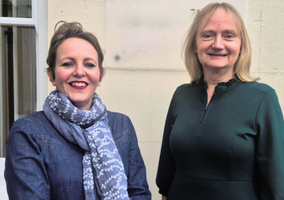


A new episode of the Civil Society Podcast has been published with Gerald Oppenheim, chief executive of the Fundraising Regulator.
In this episode, Oppenheim discusses recently revised Fundraising Code of Practice, the new “soft-opt in” marketing rules, AI in fundraising, and how the regulator is preparing for its upcoming 10th anniversary.
You can listen to the interview now below or on streaming platforms including Spotify, Apple Podcasts, Amazon Music and Pocket Casts.
AI-generated transcript
Emily Moss (EM): Hello and welcome to another episode of the Civil Society Podcast. I'm Civil Society’s junior reporter, Emily Moss, and on today's show, I’ll be speaking with Gerald Oppenheim, the chief executive of the Fundraising Regulator. We discuss the recently revised Fundraising Code of Practice, the new soft opt-in rules, AI in fundraising, and how the regulator is preparing for its upcoming tenth anniversary. Gerald is also set to speak at ELEVATE, a conference for fundraising professionals brought to you by Civil Society Media, on 11th March. Tickets are still available at civilsociety.co.uk.
I hope you find this conversation with Gerald interesting and useful, and I'll speak to you again at the end.
EM: So first off, it's been a couple of months now since obviously the new fundraising code was formally introduced. What sort of feedback have you received so far on the new code? Positive, negative…
Gerald Oppenheim (GO): We did an awful lot of consultation in developing the new code over nearly three years. So, by the time we came to publish the new code at the end of April 2025 with the six months transition period to it going live on November the first, an awful lot of people had seen it, had commented on it through the two rounds of the consultation that we did after we did the original call for evidence, and in the six month transition period, what we found was that a really gratifyingly large number of people came to the webinars that were run in early May, we had over 900 people in one that the Chartered Institute of Fundraising facilitated for us, and the very next day, in one that NCVO organised, there were another 300 people, or possibly some of the same, but I don't know… and then right away, across the summer, we were doing these webinars, one in Wales, one in Northern Ireland, one in Scotland and so on. So, by the time we came to the final one before launch, which we ran on October the fifteenth, we had over 1600 people in that one. So I think what I draw from that is that we got the messages out there, fundraisers and others who were interested, responded, came to the briefings, clearly understood what was being said and how the code was changing to a principles based document with sufficient rules in it to be clear what the do's and don'ts continue to be with all the guidance notes that we've issued since about recording your decisions right up to the one about AI, which I guess we'll talk about in a few minutes. So, people were, I think, really well prepared for it. So, it landed well on November the first.
EM: Oh, well, that's good, good to hear. And out of interest, have you received many complaints since it's been formally introduced about charities falling foul of the new rules in the code?
GO: No, not yet. It's a little bit early. I think that there is stuff starting to come in which is against the new code, as opposed to the tail end of the 2019 code, so that will build up over time. But I don't think there's anything I'm aware of in the new casework that's come in that is related to charities not understanding what the new code's about. The casework is very similar to that which it was before November, the first time will tell we'll obviously watch for that, because it's important that we do that in case we find there's something in the code that doesn't work as well as we thought it would, or others thought it might, which needs reconsideration in some way.
EM: Yeah, okay, that's interesting. Yeah, too early. Yeah, no, fair enough. And then moving on to another rather well, pretty new thing for last year at least. So obviously, a lot of people at charities, who are the majority of our listeners, would probably have already heard about these new soft opt in rules, but then quite a lot of people might not have, especially if they don't work in comms and things like that. So please could you just briefly run through what the changes to the current soft opt in rules are and what you as the regulator would like to see charities considering before they follow these new rules?
GO: Really good question. Soft opt in for charities came about as a result of the data use and access Act, which was passed by parliament, I think in June 2025. The soft opt in provision hasn't yet been implemented. I'll come back to that in a moment. But if you cast your mind back to 2018 and the coming of GDPR at that time, commercial bodies were given soft opt in opportunities, charities were not at that time, partly because of the history going back to 2015 over the way in which some of them at least had used, or rather misused donor data. So, the view was taken by the government of the day not to give charities soft opt in rights in 2018. However, the world has moved on in a good way since then, and charities are now as good or not as good as any other sort of organisation managing their data and managing the privacy and other arrangements that go with holding personal data. So there's no reason why now the charity shouldn't have soft opt in rights. This soft opt in will give charities the opportunity to market to people who are their supporters in a much wider way and much freer way, and will enable them to do it electronically. So what soft opt in does is amend the Privacy and Electronic Communications Regulations, 203 Peck, as it's known, to give charities that level playing field with commercial bodies. It won't be retrospective, so you've got to start from implementation date. But you do at least know, do at least know who's on your database? We've been working with the Information Commissioner whose law this is. They own it. They're the statutory regulator in charge, but the ICO is drawing up guidance for the use of the soft opt in-- get it right in a moment, pull over my teeth. And we've been working with them. As I say. They were hoping that the guidance might have been published this month, but they only really finished the consultation on the draft, and I know they had quite a few comments on it in December, so January was probably a little over optimistic as we speak. I don't have a date yet, but I wouldn't be surprised if it was March. It might come out before, but March would seem a reasonable guess. Now, charities shouldn't use it before it's implemented and before the guidance is there, because although the act of parliament has been passed, the relevant section giving life to this new power hasn't… parliament will have to implement that. That's the usual way these things happen. An implementation date will be given and set, whatever that might be, I'm guessing, sometime in March. And then that's when the green light gets turned on and it can be used. It's not a blank check, soft opt in. There's a lot of hype around it, understandably, because it does, as I've said, level the playing field for charities in relation to other organisations, and it almost certainly does give charities the opportunity to raise funds, and goodness knows, that's needed more than ever at the moment. I say that not just as a regulator of fundraising, but you know, because in my other life, I'm a charity trustee. I know how tough it is out there. Yeah, so it is important. It will give new opportunities, but they've got to be used responsibly. As I say, it's not retrospective. You've got to use it from day one that it exists, you've got tell people on your donor database that this now exists and that you might be hearing from us a lot more often than you used to. Charities have to give their donors the opportunity to opt out because people might not want more contact. That's got to be respected. Charities need to make sure they do that. One of the things we will watch for is whether there's an an increase in the number of referrals we get coming through the fundraising Preference Service, which might be an indicator that things are not perhaps as well as they might be, we'll see too early to know equally, there might be an uptick in casework. There could be an increase in the number of approaches the Information Commissioner gets direct. Those will be measures that perhaps things have gone too far too fast. Yeah, or the members of the public don't know and understand that charities can now do this. So it's very important for charities to explain to their donors that the law’s changed, they're now able to do this, of course, as a donor or indeed as a new supporter. That you might sign up, you can opt out if you don't want these extra approaches that you know, charities might want to market their services. Might want to say that, you know, you we've got a retail outlet that you can buy from. They might want to do all sorts of things that will enhance the availability of their services and the opportunity for them to raise money, and it is absolutely there to do that. The data and Marketing Association estimated that soft opt in might bring charities an extra 290 million pounds a year, and that was based on a sample of charities. I think Civil Society covered it when it came out. That is an estimate. Of course, nobody knows what the real number will be, but it was an estimate that the DMA got. So use it… use it responsibly when it comes out. Make sure donors know what it's about. Make sure that as a charity, you understand what it allows you to do, and perhaps you know what it doesn't allow you to do. So it's… there is a risk there that if charities don't get it right, the public trust in fundraising and charities could get damaged again. I very much hope that that's a low risk, because it ought to be with proper use of planning. And the one thing that charities have had a bit of like getting used to the new code since June… there's been seven months so far for familiarisation with what the Act says and charities will have seen the ICO’s draft guidance, even if they haven't quite liked some of what they've seen.
EM: Interesting. Yeah. And just as a follow up to that, do you think there's any risk at all that charities, obviously, you've talked a lot about charities complying to the, you know, to the utmost with these rules, but do you worry at all that there could be a risk of them damaging public trust by… I mean, misusing is quite a strong word, because that implies they're doing it deliberately, but maybe misunderstanding their new powers at all, or anything like that?
GO: Oh, there's a risk. Of course, there is. There is always a risk with any new power that it won't… it won't have been understood. And that won't be, as you just said, Emily, that won't be because people are being bad and wicked about it, it’s just that they haven't understood the detail, which is why it's so important in this case, to wait for the ICO’s guidance and our guidance alongside because that will give examples of what you can do and what you can't do. Little, you know, little case studies. So do wait for that. There's always a risk. I hope that risk is extremely low.
EM: Yeah, yeah. Okay, interesting. Thank you. And then moving on to some more tech related questions, so we're going to talk about AI and fundraising. So, what issues surrounding AI have you already seen flagged to you by charities in the last couple of years since it's come to prominence?
GO: I think everybody's talking about AI. There are any number of… any number of articles in one civil society outlet or another, any number of articles that charities have penned for themselves, practitioners have penned. So, there's a lot of it about the potential for charities to use AI is huge, whichever way you look at it, whether it's in fundraising, whether it's in their general marketing, whether it's in the way they use it to improve their own internal processes and systems. But like all these things, a bit like soft opt in, where we get there in a few weeks’ time, understand what you're doing. First, everybody will tell you that AI is a boon if you use it well. I used it the other day to write a presentation that I was doing- just fed some words that I knew I needed to cover into Chat GPT- “Chat GPT, write me a speech”, and it does… actually, it does a pretty good job. But, and here's the but, you're the human being in charge of this. You've got to read it, you've got to test it out. You've got to make sure that it's accurate, because we all know that AI can hallucinate. It can think it's understood what you're after, but it doesn't, and it gets it wrong. So human agency and checking whatever it is, whether it's a fundraising appeal, whether it's writing your annual report, whether it's writing a letter to someone to seek funds or to apologise for something going wrong, you need to check it, personalise it, make sure it looks like it comes from a human being. I think if you talk to some grant making foundations, for example, they can spot an AI written grant application a mile off, yeah, because they're all the same, they're not bad, they're not wicked, they're not wrong. It's all perfectly legal, but there's… you've got to own it, I think, is what I'm saying. And our concern, really, is that, you know AI can help. Yes, of course it can safe and responsible use of it is key make sure that the way you use it as a charity fits with your own values, your ethics, to make sure you are using it well and properly. We've issued our recent guidance in December about using AI in your fundraising to support charitable work. And we did this because we had loads of requests to do so. And I think without being, you know, too full of bragging, I think ours is the first actual guidance about using AI that's out there for real, that actually gets into, you know, a topic that charities are pursuing. And of course, we've done it as well to support the new code, yeah, and if we need it in due course, to support colleagues in case work here, who might get complaints in due course about the use of AI in fundraising in some way that may not have been understood or have gone wrong. So that that's the reason for doing it. It's got a legitimate role in fundraising, but it's really important that charities make sure they own it, use it, check it, and I would say, make sure the messages are personalised when you're doing… doing your mail outs or whatever you're doing.
EM: Yeah, definitely. Yeah, definitely. And what sort of future issues are you anticipating AI to cause in fundraising, and are you doing any work to future proof the sector for those risks?
GO: Interesting question, not at the moment, but obviously we're in close touch with the Chartered Institute of Fundraising on a raft of issues, and I can see perfectly well that this is something that we would want to talk to the Katie and her team there about, because their experience of their Institute members using it, their own guidance that they might want to produce for their members, and how to get the best out of it would be important. We, we obviously have a completely shared interest in in that being got right? To that… to that end, we're part of the Charities AI Task Force. We're also working with regulatory groups that, for example, the ICO has, the Alan Turing Institute has, so that we're plugged into those so that we can understand how those things are developing for charities, how we might then learn from that ourselves to better inform fresh guidance and advice in future. So I think it's an iterative thing. I can't give you the one big thing that's going to happen next in AI, because I haven't got any greater clue than most people, but we know it's there. We know that towards the end of last year, the latest version of Chat GPT came out. Everybody's probably got Microsoft Copilot on a laptop that they're looking at, which helps them, you know, summarise documents or find things. So there are a variety of tools out there that quite a lot of people who know an awful lot about AI in a way that I confess I don't, and you know, they will all have views about what a better tool is than another one. You know. Some people I know don't like Copilot. Other people say it's wonderful. So you know, you, as usual, with these things, you have to make a choice about what works well for you in terms of what you want it to do. Yeah.
EM: Yeah, definitely. And other sector regulators like the Charity Commission, have announced plans to adopt AI for some of their tasks, like going through charity applications. Does the Fundraising Regulator itself have plans to use any AI in the near future on a sort of company like scale?
GO: We are already… okay. We've done this. We're doing this on a pilot basis, because we need to learn how it works. So when we, when we're drafting our communication documents, investigation summaries, other documents like that, the presentation I was doing the other day as a communication we're using AI to help us do that, but with human beings reviewing what it does [is] unbridled use. It's not free use. So we are already starting to use it. I think longer term, we'd like to use it, and again, we'll be talking… we'll talk to the Charity Commission about this, because it's very, very early days, yet I can see a really good application of AI to help us read charity accounts.
EM: Yeah, very true.
GO: Because one of the things that we are interested in, of course, because it's the basis of our levy, is how much does a charity spend on its fundraising? And of course, the sort requires a charity to cover that off. And rather than having my colleagues in finance team sitting just outside this meeting room, piling through hundreds and hundreds of accounts online. You know, if they could, somebody could develop an AI tool that would help reading accounts so that you could say, how much has the ABC charity spent on its fundraising in the last 12 months. You can just do it, get to the number quickly. And so applications like that would be an absolute boon. We're not there yet that that hasn't happened, but we certainly are in touch with the Charity Commission over what they're proposing, to see if we can take advantage of it.
EM: All right, brilliant. That's good to know. I'm just very curious about that, but that's great to hear. And yeah, always keeping human beings at the centre,
GO: Do regulators do talk to each other?
EM: Yeah, I'm sure everyone will be happy to hear that. So ahead of the Fundraising Regulator’s tenth anniversary this year, how do you feel the fundraising landscape has evolved over the last decade? Do you think it's been for better or for worse? Big question…
GO: It's changed immeasurably for the better. If you think about where we came in and the reason we were set up in 2016… it was when things had gone off the rails, rather. And there was a lot of public concern. There was a lot of government concern over the things that hadn't worked well and had been exposed in press reporting. I think what we saw when charities had to get to grips with that and with cleaning up their data ahead of GDPR in 2018 they really got down to it and did it. It was probably a hellishly difficult task, but charities did it. Because if you talk to the Information Commissioner to ask John Edwards and his team, ‘do you get lots of complaints about charities and their fundraising?’ The answer will be ‘no, we don't get complaints. We don't get any more complaints about charities than we do anything else.’ And you know, yes, of course, things will go wrong in an individual organisation from time to time. There’s more, on averages, than 170,000 charities in England and Wales- never mind charities in Scotland and Northern Ireland added to that total. Of course, in that sizeable population, something somewhere won't work as intended. But the ICO will also tell you there's nothing systemic that anybody can see, and let's hope, going back to what we were saying about soft opt-in, that that doesn't become the next systemic problem. No reason it should, because people are much better equipped to understand and deal with it. So, a huge improvement, I think, in the way things have happened. Things happen. I like to hope, and I do think it's right to say, without humble bragging in any way, that our presence and our role as a regulator of fundraising with that specific task, working not just with charities, but with the agencies they work with to support their fundraising with fundraising platforms like Go Fund Me, JustGiving, Crowdfunder and so on, working with taking it to our registration a smaller number of other types of organisation, like community interest, companies that fundraise from the public and have a fair proportion of their rules as charitable, even if it's a minority, not a majority of rules... I hope the approach we've taken has helped to improve the landscape. From the public's point of view, that's really important, because as a regulator, your first responsibility is public protection when it's needed, and advice to the public. What we've seen over time, when we started out in 2016, into 2017 we might have been getting maybe 50 incoming complaints or casework topics a month. Now it's regularly 100 and more than that 20, perhaps some months. Doesn't sound a lot, but you know, 100 and 100 a month is 1200 a year for a small regulator. That's quite a lot of incoming material. Our badge is very prominent. You will see it if you watch charity adverts on television, in the last frame, you know, along with the charity number and the company number, you'll see registered with the FR in the bottom right or top right corner, or wherever it's put. So, there is recognition. You'll see it on newspaper adverts that charities take out. You'll see it when you’re hanging on the tube and there's a charity advert in front of you, there it is. So there's much greater recognition amongst the public that we're there. Charity registration is well north of 7000 organisations now. There's about over 2200 in in the levy, and another 5000 that have registered with us outside the levy so that's grown hugely. So there is value seen in registering with us if you're not a levy payer, to get the badge, to put on your materials, to show that you're committed to the code of fundraising practice, and that, you know, all that goes with it, that's grown hugely. Of course, we will have differences with charities from time to time when there's a complaint and we find the codes being breached, that's not easy for a charity, because you don't want to find yourself there, but the approach we take is that our investigations, where we carry them out, and the summaries of them that we publish are there for learning. They're not there to finger point as a charity, ‘they've got something wrong’. Of course, you know, national newspapers may choose to do that, but that's not our intent in publishing. I think there is, you know, there's much greater acceptance of that. I think the engagement with charities, the working arrangements that we have with other statutory regulators on one hand, and indeed other non-statutory so like the Advertising Standards Authority and also the Chartered Institute and the network organisations that represent charities, NCVO, ACEVO and so on, they're really good. We can talk frankly. We can exchange views where, you know, if I go back 10 years, the early meetings that we did when I was when I set a policy, could be a little tense to put it mildly, because we were the new regulator on the block, and nobody was quite sure how we go about it… understandable, and I hope the way we've gone about it has reassured charities that we're not out there to punish. We had a really nice exchange the other day with one large national charity who had taken advantage of our self-reporting system that if something, if something has happened in your fundraising, that might be reputationally difficult, let's say something hasn't worked, you can self report to us. It's a bit like a serious incident report to the general on that… and, you know, we had an exchange, as I say, with one of the really large national charities who, really their compliance manager, got back in touch saying, ‘Oh, this is a really good bit of process. You know, we've been able to put it right without going through the panoply of an investigation’ and so on. So it works, and we're hoping that the changes we're making at the moment to the way in which we manage casework will also encourage charities to think, well, of the process when we come asking questions about what's happened, because someone's been in touch with us who's not happy. You know, it's that process. We’re funded by charities. We're very aware of that. Yes, levy payers, very largely, you know, come up with most of what we spend, but we're not in their pockets. If something goes wrong, we are there to act for the public.
EM: Yeah, yeah. And on that note, a little bit, do you feel that the current version of the levy system is working?
GO: Well, yes, it is. I mean, we're… our levy year begins on September 1. And for the last six years, we're in the 10th levy at the moment, year 10 started on September the first 2025, so years, four, five, six, seven, eight, nine, we collected pretty well 98% of the income that we invoiced for. There are a few charities that don't pay the levy or don't respond to requests to pay it. There are a small and decreasing number now last year, the year ending August 2025 was the year in which we had fewer than 60 not responding or just refusing to pay. You know, when we started, it was much higher than that. First… the first year was the most difficult year of the levy, and then it's got more straightforward since we still have to do an awful lot of chasing organisations that haven't paid in September, October, November, you know, which is when you… most do pay in those three months. And then the hard, hard miles have to be put in by finance and registration teams to chase up the rest. And we will probably in early February, mid February, maybe we will publish a list of those that haven't paid. As we do, they get turned to red in our directory. And last year, we published a list of those just, just to make it easy for journalists on Civil Society to find. indeed your esteemed editor, Mr. Preston, found it. And Rob rang a few of the better known names on that list to say, are you going to pay a levy? And you? He was that fundraiser, where they were concerned, because, you know, the check was in the post, as it were.
EM: Oh, wow. Oh, yeah, I remember, I remember him doing that, but I didn't realise that it had that effect. Oh, well, that's good, good to know.
GO: I think I probably, I think I probably owed him for that. You know, we shouldn't have to do that.
EM: No, is the point?
GO: And yeah, we're in year 10 at the moment. We're not quite at the end of the trail yet, but I know that we're well north of 90% of the income collected. It's a little more difficult this year because we did a full review of charities that should be in the levy, and quite a number were added to the levy this year. And of course, it's newer for them, so we've got a bit more chasing to do with them, but compliance is overall pretty good.
EM: Okay, that's good to know. And
GO: And then so it's, it's, it's there, it's the cost of doing business.
EM: Yeah, yeah. I see, I see, that's pretty interesting. Thank you. And then going on to our final question. Now, do you have any plans for any more big projects or proactive regulatory work in 2026?
GO: Yeah, yeah, whether they're big projects… I leave others to judge. They're, they're important projects. There isn't a big project in the sense that the new code was a giant, mega project over time…
EM: Yes, oh for sure, yeah.
GO: So what we've got now are projects that are very much more related to business as usual. You'll be aware that when we set up the proactive regulation function that we've now got, the intent behind that was to enable us to be out there to understand thematic issues in the charity sector, and we've been doing a lot of work in that field, the work that we've done and are doing, and in 2026 will continue to do with the supermarket chains, all the big national chains that permit fundraising outside their premises or inside, sometimes, to make sure that they understand what's in the code, to make sure that they're working well with charities who approach them for permission to fundraise, to help them spot, sadly… to help them spot the villains, because there are try-ons. We know that we're just beginning work, and supermarkets have been brilliantly responsive on all of this. We're now doing work with the train operating companies and Network Rail because of requests to fundraise on stations. You know we… since we started, actually, since 2016 or at least 2017 Transport for London has had an arrangement with us that they get access, online access to our directory. And they can very easily check that when a charity says, ‘can I come and fundraise on Old Street Station outside the ticket barriers’, they can check that A, they're a registered charity with the Commission, and B, they're registered with us for fundraising purposes, either as a levy payer or a registrant.
EM: Oh, right, that's interesting.
GO: We, we'd like to see that model extended to national rail services, and we're just at the start of doing that. And again, looks pretty positive… like the supermarkets are, because, again, they can see the interest in doing this. So, if that continues, probably longer term, we might look to doing some of this with major sports venues, because we're aware that when there's a big match on or a big event like Wimbledon, for example, some people turn up collecting money or charity, which may or may not be for charity. So, you know, that's not the fault of the sports ground or anything. You know, people just take advantage. But there are also charities that want to get involved. So, we're doing, you know, we want to work away at that. We've just finished a big project with child sponsorship. You know, you see adverts on television ‘sponsor a child somewhere’. There have been a few issues about the way in which those are being described. Very often, if you, when, you know, very often when you donate, you're donating money into a pool which then supports a number of children in a particular community, as opposed to the one child that you might see on the screen who tells you in the advert that they want to be a doctor when they grow up, or lawyer or pilot or something. It's not quite like that. So, we've been working really closely with the child sponsorship charities like ActionAid or Plan International and a few smaller ones to make sure that they are producing adverts that get the messages across properly. And they're all signed up to that because they recognise that, you know, that's in their interest to do in terms of giving their donors transparent information. The other major push that we're having, we've started this to some degree, but we'll continue it next year, is using our 10 years as a new regulator to discuss with government where, when the opportunity comes for the next charities bill, but we got some ideas about how to improve legislation that exists now about fundraising, so that if you look at the Charities Act 1992 that defines professional fundraiser and commercial participators, those are great terms, but they're out of date because they were written in an age before computer technology had really kicked in, in a big way… digital fundraising hadn't started. Fundraising platforms didn't exist. You know, you had traditional events, fundraising, you had sponsorships, you had all sorts of things that that legislation was designed to try and put a sensible ring round. But we think some of some of the underpinning of that needs review. So, we'll be talking to government about that, and also seeking to make sure that again, when there's a legislative opportunity, we can amend some very, very old legislation, the police and factories act 1916 which sets out the regime that requires charities to be licenced when they fundraise in public. The issue here is not charities who do it well. The issue is a few rogue community interest companies that we've reported on many times at Civil Society, who fundraise without licences, without permissions, and are aggressive towards people when they say no. We think that the law can be strengthened around that. We know that civil servants and ministers at DCMS agree with that, but we need to find, or they need to find a legislative opportunity to do that. And of course, if there's a charities bill, that would be perfect, but we know there isn't going to be a bill for two, three years, at least, if not longer, because the last one was in 22 so they only come round once every five or six years. Great things, not hugely glamorous, you might say, but…
EM: [It’s] important, no, very important, very important, really, the backbone of fundraising, because it's otherwise, like you say… you don't want it to become like the Wild West, but yeah, well, thank you very much. Very interesting. I feel like we've, yeah, covered everything that I wanted to cover. So thank you very much for your time.
EM: Thank you for listening to my chat with Gerald. Please like and subscribe to the Civil Society podcast wherever you get your podcasts. Look out for another episode in the coming weeks, and in the meantime, I hope you stay safe and well.
Editor's note: This podcast was recorded at the end of January 2026, prior to the formal implementation of the soft opt-in rules in early February 2026.