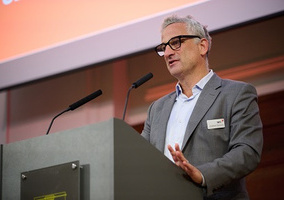

Civil society has been suffering from a lack of coordination, the chief executive of sector body NCVO has said.
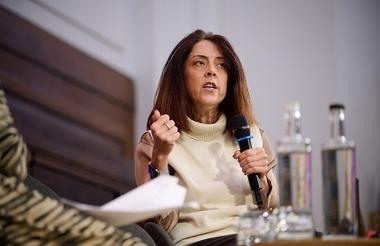
Kate Lee, speaking at a New Philanthropy Capital (NPC) event in London yesterday, said a lack of cohesion remains despite a “huge amount” of work happening, particularly locally.
“Whoever you are, size, scale – you need resilience as an organisation, and that brings in the challenges of funding and the need to coordinate,” she said.
“We need convening, we need connection, because that is what gives us strength. It is our strength in numbers. It is the power of this sector’s voice combined.”
Lee was asked about the potential of the government’s Office for the Impact Economy, announced in December to provide a “single front door” for investors, philanthropists and purpose-driven organisations.
She said that getting civil society figures into the room early was “absolutely crucial” for these discussions, but this did not always happen.
‘Risk-averse commissioners’
Lee also chairs the Civil Society Council, a group of sector experts overseeing the implementation of the government’s Civil Society Covenant.
Reflecting on this work, she said reviewing rules on commissioning and procurement had been a key focus.
In particular, Lee referenced legislation that already exists but was not being used at a local level.
“We’ve got lots of very, very risk-averse commissioners in local authorities in procurement teams,” she said.
“Although the legislation allows, for example, significant grants to be made for third-party [organisations], we know that actually procurement teams in local authorities are often quite resistant to it.
“It doesn’t matter if you’re producing more and more guidance, more and more kind of deregulation in order to do this, if it’s not being used.”
Lee also called for an increase in state funding to secure the charity sector.
“That flow of government money we know is absolutely crucial. It gives longevity. It allows charities to plan,” she said.
‘Position as loved no longer guaranteed’
More charities face increased hostility online and in-person, Lee said.
“Our position as loved is no longer guaranteed. The number of chief executives I’m working with at the moment […] that are being physically threatened is horrific.
“The need for our resilience, the need for courageous leadership is more important than ever at a time when we are feeling on our knees.”
In July, the Charity Commission found that 27% of surveyed charities had been affected by community tensions, 11% seeing support decrease and 9% reporting a boost.
Lee said that, in this climate, charities needed support to sustain themselves.
“What we need to say to philanthropists is – if we bring the courage, we bring the fight, we bring the activism, we need you to bring the food to the party,” she added.