

Charities working with marginalised communities are no strangers to threats, intimidation, and facing financial challenges.
Recent years have seen charities of all types contend with the ongoing cost-of-living crisis, soaring demand, rising costs and inflation. But now, many organisations face an existential threat as far-right, anti-LGBTQ+ and anti-migrant rhetoric abounds both online and offline.
Against this backdrop, an alarming trend has been emerging – and even major charities are not exempt. The Guardian reported in December that the UK’s largest corporations were rolling back on public support for LGBTQ+ Pride, mirroring a trend also seen among large US firms amid President Trump’s rolling back of DEI policies.
This hasn’t just been reflected by fewer social media posts about Pride months; it has also signalled a change in where large corporations are sending their donations.
Major LGBTQ+ charities seeing corporate funding drops
Not long after the Guardian’s report, Stonewall – the UK’s largest LGBTQ+ charity – revealed a more than £2m drop in its income to £4.7m in 2024-25, leaving less than £92,000 left in its cash reserves, compared with £998,000 a year earlier.
Its accounts for the year to March 2025 also showed income from corporate donations had more than halved, dropping from £348,000 in 2023-24 to £143,000 in 2024-25.
A Stonewall spokesperson ascribed the reductions to “economic uncertainty” across the charity sector and “significant turbulence” in the global LGBTQ+ movement, alongside a “significant period of transformation and change” for the charity.
Anti-violence and abuse campaigning organisation Galop, which is the UK’s second largest LGBT+ charity, also reported a drop in corporate donations, from £380,000 in 2023-24 to £288,000 in 2024-25.
Galop’s co-CEO Ben Kernighan tells Civil Society that “while some companies continue to support LGBT+ charities, recognising that our community is an important part of their workforce and customer base, others are sadly retreating from their commitments to support diversity and inclusion”.
Meanwhile, LGBTQ+ housing charity, Albert Kennedy Trust reported that corporate donations made up 28% of its total income in 2024-25, down from 34% in 2023-24.
Jess Lomax co-authored Social Enterprise UK’s recent report – Overcoming Hate: Social enterprise solutions for the LGBTQ+ movement – and found similar trends in her research.
“What we were finding in our research was that LGBT organisations are more vulnerable than others to changes in public opinion and changes in the political world, because it results in these cuts to funding, cuts to different initiatives, that have a knock-on effect on what they're able to achieve.”
Partnerships ‘drying up’
Sebastian Rocca, CEO and founder of Micro Rainbow – a community interest company which operates 30 safe houses for LGBTQI asylum seekers and refugees – has also seen a shift in corporate support.
Micro Rainbow has traditionally derived some of its income from businesses, either through work with private sector partners or through corporate donations.
Rocca says: “Corporates are very nervous to continue to support organisations like ours, both from a migration and LGBTQI angle.
“The internal processes for corporates to approve donations have increased. For a number of them, it has meant that they could not support us anymore.”
US-headquartered corporates have become particularly reticent to donate, Rocca says, since the beginning of the current Trump administration. Several examples of companies being sued by the government due to their DEI policies may have had a chilling effect on others, he says.
Rocca cites Pride Month as a particularly stark example of rollbacks on support: in previous years, Micro Rainbow was approached by “dozens” of companies to give talks or workshops to their employees.
Last year, however, the number of corporates approaching the organisation “halved, if not even more than that”, he says.
The Pride Month talks and workshops served as a source of income for Micro Rainbow, which Rocca says has now “dried up”.
Meanwhile, at Not A Phase, the UK’s only charity supporting trans adults, Maxine Heron, the charity’s online comms officer, says “it’s been a little bit slow this year with securing big corporate Pride partners”.
Like Rocca, Heron says that Not A Phase’s founder and CEO, Danielle St James, previously gave a large number of talks on trans inclusion and visibility to corporations. But more recently, amid “the death of DEI” in the US, it has become more challenging for the charity to secure those gigs. “DEI jobs are just not there like they used to be.”
Exploring alternative income models
Founded in 2020, Not A Phase grew its income to £490,000 in the year to June 2025, including individual donations, brand deals with the likes of Nike and £122,000 from selling merchandise.
Heron says that Not A Phase, which has around 5,000 service users, is now exploring how to diversify its income stream and fundraising portfolio to shield itself against a hostile sociopolitical and economic environment.
On its fifth anniversary last year, the charity launched a birthday fundraiser aiming to crowdfund £10,000.
Initially, Heron says, “we were struggling to meet that £10,000 goal, and we were struggling to find any corporate partners”.
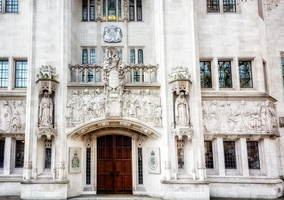
Soon after, the UK Supreme Court ruled that for purposes of the Equality Act 2010, the protected characteristic of sex means “biological sex”, regardless of whether a person has a gender recognition certificate (GRC).
The ruling caused great upset for the UK trans community, but it “really galvanised a lot of allies to jump into action”, Heron says, citing the example of Derry Girls’ actor Nicola Coughlan, who raised almost £140,000 for the charity through a social media fundraiser and match funding.
“It was almost like lightning had struck twice in the same spot,” Heron says.
Alongside crowdfunding and partnering more with public figures to platform the charity’s work, Not A Phase is also exploring gaining income from legacies. This could prove particularly beneficial, Heron says, as “often queer people don't have or might not have conventional family members and inheritance in that way, so they might want to leave part of it to the charity”.
Building resilience
At Micro Rainbow, much of the organisation’s income is sourced from grants from trusts and foundations, and a small amount of individual donations, and currently, that isn’t set to change.
Rocca and his team are focusing on protecting themselves by focusing on the community that supports them, and always has.
Discussing external attacks faced by the organisation and its staff, Rocca tries to keep in mind that “those people were never supporters”.
“We need to be very conscious of the fact that I believe, at least, that we're still talking about the minority of people in the UK, that the majority of people of the UK are kind and charitable and want a better life for everyone.
“So it is about remembering where to look for our supporters, and remembering that they are still there.
“The way we are going to go about it is to focus on where our allies are, where we know that there are people who want to support our work and try not to be distracted by this noise that is really still a minority in the UK, and build our resilience in that way.”