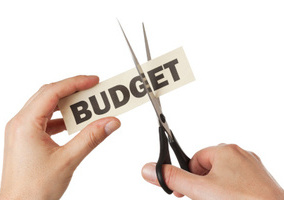


UK aid spending is predicted to fall by around £6.5bn from its 2023 record high to a historic low in 2027-28, a new analysis has found.
Last week, the Foreign, Commonwealth & Development Office (FCDO) published its annual report and accounts 2025-26 which sets out its spending plans for the next three years.
An analysis of the plans by the Independent Commission for Aid Impact (ICAI) shows that UK aid will have reduced from £15.3bn in 2023 to £8.8bn in 2027-28, a 42% decrease.
The aid watchdog said the UK aid budget has been subject to long-term disruption since the start of Covid-19 in 2020.
At the 2020 spending review, then-chancellor Rishi Sunak announced that the previous government would reduce it from the statutory level of 0.7% of gross national income (GNI) to 0.5% in 2021.
Then, in February 2025, the current government said it would reduce it further to 0.3% in 2027 to fund an increase in defence and security spending.
While it pledged to return to 0.7% when fiscal circumstances allow, the ICAI said there is no evidence of this in the spending figures or accompanying government statements.
Allocations reduced by up to 80-90%
FCDO’s report shows huge shifts in the scale, nature and purpose of UK aid, with bilateral programmes being phased out.
Eleven countries including longstanding UK partners Kenya, Tanzania and Rwanda will see their annual allocations reduced by up to 80-90% in some cases to £5m by 2028-29.
ICAI’s analysis says that as budget falls, “UK aid will increasingly focus on humanitarian assistance and support for countries facing conflict and crisis”.
“Fragile and conflict-affected states (FCAS) are now the major focus of UK bilateral aid,” it says.
“The intent to spend approximately £1.4bn per year in places with the greatest humanitarian need represents 78% of all FCDO aid allocated to specific countries and regions.
“All countries receiving more than £10m allocations from 2028-29 will be crisis-affected or have significant refugee populations.”
During the year, FCDO’s bilateral spending was driven mainly by major humanitarian and security crises in Ukraine, Palestine and Sudan, which are protected from budget reduction.
Support to Ukraine represented “a significant financial commitment”, with the UK spending £238m, FCDO’s report says.
Meanwhile, the crisis in Sudan “drove significant humanitarian demand during the year, with the FCDO spending £146m”.
‘Devastating shortfalls’
Membership body Bond said that while Ukraine, Palestine and Sudan have their budgets protected, other FCAS will see “drastic reductions”.
Despite facing a deadly Ebola outbreak, the Democratic Republic of Congo will see a 35% drop to £84m from 2026-27 onwards.
Somalia, which continues to face a severe humanitarian crisis, will see a 49% reduction, from £107m in 2025-26 to £69.2m from 2026-27 onwards.
Similarly, South Sudan will see its support fall by 46% to £72m, despite two-thirds of its population projected to require humanitarian assistance this year.
Lena Cohrs, policy and advocacy adviser, development finance, at Bond, said: “The government rightly set out that it’ll prioritise FCAS by increasing the share of all country and regional spending going to FCAS to 70%.
“However, despite this increase in percentage share, total UK official development assistance (ODA) to FCAS will still fall by 34% (to £655m).
“And least developed countries, some of which are also FCAS, will see a 49% decrease (£766m) between 2024-25 and 2028-29.”
Cohrs said that “even with prioritisation, the countries and communities that most need support will experience devastating shortfalls”.
Government must go back to 0.7% of GNI
Cohrs added: “The FCDO annual report is another disappointing step in a devastating 1.5 years of the Labour government breaking its manifesto promise and eroding trust in the UK as a reliable development partner.
“Its publication came just days before Andy Burnham became Labour’s new leader and the UK’s prime minister – and we urge the new government to learn from these mistakes and seize this opportunity to turn the corner.
“As a priority, the next government must rule out any further cuts to the ODA budget and set out a tangible path back to an ODA spending of 0.7% of GNI to honour Labour’s manifesto commitment.
“The huge scale of cuts to country allocations makes clear that we cannot afford any further reductions.”