Charity Property Conference 2013
29 Oct 2013
Sorry for interrupting, but there is something we need to tell you...
We use cookies to ensure that we give you the best experience on our website.
If you wish to restrict or block web browser cookies which are set on your device then you can do this through your browser settings, the Help function within your browser will tell you how.
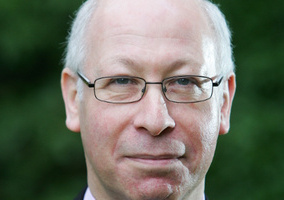
Kevin Curley is a high-profile, highly-regarded champion of local voluntary action. He was CEO at the National Association of Voluntary and Community Action (Navca – previously NACVS, the National Association of Councils for Voluntary Service) since 2003. He retired in January 2012, handing the reins to Joe Irvin, and a few months later received a CBE in the Birthday Honours List for services to the voluntary and community sector.
Curley spent 40 years in the CVS network. Previous positions included chief executive at the Charnwood, Derby, Hull and Newcastle CVS branches. He has also been programme director in Tanzania for VSO.
He is chair of trustees at Pickering Family Centre and a member of both the Treasury Third Sector Review group and the Cabinet Office public services action plan steering group.
In March 2012 he joined the board of trustees at NCVYS and in September 2012 he was appointed to the board of CFG.
Curley attended the University of York where he read English literature with education and also did a diploma in social administration.
He now describes himself as a voluntary sector adviser. When he stepped down from Navca, he told civilsociety.co.uk: "I'm not going to stop working for the local voluntary sector, I'm simply going to stop running an organisation."
Is this profile up-to-date? If not, please let us know at whoswho@civilsociety.co.uk
Chief executive of the Howard League for Penal Reform, Frances Crook, has offered support to NAVCA chief Kevin Curley’s campaign against the prospect of charities running prisons. It is the second crime prevention charity to back the campaign in a week. Richard Garside, director of the Centre for Crime and Justice Studies, hasalso offered support to Curley, saying he was right to ask if there were limits to charitable provision.
Kevin Curley, chief executive of NAVCA, has vowed to fight the prospect of the charity sector running prisons after the Charity Commission refused to rule out the possibility that it could be a charitable purpose. Curley wrote to the Commission twice this year, asking for a review of whether charities could run prisons after the Ministry of Justice decided the third sector and private sector organisations could bid to run new prisons and existing failing prisons. Crime prevention charities Catch 22 and Turning Point were the first charities to win a prison bid this month.
Stephen Bubb, chief executive of Acevo, has slammed the head of NAVCA, Kevin Curley, for his campaign to stop charities running prisons. This week, Charity Finance exclusively reported that Curley had prompted the Charity Commission to review whether running prisons was a charitable purpose in light of crime prevention charities Catch 22 and Turning Point winning a Ministry of Justice bid to run two prisons with private service provider Serco.
Kevin Curley, chief executive of NAVCA, has told Andrew Hind, chief executive of the Charity Commission, that he is “utterly horrified” that third sector organisations can now bid to run new and existing failing prisons. And in response the Charity Commission is now considering, for the first time, whether the running of prisons is in fact a charitable aim.
The chief executives of NAVCA, Charity Finance Directors' Group and the Institute of Fundraising have now joined the NCVO's Stuart Etherington in providing their total expenses amounts, leaving Acevo as the only major sector umbrella body yet to do so. In 2008-9, NAVCA chief Kevin Curley claimed £9,088, split between £7,403 for travel and £1,685 subsistence, including accommodation, and misc. In 2007-8, he claimed £9351, split between £6,813 for travel and £2538 for subsistence and miscellaneous.
Grassroots voluntary sector organisations remain concerned about their income levels despite the government's recent commitment to increase funding at a local level, according to two new pieces of research.
The inclusion of sexual violence targets within the government's new Public Service Agreements could be the catalyst for reversing the decline in funding to rape crisis centres, according to some voluntary sector groups
The Department for International Development has extended its consultation on conflict in the developing world thanks to pressure applied by the Compact Advocacy Programme.