


This week, charities were asked to do their bit by making it easier for the wealthiest in society to donate to them.
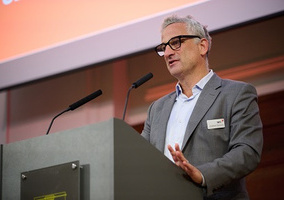
Speaking on Tuesday, NPC Ignites chief executive Jonathan Simmons called on sector organisations, despite many being “hugely cash-strapped”, to help philanthropists find them and read about the vital impact of their work.
Predicting some pushback, he said some may not like him “putting the onus on the charities” but said he was not seeing a “focus on storytelling and universal use of the incredibly cheap tools available to us”.
Simmons’ well-intentioned comments sparked the debate he foresaw, with some charity folk asking him to take the onus back, thank you very much, and regift it to those holding all the cash and power.
And it’s not as if charities aren’t already trying. Some, mainly larger, charities are investing in their relationships with major donors, with Crisis and Nordoff & Robins both recently creating senior fundraising roles to support this work.
Mind, British Heart Foundation and the National Trust, meanwhile, have all publicised multi-million-pound record donations that they have received in recent months.
They are doing this because encouraging the rich to cough up more increasingly feels like the only source of potential growth.
Giving by regular folk has slumped in recent years, according to research by the Charities Aid Foundation (CAF), with six million fewer donors than a decade ago. Until last year, this decline was offset by average donations getting larger. This all suggests that fewer, but richer, people are giving.
However, Britain’s high-net-worth individuals give just 0.4% of their combined investable assets to charities each year, according to further CAF research, while members of the general public donate 1.6% of their incomes.
Government, sector bodies, and even regulators have expressed a wish in recent years to address the disparity between toff and pleb generosity so the country’s philanthropic potential can finally be unleashed, boosted, supercharged etc.
So, with such widespread support, what is stopping this vision from becoming reality?
Philanthropic advice
When charities aren’t being asked to sing for their supper more tunefully, a frequent suggestion is that the minted just need more advice on how to donate.
Sector lobbyists were disappointed in April when the government refused, for cost reasons, to introduce mandatory philanthropy training for wealth advisers. Instead, it promised a joint working group to “further explore this issue”.
Meanwhile, legacy experts at Remember A Charity produced their own good practice guide this summer to help wealth advisers discuss gifts-in-wills with their clients.
This is all good stuff, if it works, but do those that have risen to the top of our meritocracy really not know how to give to charities?
Their gated mansions may not be visited by subcontracted door-knockers but they must have seen the odd fundraising appeal on their massive tellies. Many appeals just require you to text a word to a short number – presumably they could manage that?
As Vic Hancock Fell pointed out, they probably also have access to the internet and are capable of asking Google or Chat GPT for the names of local charities.
It brings to mind the episode of Ab Fab when Patsy gets rich and stuffs wads of cash in the toaster after being advised that she’s “got to put it somewhere”.
Feed the Rich
One hopes that philanthropy advisers are really giving their rich clients more of a call to action a la Bob Geldof – something like: “The country’s on its arse, give us yer money!”
The most generous tycoon in the country, Chris Hohn, has the right idea. A few months ago, Hohn was named as the first Brit to have given more than £1bn to good causes in a single calendar year.
The hedge fund manager used the publicity his achievement gained to complain to the Sunday Times about other rich folk “hoarding their money” and urged them to match his generosity instead.
Sure, most of Hohn’s £1.4bn of donations in 2025 went to three charitable foundations he’d set up, so it would be a bit worrying if he couldn’t locate them.
But among the rich without their own foundations, we are told many struggle to find the “right charities” for their wealth.
And perhaps that is the charities’ fault. They could all do well to take a long, hard look in the mirror and ask whether their branding and activities are really likely to tug at an oligarch’s heartstrings.
There may be 170,000 on the register but how many of them have the charitable object of the advancement of wealth? Where’s Help the Loaded, Fat Cats Protection and AffluentAid? Surely, there’s room for an RSPHNWIs?
Glibness aside, some well-heeled chaps are putting their money where their interests lie. Look at Reform UK’s recent mega-donations. We really do need the good powerful guys to outspend them.