


A whistleblowing charity has recorded a 37% year-on-year rise in calls from the charitable sector, with an increase in volunteers reporting concerns.
Protect’s recently published 2025 impact report shows that last year, the charity handled 3,589 new cases overall – an 8% increase on 2024 – and had 19,654 interactions via phone and email.
The report shows that last year, 42% of Protect’s cases came from the private sector, 23% from the public sector and 25% from the not-for-profit (NFP) sector.
A spokesperson for the charity told Civil Society that it received 549 calls from NFP callers in 2025, up from 401 the previous year.
Most concerns about governance and staff conduct
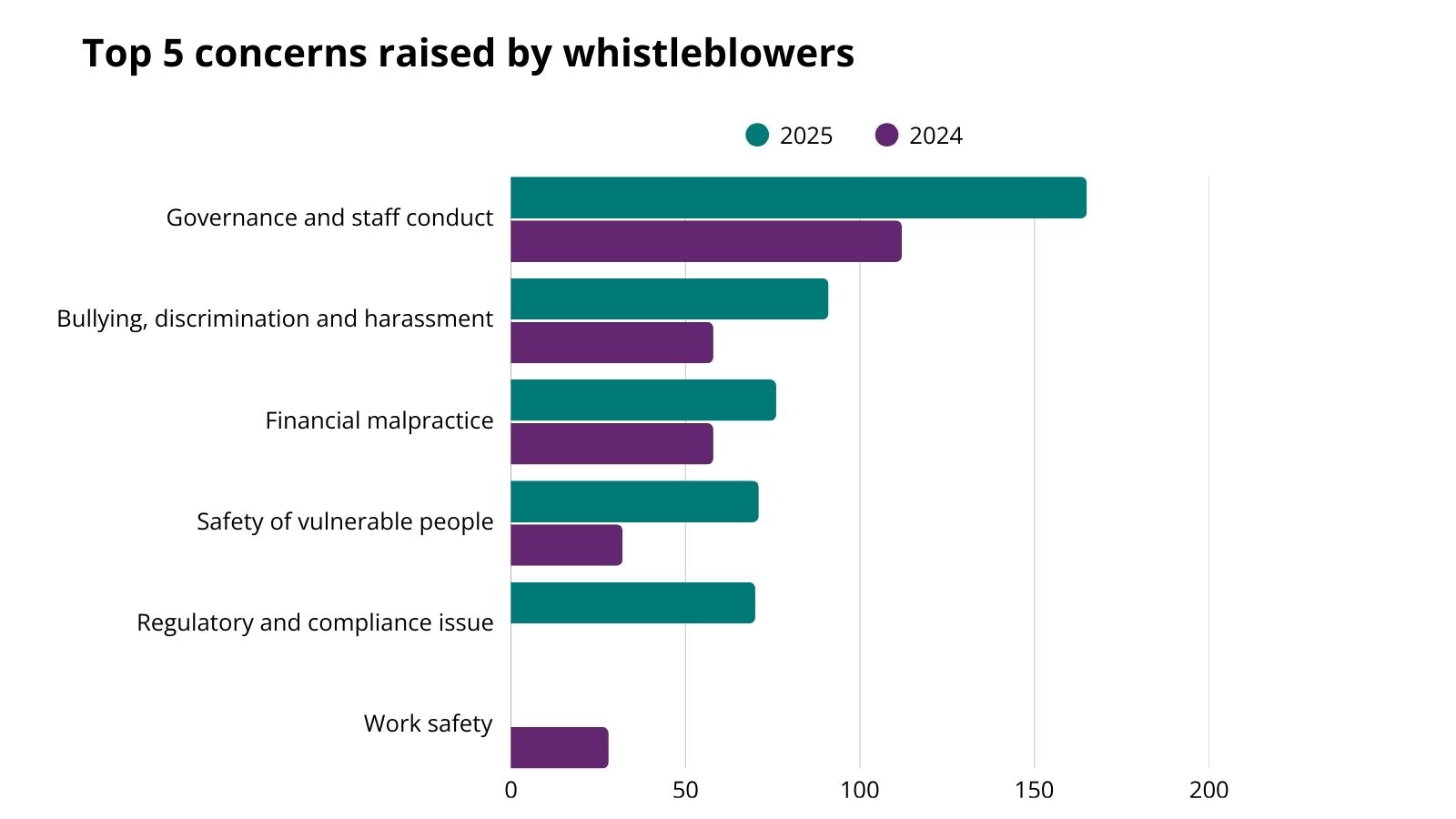
In 2025, most NFP callers raised concerns about governance and staff conduct (30%, up from 28% in 2024), followed by bullying, discrimination and harassment (17%, 2024: 14%) and financial malpractice (14%, 2024: 17%).
Most of the NFP callers (375) had raised concerns at their charities before calling Protect, compared with 265 the previous year.
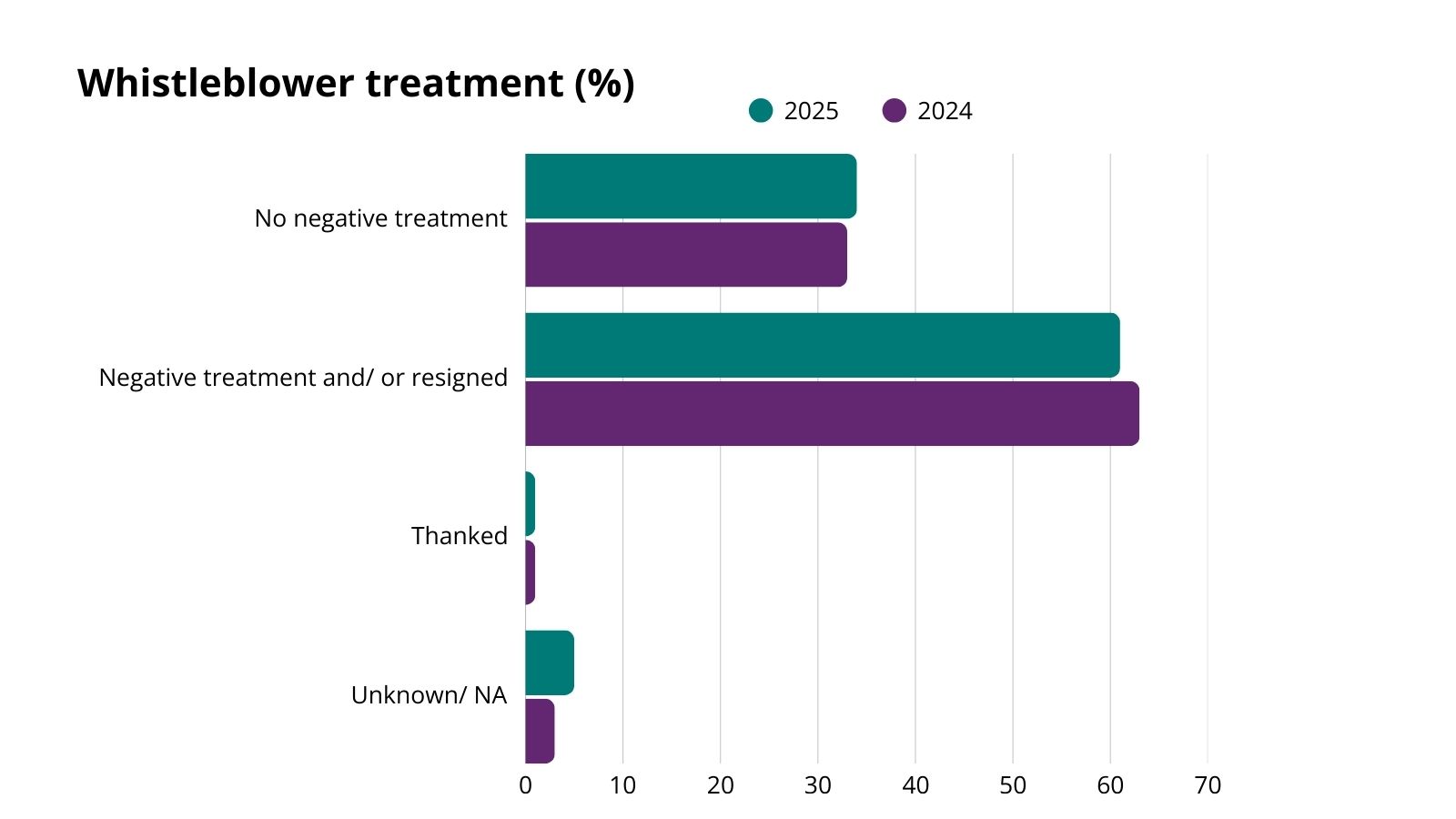
Of the 375 callers, more than 60% said they had received negative treatment (including bullying, harassment, discrimination and victimisation) and nearly 40% reported that their concerns had been ignored by their charities.
In 31% of cases, whistleblowers’ concerns were under investigation by their charities, while 4% had been addressed and another 4% acknowledged by their organisations.
Source: Protect
‘Significant rise’ in volunteers raising concerns
Protect said a few notable trends are emerging from callers to its advice line, including “a significant rise in volunteers contacting us about concerns in charities”.
These calls increased from 51 in 2024 to 91 in 2025, which “suggests that people beyond paid staff are increasingly aware of the importance of speaking up when they witness wrongdoing”.
“Critically, these are the people who aren’t protected by whistleblowing legislation,” the spokesperson said. “We’re also seeing more evidence that concerns are being taken seriously internally.
“The proportion of callers telling us their issue is being investigated has increased by around 10%, which is an encouraging sign that some organisations are improving how they respond to whistleblowing.”
They added that while the proportion of NFP callers being victimised after raising concerns remains slightly lower than the rate across all sectors, “it still highlights the risks individuals face when speaking up”.
“Across our charity-related cases, we continue to see recurring themes in the types of concerns raised, particularly around governance issues, safeguarding risks, financial wrongdoing and management conduct,” they said.
“Calls come from a mix of workers, volunteers and trustees, reflecting the broad range of people involved in delivering charitable services.”
Jon Cunningham, client relationship director at Protect, said: “Charities exist to serve others – and when concerns are raised internally, they should be seen as an opportunity to protect that mission, not a threat to it.
“From a charity’s perspective, creating a culture where staff feel safe to speak up is essential to safeguarding beneficiaries, maintaining public confidence and protecting hard-earned reputations.
“At Protect, we work with charities to deliver practical, proportionate whistleblowing frameworks that reflect their values and operational realities.
“When employers respond well to concerns, they strengthen trust – both inside and outside the organisation.”