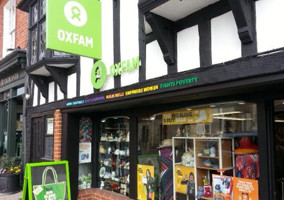


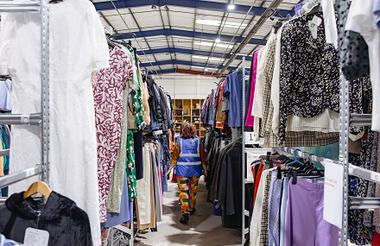
Oxfam will trial new textile sorting technology at its main Batley recycling centre as part of a scheme aiming to find more viable markets for clothing that cannot be sold in shops.
The scheme, called the Circuit, will test how unsaleable textiles from Oxfam shops and other sources can be sorted and prepared for different recycling routes, while developing processes needed to support this at greater scale.
Oxfam will be recruiting staff to operate the new automated sorting technology during the pilot, which is due to begin early next year at the Batley centre.
Commercial retailers including M&S and New Look are also taking part in the scheme, while the automated sorting technology has been designed by recycling firm Circle-8.
An Oxfam spokesperson said: “Charity shops are already a major part of the UK’s textile reuse system, but there is a need for better solutions for clothing that has reached the end of its usable life.
“The pilot is about testing what works in practice, including how different sources of post-consumer textiles non-reusable textiles can be sorted, what materials can be recovered and which recycling routes they can feed into.
“If these approaches can be developed and scaled commercially, they could create new opportunities for a much wider range of textile collectors and charity retailers, and reduce the amount of unwanted textiles that ultimately go to waste.”
Other retailers have been invited to the pilot scheme, with a second group of partners due to be announced later this year.
Many charity retailers sell unsaleable clothing donations to commercial textile recyclers, known as rag collectors.
However, the rag market has declined in recent years, with prices received by charity shops now averaging under £30 per tonne according to Let’s Recycle, around a tenth of what they were three years earlier.
In 2024, approximately 1.4 million tonnes of post-consumer textiles overall were generated across the UK.