


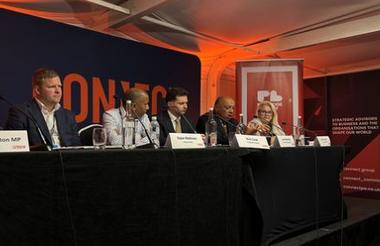
International development charities are facing “out of date” funding models, an event has heard.
Peace Direct chief executive Dylan Mathews told a Postcode Lottery event at the Labour Party Conference on Monday that many of his charity’s partners around the world had reported that “the funding practices are not fit for purpose”.
He said that global civil society organisations had not received “quality funding” for decades.
“[Funding arrangements] are short term, they’re projectised, they feel very transactional, and they’re very, very inflexible,” he said.
“If you’re an organisation like Peace Direct working in some of the most conflict-affected countries in the world, we can’t simply do the job, and nor can our partners, because that type of funding is poor quality funding, and poor-quality funding is something that we don’t talk enough about.”
Mathews said his charity had been “working with funders to try and change their funding practices, both at government level and also with private philanthropy”.
Despite some grantmakers offering flexible funding, he said: “Very few others do, and that is a problem.
“The UK government certainly don’t have that, and most private philanthropy is still operating on a model that is 30, 40 years out of date.”
Government funding reliance a ‘broken model’
Mathews added: “I think if the charity sector has to survive on government funding, we’ve got a broken model.
“We as a sector became too dependent on certain types of funding, and that accelerated the disconnection between charities and the public.
“Over time, as the sector grew, we became more dependent on international government funding, but also private philanthropy, and I think what that has done is it’s helped us to scale, and it’s helped us to achieve incredible impact but at a cost – and that’s the cost that we’re now starting to see.”
It was revealed earlier this year that UK government aid spending is expected to fall to an historic low in 2027-28, after it was announced last year that the aid budget would be cut to 0.3% from 0.5%.