

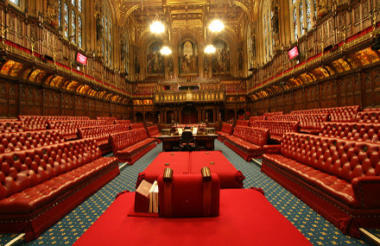
The government was challenged this week in a House of Lords debate on its support for charities amid falling donations.
Baroness Pithkeathley, a founding member of ACEVO and former CEO of Carers UK, opened the debate on Monday by expressing concerns about the Charities Aid Foundation’s UK Giving Report 2026, which revealed that charitable giving from the British public fell by 10% to £14bn last year.
In response, culture minister Baroness Twycross said that despite the research findings, “charitable giving has broadly kept up with inflation over the last decade and the proportion of those who give is the same as the previous year”, adding that the government’s newly published place-based philanthropy strategy aimed to combat falling donations.
Pithkeathley responded that while the strategy was an “excellent and most welcome initiative”, the fall in donations had been “of great concern to charities, which are under increasing pressure to meet growing demands while their incomes are falling”, and asked whether the government is planning on introducing any policies that promote giving from both corporate and individual donors.
Twycross said that it was important for the government to “focus on how we can support an already incredibly generous public, without playing down the reasons why people might be reluctant to give” such as the ongoing cost-of-living crisis.
“HMRC is providing over £2.5bn of relief through gift aid and higher rate relief, and reviewing current gift aid claiming processes to try to help charities gain as much as they can through that route,” she added.
Increased staff costs raised
Later in the debate, shadow culture minister Lord Parkinson said in reference to the CAF research findings: “If the British public were still giving at the level they were a decade ago, another £12.5bn would be available to charities across the country.
“The minister is right that the British people are a generous lot. However, does she agree that part of the problem is that they balk at paying the extra tax bills that charities are facing through additional employment costs and national insurance contributions?”
Parkinson cited the example of the National Trust, whom he said faced extra costs of £10m per year.
In response, Twycross said that the government had to make “difficult decisions” upon winning the 2024 election, and added: “If the noble lord has not read the report – it is a really interesting read – that was not one of the specific things I recall coming up in it.
“We would prefer to look at it in a much more positive way and to make the case for people giving. We will continue to do that as a government.”
Report suggests people of faith more likely to donate
Earlier this week, digital firm Blue State published its UK Giving Behaviours Tracker, which found that donors are more likely to trust charities that operate domestically over international development organisations.
Its survey of over 2,000 people found that 63% of respondents said they trusted UK-operating charities, while 41% said the same for international organisations.
It also found that religious people, donors from ethnic minority backgrounds, and those aged between 25 and 44 were more generous than the average donor in its sample.