


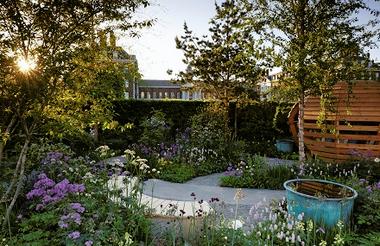
The primary funder of charity show gardens at the Chelsea Flower Show is set to close after this year’s event, prompting participating charities to seek new philanthropic donors.
Project Giving Back (PGB), which was shortlisted for the Charity Awards 2025, was launched by an anonymous philanthropist couple in 2021 in response to the Covid pandemic.
The charity has spent more than £23m on 63 show gardens at the event, run each year by the Royal Horticultural Society (RHS) in southwest London, over the past five years.
It estimates that charities involved in PGB funded gardens at RHS Chelsea Flower Show have raised in excess of £20m as a result.
PGB said it has only been able to fund 10% of the charity gardens that applied for funding during its existence.
Hattie Ghaui, PGB’s chief executive, said her charity was initially established as a three-year project but extended it to five years due to the “success” of the charities involved.
Ghaui said that just four out of 25 gardens were linked to a charitable cause before it was established.
By contrast, at the 2025 show, 15 out of 20 gardens, 75%, were inspired by a “good cause” or had a charity beneficiary, she said.
Overall, PGB will have contributed to the creation of 64 gardens by the end of the 2026 show, linked with charities such as RNLI, Mind and the King’s Trust.
“The project was never meant to last indefinitely, but it has created a blueprint for ‘creative philanthropy’ that has inspired other organisations,” said Ghaui.
RHS told Civil Society that it was not looking for a charitable funder for next year, but announced it has a new corporate sponsor in Range Rover.
A RHS spokesperson said: “In the aftermath of the pandemic and for the last five years, Project Giving Back was created to help charities in a difficult time.
“In 2026, there will be 11 PGB gardens and 19 gardens that have found funding independently.”
‘We hope other philanthropists will step forward’
Gwen Hines, chief executive of Plant Heritage charity, which is receiving PGB funding for its Chelsea Flower Show patch this year, said it could not afford to do so alone.
“The gardens are expensive,” Hines told Civil Society.
“You’re building it from scratch in a very short space of time, so ours would be over 10 days, for example. For us as a charity it would just be unaffordable.”
She estimated the costs would exceed £100,000 for design, build, plants and contractors, as well as the additional charge to relocate the garden from Chelsea to its forever home.
Hines, whose charity reported an income of £405,000 and expenditure of £462,000 in the year to October 2024, said that applying for a spot at the flower show was a “crazy process” but said the rewards were myriad.
“There’s a lot of cost involved for a charity to be at Chelsea but the rewards are quite high in terms of PR, fundraising and of course getting the message out to the public.
“For us as a charity, it's a fantastically important way to raise our profile and therefore help people to understand more about the work we do.”
About two million people on average watch coverage of the Chelsea Flower Show each night, which Hines said would drive traffic to her charity’s website and help it to secure members.
On PGB’s closure, she said: “Everyone has known this has been coming a long time.
“We hope other philanthropists will step forward to continue funding charity gardens.”