


Twenty years ago, Andy Burnham was a health minister focused on delivery and reform. Two decades on, as prime minister, he has made fixing social care one of the defining priorities of his premiership.
That ambition deserves support. But alongside long-term reform, there is also an opportunity in this month's budget to modernise parts of the tax system that are holding charities back from delivering more for the people and communities they serve.
For charities, the budget will be judged not only by the headlines, but by whether it helps more resources reach frontline services and supports the people who need help most.
Social care
Few issues illustrate that challenge more clearly than social care.
Charities already help thousands of people live independently, support disabled people, provide respite care and reduce pressure on overstretched public services. They are not simply supporting the care system; in many communities they are an essential part of it.
Yet many charities providing social care face VAT costs that they cannot recover.
The result is straightforward. Money that should be paying for care workers, specialist support and help for vulnerable people is instead lost to irrecoverable VAT. At a time when demand for care is rising and providers are under increasing financial pressure, that is hard to justify.
Importantly, charities providing social care are fundamentally different from commercial providers. They exist to deliver public benefit, reinvesting any surplus back into services rather than distributing profits to shareholders. They often work alongside local authorities and the NHS, supporting many of the same people and helping deliver many of the same outcomes.
Government already recognises that public money intended for care should not be lost to irrecoverable VAT when services are delivered by local authorities. The same principle should apply when charities are delivering many of the same services, supporting many of the same people and reinvesting every available pound back into care.
This is not a call for special treatment. It is about ensuring that policy is working in the same direction. If social care is to be one of the defining challenges this government chooses to tackle, the tax system should help direct more resources towards care, not take them away from it.
The same principle applies beyond social care.
Social media and VAT
The way charities raise money has changed beyond recognition. Twenty years ago, fundraising campaigns were built around newspapers, magazines and direct mail. Today, charities reach supporters through social media, online video and digital advertising.
The public has moved online. Charities have moved online. But parts of the tax system are still stuck in the old world.
The result is that some charities are paying millions of pounds in VAT on fundraising activity simply because they are using the platforms where people now spend their time.
Take cancer charities. Every year, millions of pounds that could be funding research, supporting patients or helping families affected by cancer are instead lost to VAT because tax rules have not kept pace with modern fundraising. That is money donated in good faith by supporters to fight cancer, not to disappear in avoidable tax costs.
Nobody is asking for a new advantage. The goal is the same as it has always been: helping charities reach supporters and raise funds for good causes. The budget is an opportunity to update outdated rules so that charities are not penalised for fundraising in 2026 rather than 2006.
Gift aid
The same case can be made for gift aid.
Gift aid is one of the great success stories of charitable giving in the UK, helping charities and community amateur sports clubs receive more than £1.88bn last year and forming part of a wider package of charitable tax reliefs worth more than £8bn annually.
Its success shows what can happen when the tax system works alongside charities rather than against them.
But while people can open a bank account, apply for a mortgage and manage much of their financial life online, parts of the gift aid system still reflect a different era. Practical reforms to simplify and modernise the process could help more eligible donations attract gift aid and ensure charities receive every penny that parliament intended them to receive.
At a time when charities face rising costs and growing demand, that is a change worth making.
Taken together, these issues reveal a broader challenge.
The charity sector has evolved rapidly. It is delivering care in new ways, fundraising through new channels and responding to growing demand across society. Yet aspects of the tax system have not evolved at the same pace.
The forthcoming budget provides an opportunity to address that gap.
None of these reforms would solve every challenge facing the charity sector. But each would help ensure that more money reaches the front line, whether that means supporting people in need of care, funding lifesaving research or encouraging charitable giving.
The prime minister has challenged the country to tackle some of its biggest long-term challenges. Charities are already helping to meet them every day, whether through social care, medical research, community services or support for vulnerable people.
This budget should make it easier for them to do more.
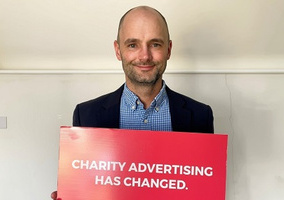
Luke Hall is CEO of the Charity Tax Group
Related articles