

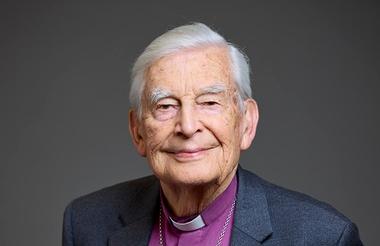
Richard Harries, a former Bishop of Oxford, died on 29 April 2026, aged 89.
He is arguably best known in the charity sector as being behind the “Bishop of Oxford case”, or more formally Harries v The Church Commissioners for England. In 1992, Harries went to court in an attempt to get a ruling that the Church Commissioners should invest in line with the ethics of its Christian values.
While the judgment found that the Church Commissioners’ approach was valid and, in most circumstances, trustees would focus on the maximisation of financial gain, it did also recognise that there were circumstances where charities could take an ethical approach to their investments.
Summarising the judgment in a blog in 2014, Stephen Roberts, the then head of legal policy and litigation at the Charity Commission, wrote: “The Vice-Chancellor considering that case summed up the responsibilities of charities with regard to investment very succinctly: ‘Most charities need money; and the more of it there is available the more the trustees can seek to accomplish.’
“Thus, the purposes of the charity are usually ‘best served by the trustees seeking to obtain therefrom the maximum return, whether by way of income or capital growth which is consistent with commercial prudence’.
“However, he recognised that ‘in a minority of cases the position will not be so straightforward’. These were cases ‘when the objects of the charity are such that investments of a particular type would conflict with the aims of the charity’.
Examples were cancer research charities and tobacco shares, trustees of temperance charities and brewery and distillery shares, and trustees of charities of the Society of Friends and shares in armaments companies.
“The Vice-Chancellor also identified another category of case where trustees’ holdings of particular investments ‘might hamper a charity’s work by making potential recipients of aid unwilling to be helped because of the source of the charity’s money, or by alienating some of those who support the charity financially’.
“The Vice-Chancellor made clear that the greater the risk of financial detriment the clearer the trustees needed to be of the advantages to the charity of the course of action they were adopting.
“The case also made clear that trustees ‘must not use property held by them for investment purposes as a means for making moral statements at the expense of the charity of which they are trustees’.”
At the time, Harries was particularly concerned with the Church Commissioners funding the apartheid regime in South Africa, however, for a long time the case was seen as the basis for charities adopting an ethical or responsible investment approach.
Paying tribute on LinkedIn, Andrew Robinson, head of market development at CCLA Investment Management, said: “We invited Lord Harries to deliver a CCLA lecture to mark 50 years of the investment funds we manage for the Church of England. His opening line was: ‘Many people say I am the grandfather of ethical investment in the UK. Not true. Just a troublesome priest with a pension and, as Bishop of Oxford, oversight of the charitable assets of my diocese, determined to do something about apartheid in South Africa.’
“His argument in 1992 was that investment policies should not just focus on maximising financial returns, but should consider ethical factors in line with Christian faith. So not in companies that conflict with the purpose of the organisation.
The court ruled that while ‘maximum return’ is the starting point, trustees do have the discretion to exclude investments on ethical grounds, particularly if the investments could alienate donors or beneficiaries.
“His case has underpinned charity investment guidelines for decades, allowing the development of ethical and socially responsible investment within the charitable sector in UK – definitive legal precedent until 2022 when another case [the Butler-Sloss case] broadened the scope for climate-related ethical investment.”