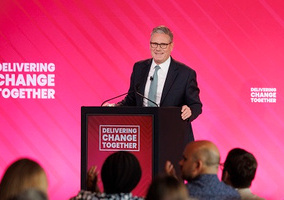



When asked at the Bates Wells Spotlight Conference last week what had most surprised her as chief executive of NCVO, Kate Lee replied that she had been amazed so many charities were “apologetic” about their role and contribution to society.
Lee went on to explain that the sector was “essential” and shouldn’t be afraid to emphasise its own importance.
Of course, many charities are far from diffident when explaining their achievements to their own donors and supporters. But Lee was referring to the sector’s collective posture in wider public debate about its role in meeting the country’s many challenges.
That got me thinking about why many charities don’t go around behaving and talking as if they are essential.
Mobilising government and societal action
Charities know that they can’t provide universal services for people to enjoy as of right. When society decides that a service is essential in that sense, it must legislate for the state to ensure universal services, rather than rely on the happenstance of where charities are clustered and where they don’t exist.
We know our limitations, and for many causes the aim is to convince government, parliament or state agencies like the NHS to do more, because the charities themselves can only scratch the surface.
Similarly, when it comes to many aspects of the arts, charities know that they need the support and funding of the state if they are to avoid grave inequalities, whereby many arts are confined to parts of society that can pay.
Environmental organisations trying to raise awareness of the dangers of climate change know they can’t fix it by themselves, they must try to awaken government, business and international organisations to the urgency of action. It would run counter to this to big up what they can do as a voluntary organisation.
Or take international development. It has long been apparent to charities that they can make only a very small direct contribution to alleviating poverty and injustice globally.
The big drivers are climate change, wars, grotesque inequalities, patriarchy and discrimination, and flaws in the international trading and economic system. That is why most of these charities combine service delivery with campaigning and mobilisation.
The message “we charities are essential” is not the one they want to convey. What’s essential is collective action by parliaments, governments, businesses and individuals as well as voluntary organisations.
The cause, not the organisation
Many charities are trying to redress inequalities and injustices, and the watchword is empowerment of their users and giving them a voice, not bigging up the charities themselves.
More generally, charities are rightly focused on their cause, not on themselves as organisations.
One of the most wounding and, in my view, totally unjust accusations levelled by the Charity Commission against Oxfam during the furore about safeguarding issues in Haiti was that they cared more about the reputation of the organisation than they did about their beneficiaries.
That’s an accusation that stings, because charities should be so laser-focused on their beneficiaries, not on themselves as an organisation.
Some of these factors apply particularly strongly to charities working on causes that are struggling against headwinds of indifference or hostility. It isn’t easy for refugee organisations, for instance, to shout about their achievements when their causes are so beleaguered or in retreat.
To a greater or lesser extent, the same is true of mental illness, the life chances of many young people, the housing crisis, the collapse of biodiversity, anti-racism… The list is a long one.
Inessential but important
In civil society, many organisations do not pretend to be providing essential services. They serve an enthusiasm that some people share and others do not.
That applies to most faith organisations and a multitude of secular ones, too. In the broad sphere of education and research, for instance, some organisations form part of the essential education system, but many represent niche, special interests or a way of making life more agreeable and interesting.
The category of “fulfilling a valued social role, but not claiming to be essential” is broad and varied.
As one who has worked in charity infrastructure bodies, I have come to the painful realisation that many charities are wrapped up in their own cause and the world of that cause and find generic voluntary sector issues – the lifeblood of NCVO – of secondary or no real interest to them.
They don’t see themselves as charitable sector, they just care terribly about the environment or the loneliness of some older people or whatever and want to do something about it.
Don’t expect many of those people to think it’s a priority to big up the role of the charitable sector.
Banging the drum for the sector
Don’t get me wrong. I entirely agree with Lee that charities should speak in discussions with government and other sectors with self-confidence and a sense that their contribution matters a lot, and that they have distinctive expertise and know what they are talking about.
But there is always going to be a strong undertow of diffidence about focusing on the role of the organisation and of the wider sector.
That is indeed why we need the powerful voices of the diminishing band of umbrella organisations like NCVO itself, ACEVO, PBE, NACVA and all the rest, that have a broader and different perspective from most individual charities.
When it comes to a full recognition and negotiation of the proper role of the voluntary sector in meeting societal challenges and interacting with government and business, long live the infrastructure bodies on whom we rely.