

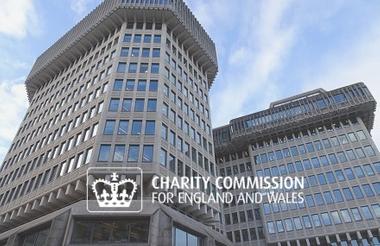
The Charity Commission is planning to recruit 80 new staff to meet the “extraordinary” increases in demand for its services, its chief executive has revealed.
David Holdsworth announced yesterday that his organisation will increase its staff headcount by around 23% over the next 12 months.
Speaking at the annual charity conference of the Institute of Chartered Accountants in England and Wales, Holdsworth was asked how the commission plans to improve the speed of its responses.
He told attendees the commission had seen “extraordinary increases in demand on our services just as the sector has seen increases on demand for their services”.
Holdsworth said this included a 26% increase in the number of reports relating to concerns about a charity.
In the Treasury’s spending review last year, the regulator was awarded a 27% increase to its budget to £37.9m in 2026-27.
Holdsworth said he had “fought so hard” for the funding rise and would now recruit 80 new staff members, but cautioned that change would not happen overnight.
“As you know, charity law is complex. You all work in this sphere, and it’ll take us a while to get those people up to speed and train them, so there won’t be an immediate impact,” he told delegates.
The commission employed 457 people as of 31 March 2025, according to its latest accounts.
Trustee identification verification process plans
Holdsworth said he was “engaging with government” on an identification verification process for trustees, similar to the one Companies House introduced to help deter people seeking to use companies for illegal purposes.
“I’ll be frank, if we don’t introduce some form of trustee verification, we leave ourselves open to fraud and abuse,” he said.
“We’re now the only part of government where you can set up a corporate entity without having your identity verified. That comes with all sorts of risks.
“So, what we’re looking at with government is, how can we introduce verification for trustees, learning from some of the lessons at Companies House, but also without putting trustees off.”
‘We won’t come down hard on trustees’
Holdsworth said the sector continues to face acute fundamental, collective challenges, such as the rising cost of employing staff and the impact of inflation on the value of funding.
He acknowledged that many charities have had “to make profoundly difficult choices that have triggered concern and anxiety amongst their staff and their beneficiaries alike”.
“NSPCC, for example, is undergoing a significant restructure in the face of economic challenges to help ensure its vital work to keep children safe can continue long into the future,” he said.
“Such profound changes are difficult to make, but often vital to secure the future of a charity’s work, and the timeliness of such decisions is also vital.
“The commission’s reassurance here is as follows: so far as decisions are taken in the best interests of the charity, in line with its purposes and following our decision-making guidance, we’ll have your back.
“We won’t come down hard on trustees simply because their decision was unpopular or subject to criticism.
“A charity’s reputation is amongst its most important assets, and we’d expect trustees to take reasonable steps to protect it.”
Charity not expected to be ‘fluffy’
Holdsworth discussed the distinction between public trust and approval, saying that “none of us will support every single charity on the register”.
“We all have different worldviews, passions and interests. It’s one of the sector’s great strengths - how broad the sector is. And as regulator, we don’t expect charities to be uncontroversial,” he said.
“In fact, it’s my personal conviction that societal progress over the decades has come about precisely because of the work of charities whose missions have been at odds with what was, at the time, comfortable, respectable or common ground amongst the general public.”
Holdsworth added that charities have been at the heart of movements that make society safer and stronger.
“They haven’t done so without ruffling a few powerful feathers, without disrupting existing interests or challenging loyalties,” he said.
“We shouldn’t expect charity to be fluffy. Sometimes charity is and must be disruptive, but – and this is an important but – the ability and freedom of charities to pursue controversial charitable aims rests on a collective commitment to integrity in how charities are run.”