
Etherington and Hayday propose new future for Social Investment Business
News

Etherington and Hayday propose new future for Social Investment Business 3

Finance | Tania Mason | 24 Feb 2010

The loan book of the Social Investment Business should be sold and the proceeds passed to the new Social Investment Wholesale Bank, according to NCVO chief executive Stuart Etherington.

In the March edition of Charity Finance magazine, Etherington and Charity Bank chief executive Malcolm Hayday separately outline their views on the future of the social investment market and how best to capitalise on the legacy of the Futurebuilders funding already committed to the sector by the government.

Etherington argued that in order to grow the social investment market so that it constitutes a bigger proportion of funding available to the sector, a “strategic market maker” is needed.  This could take the form of the new Social Investment Wholesale Bank (SIWB), he contended, but in order to be effective it would need to be better resourced than the £75m already committed by the government.

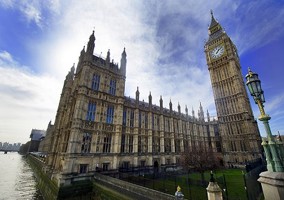
He suggested that the existing loans of the Social Investment Business (pictured) should be sold on to other  retail lenders and the proceeds given to the wholesale bank, or, "failing that, the returns on investment be used for the same purpose, although at a slower rate".

“This claim on the Social Investment Business is defensible,” Etherington wrote. “SIB is simply a government loan fund.  It is unlike the other social investment banks in that it has no capital base against which it is lending nor is it regulated as a bank.

“Unless government continues to channel funds through this institution or it can obtain funds from elsewhere…it cannot continue to lend.”

But if its loan book was made available to the Social Investment Wholesale Bank, said Etherington, and this new organisation had a “small strategic team with a skill set in market-making rather than retail lending” it could develop the social investment market in a “balanced and sustainable way”.

Hayday: ‘give us loans as discrete endowments’

Hayday’s article ignores the wholesale bank concept and expands on the merits of transferring the Futurebuilders loan book to retail lenders, such as his own Charity Bank. He singles out the Futurebuilders fund because the other programmes that the Social Investment Business runs, the Department of Health Social Enterprise fund, and Communitybuilders, are both largely grant-focused.

Hayday points out that at its launch, the Futurebuilders Fund was described by the government as “the sector’s money”, and while there have been “mistakes” in its distribution, there is also a positive legacy that could now be used to leverage further non-government money.

“The seasoned portfolio could be given as discrete endowments to third sector social finance intermediaries,” he suggested, and these could be used to create a “risk buffer” to guarantee the higher-risk proposals. The Social Investment Business could be left with a small proportion of the money in order to develop a “risk fund operating truly at the catalytic end of the market”.

Hayday acknowledges the potential difficulty in persuading the government to release the fund money, which he estimates to be about £150m, from its own balance sheet.

Lewis: Stop bickering or the sector may lose the money

Jonathan Lewis, chief executive of the Social Investment Business, made a point of disputing Hayday’s comment that Futurebuilders had made mistakes. He said the programme had been “highly successful” and that an independent evaluation due out in March would bear this out.

He agreed with Etherington that the loans or their proceeds should be consolidated into the new wholesale bank, in order to create a large and powerful new financial player in the sector.  He opposed Hayday’s idea of parcelling up the loans and dividing them amongst existing players.

“Every pound that we are given ultimately leads to £6 going into the sector,” Lewis said, “and we currently manage funds of around £400m.  Once you can say you have that sort of money people listen to you, it’s easier to make things happen quickly and to raise more money from other sources.

“The market needs a big player, with proper assets and proper power.”

Asked whether the Social Investment Business would consider applying to become regulated by the Financial Services Authority so it could run the wholesale bank, Lewis said the organisation was “looking at a whole bunch of ways of helping the sector and regulation may be one of them”.

He also said that the most important thing in the entire debate was that the loan book remains in the sector and doesn’t get snatched back by the Treasury, and condemned the “bickering” in the sector about how to ensure this happens. 

“The longer the sector goes on being divided over what to do the easier it becomes for the Treasury to grab the cash back. My appeal to everyone is to have these kind of debates behind the scenes and try to present a united front in public.”

•    Subscribers to Charity Finance magazine and CivilSociety.co.uk can read the full articles from and Hayday here.

Share

Etherington and Hayday propose new future for Social Investment Business

Place a comment

John Brooks
Sales & Marketing Director
Unity Trust bank PLC
2 Mar 2010

Having spoken with Stuart we are fully supportive of his views that if the Futurebuilders fund was sold the proceeds should go to the SIWB or failing that the revenue streams derived from it.

John Brooks
Sales and Marketing Director
Unity Trust Bank
1 Mar 2010

At Unity we have consistently supported the establishment of a Social Investment Wholesale Bank (SIWB) and almost entirely support the views put forward by Stuart Etherington, with one small but for us very important disctinction. If a decision was made to utilise the loan book of the Futurebuilders fund it should not involve a transfer of that loan book to a SIWB as the loan book is a 'retail' book and this would impact on the core role of the SIWB which would have to administer the individual cases. We would of course be quite happy for the proceeds of any sale of the book, or the ongoing income derived from it to be utilised by the SIWB for its core activities.

Robin Bogg
CEO
BUBB
25 Feb 2010

I expect that Lewis learned the value of having these discussions in private rather than through the media from his chair at SIB.

Comments

[Cancel] | Reply to:

Office for Civil Society to slash spending by £11m

29 Jul 2010

The Office for Civil Society has announced that it will be cutting £11m from its 2010/11 budget.

NSPCC, Children 1st and Spar beat £2m fundraising target

27 Jul 2010

A corporate partnership between retailer Spar UK and children’s charities NSPCC and Children 1st has...

Oxford Uni anger over toxic dump donation links

27 Jul 2010

Students and academics at Oxford University are reportedly outraged that the institution has accepted...

Charity Commission opens consultation on online plans

29 Jul 2010

The Charity Commission is seeking views on its plans to place all its services online by 2012, a move...

Government asks charities and social enterprises for ideas on reducing the deficit

29 Jul 2010

The Cabinet Office is asking the voluntary, community and social enterprise sectors for innovative ideas...

Office for Civil Society to slash spending by £11m

29 Jul 2010

The Office for Civil Society has announced that it will be cutting £11m from its 2010/11 budget.

Charity Commission opens consultation on online plans

29 Jul 2010

The Charity Commission is seeking views on its plans to place all its services online by 2012, a move...

O2 makes text donations free for charities

26 Jul 2010

O2 has become the second mobile operator to pledge to deliver 100 per cent of all text donation value...

Puffins get equipped with sat nav

20 Jul 2010

One of the things that has always set birds aside from humans is their navigational ability, migrating...