

Charities in Twitter storm over balloon releases
24 May 2012
Charities are being urged to abandon balloon releases in a Twitter a campaign.
Amendments to the accounting thresholds for charities have been labelled as “tinkering for the sake of tinkering” by a leading charity audit specialist.
Nick Brooks, head of Kingston Smith’s charity audit team, who also led the ICAEW’s response to Sorp 2005, was reacting to last week’s publication of the government response to its consultation on raising the minimum reporting requirements. He said that changes have only been introduced “because the 2006 Charities Act said that the thresholds would be revisited”.
The Office of the Third Sector estimates that 20 per cent, or 33,000, registered charities are expected to benefit from a reduced regulatory burden under recommendations that will be implemented for the financial year 2009-10.
In its final response, Financial Thresholds in the Charities Acts – Proposals for Change, the government forged ahead with all but two of the original recommendations made during the process, conducted jointly with the Charity Commission.
Key threshold changes include an increase in the threshold above which charities must prepare accruals accounts from £100,000 to £250,000. This will reduce burdens for around 11,700 charities, which will now be able to prepare accounts on a receipts and payments basis.
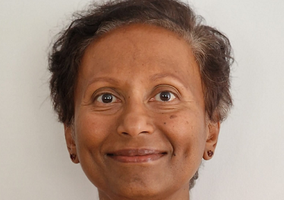
However, Brooks (pictured), who also chairs the standards committee of the Institute of Fundraising and is treasurer of the Charity Law Association, said receipts and payments accounts did not necessarily show a true and fair view of the charity’s affairs.
“By increasing the threshold to £250,000 there are now 11,700 more charities without a sensible set of accounts. We need to remember that the £250,000 of income is donors or taxpayers money and I think it should be accounted for correctly. It is not that difficult to prepare a proper set of accounts.”
But Ernese Skinner, policy and campaigns manager at Charity Finance Directors’ Group, welcomed the move. “The change to the threshold for accruals accounts was supported by two-thirds of our respondents with an annual income of less than £1m and for that reason we think this move will ease the burden on smaller charities.”
Brooks also criticised the increase in the threshold from £10,000 to £25,000 for charities to submit annual accounts and the trustees’ annual report (TAR) to the Charity Commission, which will affect around 23,000 small charities.
“The increase in the threshold for charities to file accounts with the Charity Commission is to help the Commission, not the charities. Charities will still have to prepare the accounts, just not file them. Where is the advantage in that?”
There will also be an increase in the threshold above which accounts must undergo external scrutiny from £10,000 to £25,000, meaning that around 37,000 charities will no longer be required to have their accounts externally examined.
While most of the recommendations in the consultation were overwhelmingly approved by respondents, the proposal that a preparation threshold be introduced for the TAR was rejected due to strong opposition. The government’s response stated: “This proposal was perhaps the most significant change put forward in the consultation document as it would have removed the obligation to produce the TAR in any form from around 118,000 small charities. It carried a higher risk to the accountability and transparency of charities that is vital to the maintenance of public confidence. For this reason we feel that in order to prove workable it required wider support than was apparent from the responses.”
Plans to increase the threshold at which charities are required to state that they are registered charities on certain documents from £10,000 to £25,000 were also shelved.
“The arguments made by opponents of the original proposal were convincing,” said the report. “Complying with this requirement provides the public and other stakeholders with useful information and is a very small burden on an individual charity. It is also noted that many charities want to highlight their registered status.”
Phil Hope, minister for the third sector, said he believed it is important that charities are free to focus as much time as possible on their core purpose.
“However, I also recognise that proper accounting standards are important because people who donate money want to know it is being used properly, but there is a balance to be struck, and I am confident that these changes get that balance right.”
The recommendations will be introduced in secondary legislation by the end of the 2008-09 financial year. In total, 58 responses were received from a wide range of charities and other stakeholders representing thousands of charities. To see the full government response go to http://www.cabinetoffice.gov.uk/~/media/assets/www.cabinetoffice.gov.uk/third_sector/responses/gov_res_thresholds%20pdf.ashx
24 May 2012
Charities are being urged to abandon balloon releases in a Twitter a campaign.
23 May 2012
The Institute of Fundraising is to replace its 28 codes of fundraising practice with a single code and...
23 May 2012
A theatre company run by war veterans charity Stoll has partnered with the Royal Shakespeare Company Open...
24 May 2012
A consultation launched by the Department for Business, Innovation and Skills has been criticised for...
24 May 2012
Missing People is hoping to track down missing children using Twitter.
23 May 2012
A theatre company run by war veterans charity Stoll has partnered with the Royal Shakespeare Company Open...
24 May 2012
Charities are being urged to abandon balloon releases in a Twitter a campaign.
24 May 2012
Missing People is hoping to track down missing children using Twitter.
21 May 2012
Marie Curie Cancer Care has officially opened its new national support centre in Pontypool, Wales, creating...
15 Oct 2012
15 Oct 2012
15 Oct 2012
19 Nov 2012